

BROOKFIELD, Wis.—A new study shows that consumer use of digital banking—online, mobile and electronic payments—leads to higher revenue for financial institutions and stronger relationships.
Fiserv recently collaborated with Bank of the West to conduct a Digital Engagement Intensity Study to evaluate the value of digital banking and engaged users over a two-year period.
"Financial institutions are operating in a world that moves faster than ever before, where consumers compare their digital banking service to all other digital experiences," said Matt Wilcox, senior vice president, marketing strategy and innovation, Fiserv. "Understanding digital banking activity and the value of these customers can help financial institutions determine where to invest in capabilities that engage and satisfy consumers."
The study evaluated the impact of enrollment in online banking, mobile banking, online bill pay, person-to-person payments and account-to-account transfers on revenue, product engagement, attrition and transactions.
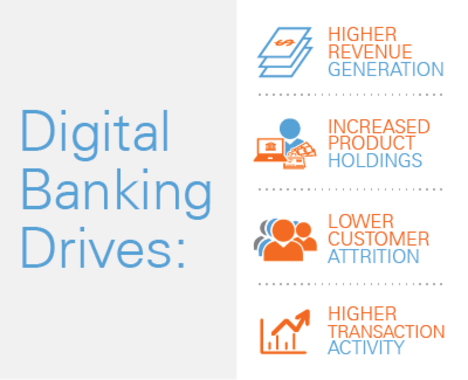
The study revealed that use of digital banking drives:
1. Higher Revenue Generation
Following enrollment in digital banking, monthly revenue per customer increased by 10.7%, compared to a 4.5% increase for non-digital users during the same period. And higher engagement drove higher value.
Among highly engaged customers in the study, average monthly revenue jumped 13.1% after digital enrollment. The study defines highly engaged customers as those who have the longest tenure, make the most transactions and generate the highest revenue.
2. Increased Product Holdings
Among Bank of the West customers in the study, the average total product holdings increased 58.4% after digital enrollment, compared to negligible growth during the same time period for non-digital customers.
3. Lower Customer Attrition
Digital banking customers were 35% less likely to leave the bank, compared to non-digital users. Attrition was examined in the 15 months following digital enrollment.
4. Higher Transaction Activity
The study found a 12.8% increase in the volume of credit transactions and a 12.9% increase in transaction frequency after digital enrollment, compared to negligible increases for non-digital users. The results for debit activity were similar: a 14.6% increase in the volume of debit transactions, and a 9.3% increase in frequency of debit transactions.