

HOBOKEN, N.J.—How much of a hindrance is student debt to today’s graduates? Which groups are affected the most? And does student debt have a differential impact by gender or race? A new study offers some answers to those questions.
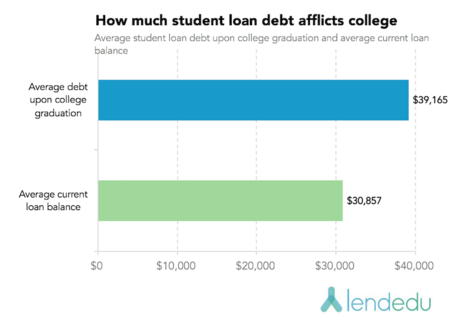
The study from LendEDU (www.lendedu.com), shows that people graduate college with nearly $40,000 in debt and that men have more debt than women. The report, which surveyed more than 1,400 college graduates between the ages of 25 and 54, also found that on average white and Asian college graduates have more debt than their black and Hispanic/Latino peers.
“When it comes to financing their education, men tend to get more help from the parents in paying for college than women do,” LendEDU said. “And, among all the demographic groups we survey, Asian students get the most financial help from their parents in paying for college. However, Asians are more likely to feel the pressure of student debt preventing them from starting businesses compared to their peers.”
The study shows that those who graduated with nearly $40,000 in debt still had about $30,000 in debt outstanding seven years later.
“This means that even years later—since all of our respondents were at least three years out of school—college graduates still have an average of 75% of their loans left to pay,” LendEDU explained.
The reports shows there is a wide range of average debt upon graduation between the genders and races. White college students have the biggest discrepancy between male and female graduates. On average, white male students graduate with about 33% more debt than their white female peers.
“Interestingly, white males graduate with the most debt of any of our subgroups, and white females graduate with the second least amount of debt. As a whole, females tended to graduate with less debt than their male counterparts, except for black females who had $272 more in debt than black males. Asian males graduated with the second most debt, just $253 on average less than white males. On the other side, Hispanic/Latino women graduated with the least amount of debt; they have $564 less to pay off than white women,” LendEDU said.
Nearly half of the respondents paid for college without any assistance. Only about 10% received about half their tuition from their family. Fewer than one in ten people had the majority of their college finances supported by their parents, the report shows.
Overall, females receive less help paying for college than their male peers.
“Only 6% of women responded indicating that their parents paid for the majority of the tuition, and 50% received no help at all. On the other hand, only 43% of male respondents said their parents did not contribute financially to their schooling. Additionally, one in ten male respondents said their parents paid the majority of their college tuition, nearly double the number of women who answered the same way. This is particularly noteworthy after we saw above on a whole women graduate with less debt than men. So even though they get less financial help from their families, women still have fewer loans to repay after college,” LendEDU said.
The most clear finding, according to the study, is that Asians get the most financial help from their parents paying for school. Nearly double the number of Asian respondents reported getting the majority of their college tuition paid for by their parents compared to the other races.
On the whole, more than half of the respondents of both genders felt that their debt negatively impacted their current lives. Nearly two-thirds of respondents said their current loans have made it harder to save for retirement, and over 50% said that the debt has made starting a small business more difficult.
“The place where we see the biggest difference in these feelings by gender is in the respondent's’ feelings about keeping up with daily expenses. Only about half the men said that their debt has made day-to-day finances more burdensome, but 10% more females felt the same way,” LendEDU said.
White respondents, more than the other races, felt the most strongly that their student debt hindered their ability to save for retirement and keep up with daily expenses. For example, 13% more white college graduates than Asian graduates think their loans have negatively impacted their retirement savings. However, Asian respondents feel the most burdened by their debt when it comes to their ability to create their own company. Almost 10% more Asian graduates than any other race felt their loans hindered their ability to start a small business, the study shows.