

ROCKVILLE, Md.–The coronavirus pandemic has led to lower consumer spending, which has affected card volumes and prepaid card use.
But a new analysis has found prepaid purchase volume declines will hit certain industry participants differently, according to market research firm Packaged Facts, which has released the study Prepaid Cards in the U.S., 7th Edition.
Among the findings:
- Issuers, for example, must grapple with lower yields on prepaid card deposit balances, due to Federal Reserve interest rate decreases made in response to recessionary pressures.
- Fee income in the form of prepaid card reload activity is also affected, not only because of lower spending but also because of almost certain drop off in in-person fund reloads, due to pandemic-driven store closings and stay-at-home orders.
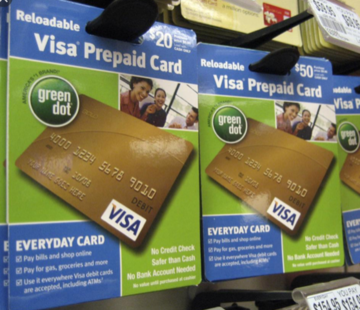
- Interchange fee revenue is affected, since purchase volume directly correlates to interchange fee generation. Some players may also lose interchange fee incentive income. Green Dot, for example, has noted that interchange fees it earns are tied to a tiered volume pricing structure in which it earns disproportionately less in fees when volume declines, the company said.
May See ‘Inflow’
Packaged Facts added, however, that “against a likely backdrop of credit tightening and the possibility of higher bars required for traditional bank accounts, prepaid accounts may see an inflow of consumers affected by those trends.”
“The effects of the coronavirus pandemic will be much deeper and more widespread than the above trends,” says David Sprinkle, research director for Packaged Facts.
While prepaid cards are a subset of debit cards, their use case is different, owing to the type of consumers who use them, the company noted. Consumers who select prepaid cards as their primary payment instruments (or as one of their main payment instruments) probably use them for both discretionary and non-discretionary spending, it added.
Additional Findings
Under a recessionary scenario, prepaid cards will see reduced discretionary and non-discretionary spending by these users. The same will likely hold true of younger and more upwardly mobile, digitally inclined prepaid card users, who make up another slice of the prepaid card use space, Packaged Facts stated.
“The pandemic also places significant roadblocks in the way of general-purpose reloadable prepaid card users’ cash preferences,” according to the study. “At a time when physical locations are either still closed or opened with limitations, consumers seeking to engage in commerce or pay bills are forced to go online where cash is not an option (and these days who wants to pay with cash, after thinking about how many people have touched it?). For many, cash has likely become a pariah. Either way, the result, for the prepaid card industry, translates to cash-only holdouts giving up and obtaining a card—and likely a prepaid card, since they have eschewed or been turned away by mainstream banking channels—and a movement among generally cash-friendly prepaid card users to use it less and their cards more.”
Packaged Facts said data is helping to “make the case,” finding some 46% of general-purpose reloadable prepaid card users agree that they often prefer to pay cash for things they buy, and 25% agree that they always use cash to pay for their bills.
Income Correlation
“Cash payment preferences among general-purpose reloadable prepaid card users correlate very strongly to household income, with the preference diminishing as income increases,” the analysis states. “This likely correlates to prepaid card holders’ unbanked or underbanked status, suggesting that the more economically marginalized card users continue to rely heavily on cash.
“Lingering closures in many states translate to reduced foot traffic, which reduces point-of-sale purchases. For any form of payment, this is bad news,” the analysis continues. “The silver lining is that at least some of this reduction must shift to the online realm. The net result as a share of payments and in the context of cash use is less cash, more prepaid cards, and more online prepaid cards. A significant related effect is that this shift towards online purchases puts digital commerce into overdrive and may keep it there. Once consumers adjust to this payment shift, many may find they like things just fine.”