

CAMBRIDGE, Mass.–A significant number of younger workers are reporting they have experienced mental health challenges and feel there is a “stigma” when it comes to reporting those challenges at work.
Indeed, a new study found three-quarters of Gen Z workers said they had voluntarily left roles in the past for mental health reasons. In addition, the study also found CEOs are as likely to report mental health issues as other employees.
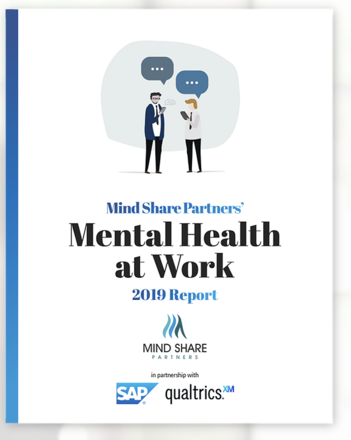
In light of data indicating up to 200-million workdays are lost each year due to mental health conditions, as well as other data showing nearly 60% of employees have never spoken to anyone at work about their mental health status, Mind Share Partners, SAP, and Qualtrics conducted a study on the prevalence of mental health challenges and stigma in U.S. workplaces. The Harvard Business Review noted the study looked at the full spectrum, from 100% mentally healthy to chronic and severe impairment.
“In previous studies, mental health has often been measured through either diagnosable conditions or general stress levels,” the Harvard Business Review observed. “But these two metrics do not fully capture the breadth of mental health experiences that lie between them, such as undiagnosed conditions, episodic challenges, and symptoms that do not meet a clinical threshold.”
Broadened Perspective
The new study aimed to broaden the perspective by framing questions in terms of individual symptoms, which are less stigmatized. Among the findings was that more than half of our respondents felt that mental health was prioritized at their company, and even fewer viewed their company leaders as advocates.
Eighty-six percent of respondents thought that a company’s culture should support mental health. The percentage was even higher for Millennials and Gen Zers, who have higher turnover rates and are the largest demographic in the workforce. Half of Millennials and 75% of Gen Zers had voluntarily left roles in the past for mental health reasons, compared with just 20% of respondents overall, a finding that speaks to a generational shift in awareness.
Not Seeking Treatment
“Low levels of self-identification mean that many workers won’t seek treatment, and it might explain why disclosure rates in companies are low,” the study’s authors state. “Our research showed that while nearly 60% of respondents experienced symptoms in the past year — a number much higher than the oft-cited 20% of people who manage a condition in any given year — close to 60% also never talked about their conditions at work. When conversations about mental health did occur, less than half were described as positive. In fact, respondents were the least comfortable talking with their company’s HR and senior leaders, although senior leaders, including CEOs, were just as likely to struggle with mental health symptoms as individual contributors.”
The study also found LGBTQ+ people, Millennials, and Gen Zers were more likely to experience mental health symptoms for longer durations and were also more open to diagnosis, treatment, and talking about them at work. In addition, almost half of black and Latinx respondents had left a job at least partly for mental health reasons, compared with 32% of Caucasian respondents.
Recommendations Made
To do a better job of improving the state of mental health at work, especially for younger, diverse demographic groups, the study recommends:
- Start at the top. “Changing the culture is a top-down process. It starts with transforming leaders into allies. Encourage executive teams, managers, and senior employees to share their experiences (or those of close family members or friends) at all-staff meetings or in other interactions with their teams. Modeling disclosure and vulnerability as strengths, not weaknesses, goes a long way toward reducing the stigma and setting the tone for transparency.”
- Invest in education. “Trainings are imperative for all employees — and especially managers — to learn how to name, normalize, and navigate mental health at work. We’re not advocating for managers to become therapists. However, they should have baseline knowledge of tools they can use during difficult conversations and actions they can take to reduce the stigma, in addition to an understanding of mental health conditions, their prevalence and impact at work, and ways to recognize and respond to employees who may be struggling.”
- Provide support. “At a minimum, companies need solid mental health benefits, and those that do have them must learn how to communicate them clearly — as well as their confidential nature. Many employees are either unaware of the mental health resources offered at their organizations, or they are afraid to use them. In our study, Millennials were 63% more likely than Baby Boomers to know the proper procedure for seeking company mental health support.”