Curt Long, NAFCU
ARLINGTON, Va.—CUs are seeing an uptick in small retailer breaches that are adding to their fraud losses, a new study reveals.
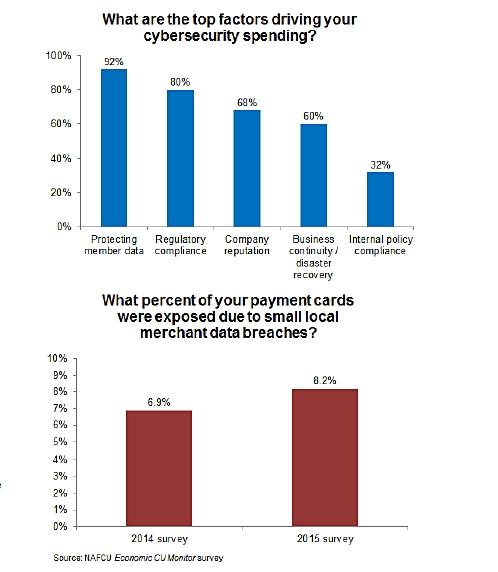
According to NAFCU’s October Economic & CU Monitor, small merchant breaches are worsening: 87% of respondents reported an impact from a local merchant breach during the past two years, up from 84% in 2014.
“Our October ECUM shows credit unions and consumers will only be protected when retailers and merchants are subject to robust federal data safekeeping standards,” said NAFCU Chief Economist Curt Long. “Unfortunately, retailers and merchants are not subject to the same data security standards as financial institutions. This leaves consumers’ sensitive financial information extremely vulnerable to cybercriminals.”
Since 1999, financial institutions have had to adhere to the stringent standards of the Gramm-Leach-Bliley Act that help safeguard consumers’ sensitive personal and financial information, Long reminded.
Highlights from the cyber security study:
- Nearly every credit union survey respondent (91.7%) believes Congress must make strengthening retailer data security standards a priority.
- The portion of survey respondents’ payment cards that were affected by small, local merchant breaches jumped by 19%.
- The number-one factor driving survey respondents in the area of information security is the safety of their members (92% of respondents).
- Credit union respondents were nearly unanimous (95.7%) in their support for sharing information about cyber threats.
- Looking ahead, 80% of respondents plan to devote more money toward merchant data breaches in 2016 than they did in 2015.
- Nearly half of survey respondents (48%) reported that members had inquired about their credit unions’ cyber security measures.
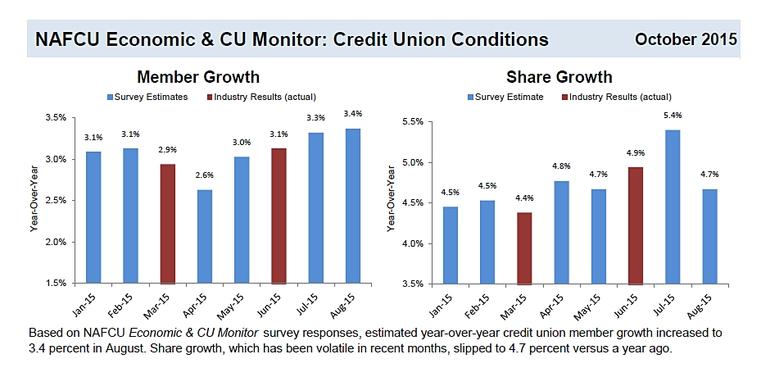
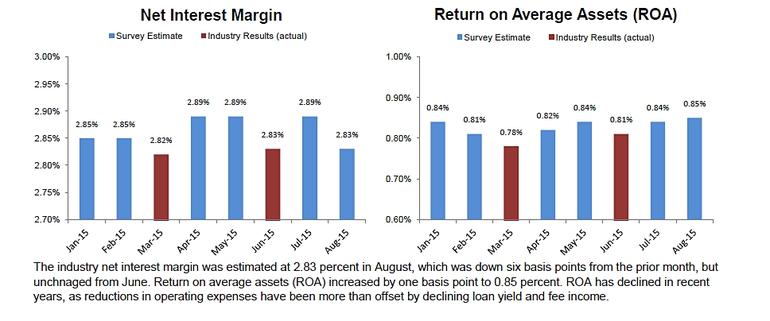
In the Monitor’s monthly look at CU performance, as of September, CAMEL 4 and 5 credit unions represented just 0.8% of total insured shares, lower than pre-crisis levels. Member and loan growth are at their highest levels in a decade, with the latter driven by a 15% surge in vehicle loans versus last year. Share growth increased in the second quarter and is at its highest level since 2012.