HOBOKEN, N.J.–How significant is student loan debt in the minds of those who consider filing for bankruptcy—even though it’s nearly impossible to discharge through such proceedings? A new study offers some answers.
Under a Chapter 7 bankruptcy, an individual can liquidate whatever assets they might have and use the funds to pay off as much outstanding debt as possible. But while that might promise a fresh start, student loan debt, the second-highest form of outstanding debt in the U.S., almost always remains the responsibility of the borrower.
With that in mind, LendEDU sought to analyze how significant student loan debt is for consumers that have looked to discharge their debt in bankruptcy. Using exclusive anonymized data provided by Upsolve, a nonprofit that helps low-income individuals file for Chapter 7 bankruptcy free of charge, LendEDU said it was able to uncover just how many bankruptcy filers also carry student loan debt and how much of their total debt is comprised of student loan debt.
More Than 1,000 Cases Examined
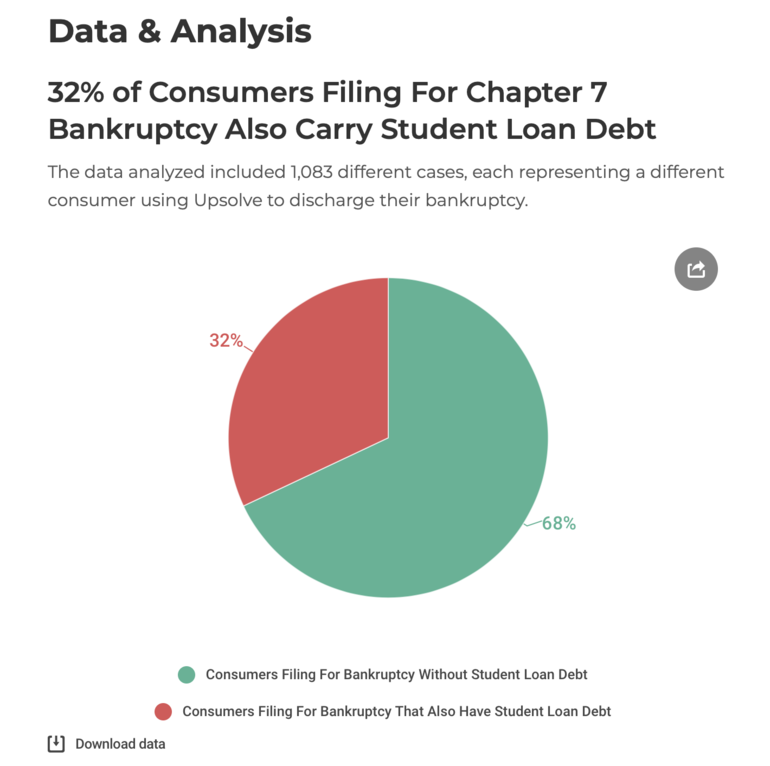
The data analyzed included 1,083 different cases, each representing a different consumer using Upsolve to discharge their bankruptcy, and found 32% of all Upsolve users that sought to discharge their outstanding debt in bankruptcy also carried student loan debt.
For reference, Chapter 7 bankruptcy claims that going through Upsolve carries a 98% success rate when it comes to having the debt successfully discharged, the company said, adding that success rate does not include student loan debt cases as Upsolve does not help with bankruptcy claims for student loan debt.
LendEDU noted Upsolve actually informs users to not use its services if they are looking to discharge their student debt because that process requires specialized attention that the nonprofit does not provide.
The Findings
Among the other findings:
- On average, student loan debt represented 49% of this cohort’s total debt with the next closest being “uncategorized debt” at 24%. “Uncategorized debt” could have included any form of debt, including that from credit cards, mortgages, or medical expenses amongst others.
- 21% of all debt that was processed by Upsolve. It is worth noting that the “uncategorized debt” section could include any class of debt, including that from credit cards, medical expenses, and automobiles, among others.