CHARLOTTESVILLE, Va.—The total number of credit union branches across the U.S. is on the rise for the second consecutive year after declines in the previous two years.
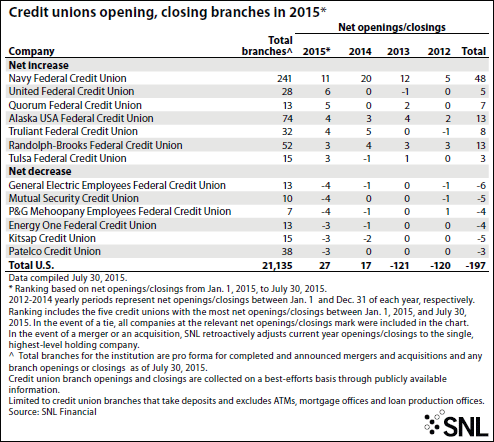
An analysis by SNL Financial found that as of July 30, there were 27 more CU branches opened than closed in the U.S in 2015. In 2012 and 2013 combined credit unions lost a net of 241 branches, SNL found.
Leading the way with net branch additions in 2015 are Navy FCU (11), Vienna Va.; United FCU (6), St. Joseph, Mich.; and Quorum FCU (5), Purchase, N.Y. Those with the most net closings are General Electric FCU, Cincinnati (-4); P&G Mehoopany Employees CU (-4), Tunkhannock, Penn.; and Mutual Security CU (-4), Shelton, Conn.
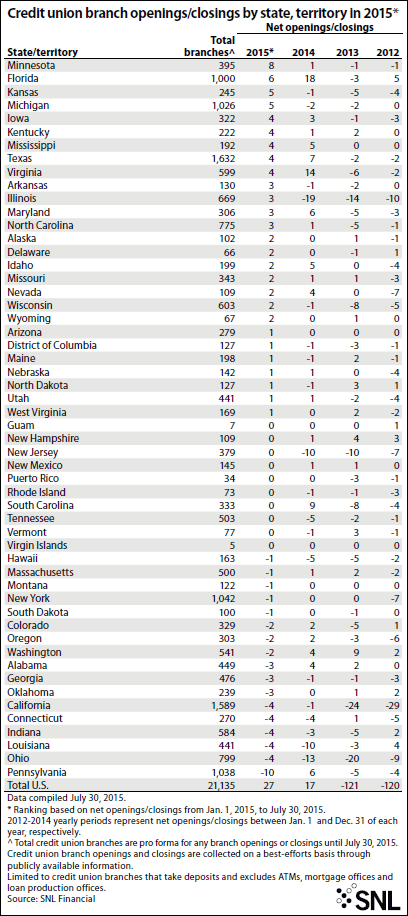
SNL data shows Minnesota (8) this year has had more net openings than any other state, Florida (6) is second, and Kansas and Michigan are tied for third (5). Michigan is fifth in the country in terms of the number of total credit union branches with 1,026. Stacy Fillmore, vice president of national sales and service for United, said the CU is looking at what the competition is doing while at the same time surveying its members to gauge their wants and needs.
"We want to be competitive and convenient," she told SNL. "Of course, we're always watching the industry and our competitors, but more than anything we depend on our own research."
Ancin Cooley, principal with Synergy Bank Consulting Inc. in Elgin, Ill., told SNL that banks tend to use branching as a part of a larger deposit growth strategy whereas small credit unions use additional branches to grow their brand and establish better footing in the communities they serve. Credit unions tend to operate and thrive better in situations with diverse socio-economic conditions, he said.
As the cost of delivering mobile transaction solutions declines, both banks and credit unions will be able to offer the same technology solutions to their customers and/or members, Cooley said. He believes the companies that are shedding branches because they think mobile is the wave of the future are missing the benefits of having a physical presence. "I deal with Apple primarily through my phone for small stuff like buying new music or paying for subscriptions. However, when I need something fixed or I need to make a big purchase I go to the store," he said.
Cooley believes that Florida and other Southeastern states will continue to see more branches built purely due to demographics and the "snow-bird effect."
Cooley said he has found that people do not do business with a bank or credit union but instead with "that nice customer service person named Gladys or John" that has been helping them for 20 or 30 years. "The data may suggest that millennials don't like going into branches, but I'd say as they get older and life happens they are going to want a familiar face," he said.