

LAWRENCEVILLE, Ga.—A new analysis suggests that lenders should look favorably on borrowers seeking a used car loan on some discontinued models.
Black Book has released a new analytics-driven report that looks at why certain vehicle models were discontinued over the last several years, and how they’ve retained their values since discontinuation.
“Some car and truck models, despite their popularity, are discontinued because manufacturers simply move production strategies in a new direction. When this happens, certain models retain their values better than their segment average, while others see retention values plummet,” stated Black Book.
The company said it conducted a thorough analysis that includes a mix of small- and mid-size cars, trucks, SUVs and minivans.
“Their discontinuation dates vary over the last few decades, and the reasons for their discontinuation are as diverse as the vehicles themselves,” Black Book said.
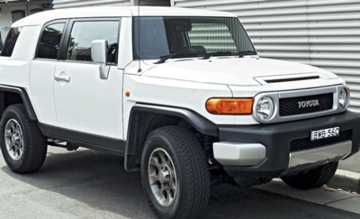
As an example of this analysis, Black book data show that the Toyota FJ Cruiser, whose last model year was 2014, has actually gone up in value by 25.7% compared to other vehicles that were listed in its segment. The Hummer H2 is second-best in retention at 18.5%.
The Toyota FJ Cruiser was acclaimed for its off-road performance.
“The wide stance and short wheelbase made it look quirky. In the last model year of production, it sold only about 14,000 in 2014. Given the uniqueness of this vehicle and the relative high demand from enthusiasts, it became a modern collectible. The change in three-year retention for Toyota FJ Cruiser was a whopping 26 percentage points better than the mid-size crossover/SUV segment,” Black Book said.
Conversely, the Mazda MPV minivan, last produced in 2006, has lost -15.8% of its value compared to other vehicles in its segment, and the Mercury Milan has lost -9.5% compared to others in its segment after it was discontinued in 2011.