

MADISON, Wis.—The slowdown in auto sales due to supply issues led to slower credit union loan growth in the year ending June 2021, compared to the same period in 2020, CUNA Mutual Group’s latest Trends Report reveals, adding that indirect auto is the culprit.
However, CUNA Mutual projects lending will return to more normal levels in 2022 and 2023.
Credit union ROA is up this year, due largely to lower provisions for loan losses.
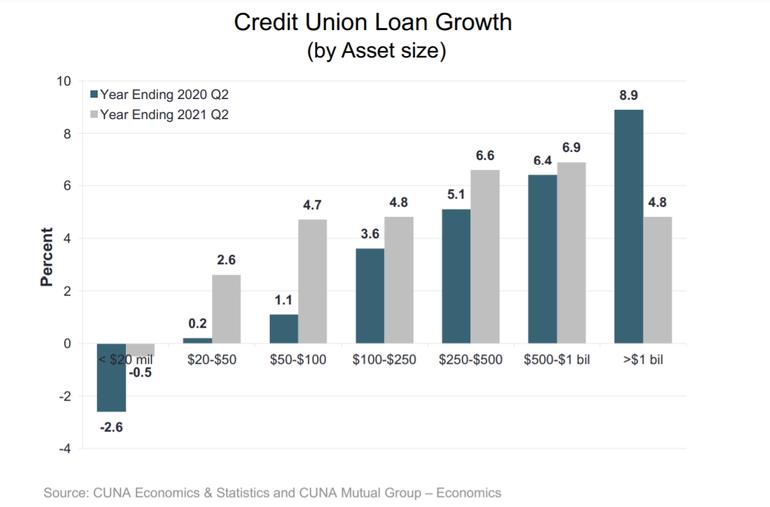
Data show credit union loan balances rose 4.7% in the year ending in June 2021, slower than the 7.1% pace reported in the year ending in 2020.
“This was due to larger credit unions (assets greater than $1 billion) reporting slower loan growth this year than last year, especially in the indirect auto loan category,” CUNA Mutual Group stated.
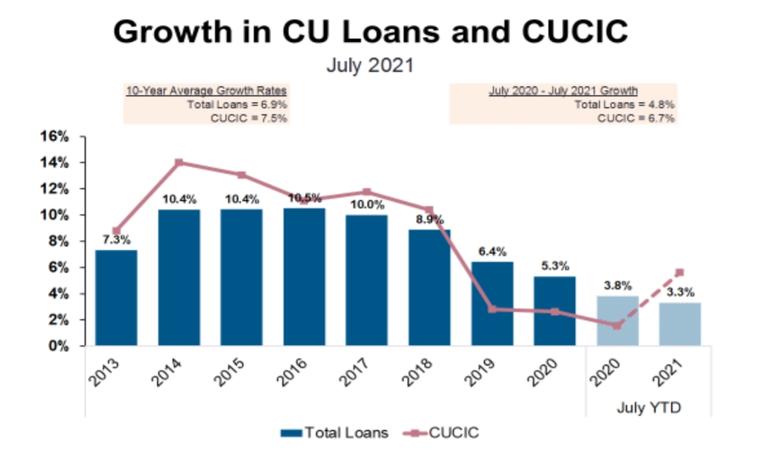
Credit union loan balances grew at a 6.2% seasonally-adjusted, annualized growth rate in July, significantly better than the 4.9% pace set in June 2020 during the worst of the economic crisis.
“Over the long run, credit union loan balances rise on average 7% per annum. We are forecasting above trend credit union loan growth for the next two years (around 9%) as the economy resumes its normal growth, the unemployment rates fall below their natural rate, and infrastructure spending kicks in,” the reports states.
Consumer Installment Credit
For the first time in over two years, credit union consumer installment credit loan balances (auto, credit card and other unsecured loans) rose at a faster pace than all credit union loans during the first seven months of 2021. Credit union consumer installment credit rose 6.7% during the 12 months ending in July, above the 4% pace reported by all other lenders. Credit card balances grew at a 3.2% seasonally-adjusted annualized growth rate in July, the fastest pace since September 2019. July’s credit card seasonal factors usually add 0.62 percentage points to the underlying trend growth rate as people venture out on vacations. Rising gas prices and consumers increasing their spending on services will keep credit card loan growth in the positive territory for the remainder of the year.
Vehicle Loans
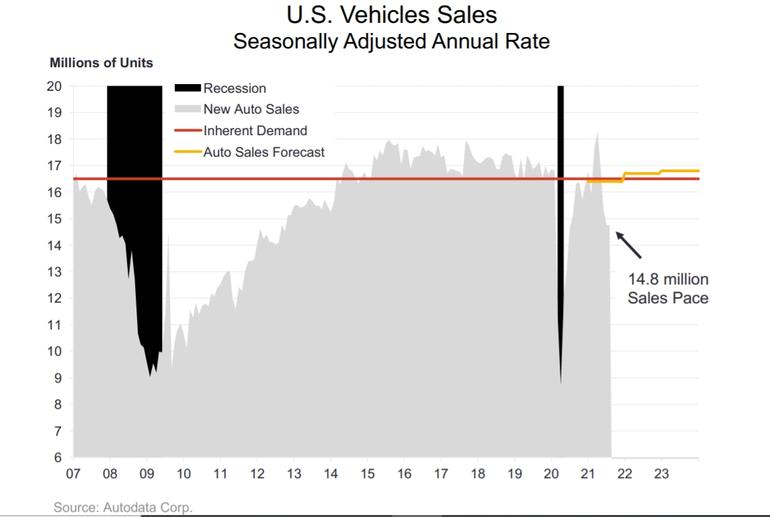
Vehicle sales fell in July to a 14.8 million unit seasonally-adjusted annualized sales rate, which is down from 3.9% from June when 15.4 million units were sold. But vehicle sales were still slightly above the 14.6 million paces set in July 2020.
“Auto sales are depressed due to the shortage of semiconductor computer chips and will remain below the 16.5 million level considered a normal auto market. The pandemic has reduced the demand for public transportation and air travel, and so has increased the demand for personal mobility and therefore automobiles. Moreover, since the majority of job losses were in lower-paying positions and not in higher-paying jobs, and most new car sales are among higher-income consumers, we expect car demand to remain strong, which will push up new and used auto prices. Price will only fall once auto production levels ramp up once supply chain bottlenecks get worked out,” CUNA Mutual stated.
Real Estate Information
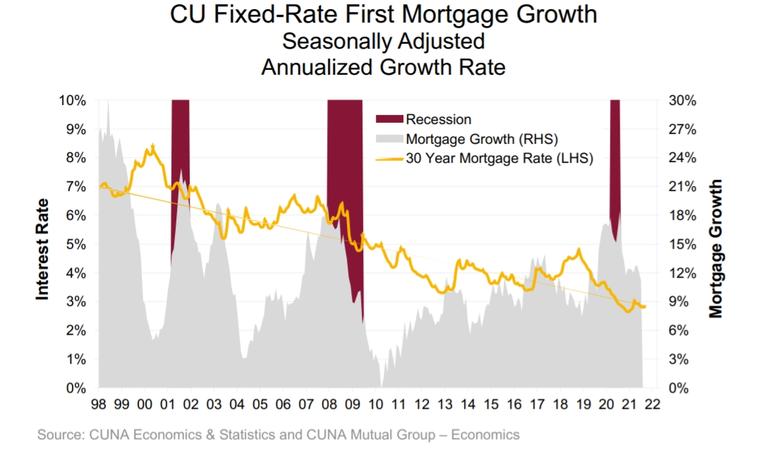
Credit unions originated a record $157 billion first mortgage loans in the first half of 2021, a 21% increase above the $130 billion in originations in the first half of 2020 and a “remarkable” 131% increase above the $68 billion in originations in the first half of 2019. Credit unions then proceeded to sell off 38% of those originations into the secondary market, a lower percentage than the 40% reported in the first half of 2020. The stage is set for a strong second half of 2021 due to the recent drop in mortgage interest rates and strong demand for purchase mortgage loans.
“We expect both purchase mortgage and refinance mortgage activity to slow by around 35% in 2022. The contract interest rate on a 30-year fixed-rate conventional home mortgage fell to 2.87% in July, down from 2.98% in June and below the 3.02% reported in July 2020. We expect the Federal Reserve to raise long-term interest rates this winter as they begin to taper their asset purchase program. This will slow home sales and therefore mortgage originations. Home prices rose 1.8% in July from June, according to the Core Logic Home Price Index, and 18% year-over-year. This is the fastest year-over-year rate of growth ever recorded. Low mortgage interest rates since the start of the pandemic have picked up the pace of home price appreciation,” CUNA Mutual Group said.
Savings and Assets
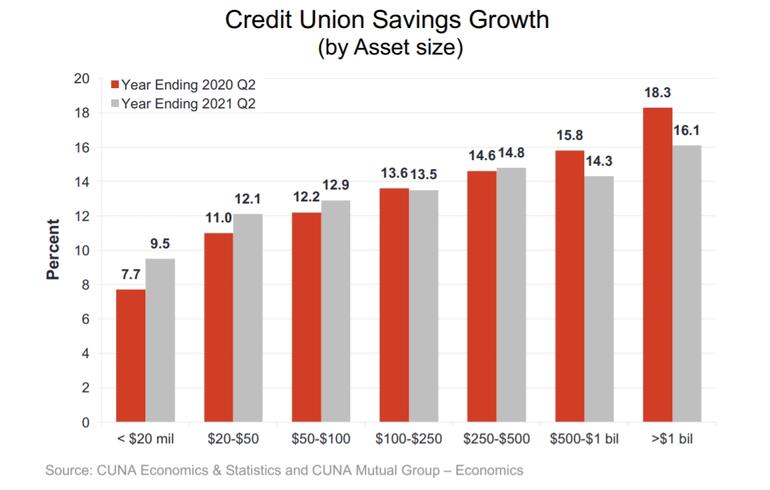
Credit union savings balances rose 1.2% in July, below the 1.5% increase in balances in July 2020 when the month ended on a payroll Friday. July is normally the weakest month of the year for savings growth due to seasonal factors such as vacation spending and auto loan down payments. But 2021 is not a normal year due to $1,400 stimulus checks and household spending curtailed from COVID-19 worries. During the last 12 months, savings balances rose a “remarkable” 14.8%, but slower than the record-setting 18.5% pace set in the year ending in June 2020, as members saved stimulus checks and saved money on gasoline purchases while staying at home. Savings growth per member is currently running at 11.1%, four times greater than the long-run average of 2.7%. According to NCUA call report data, credit unions of all sizes reported strong increases in savings rates during the last two years. We expect savings balances to grow 12% in 2021 and then decelerate to 6% in 2022.
Capital and Other Key Measures
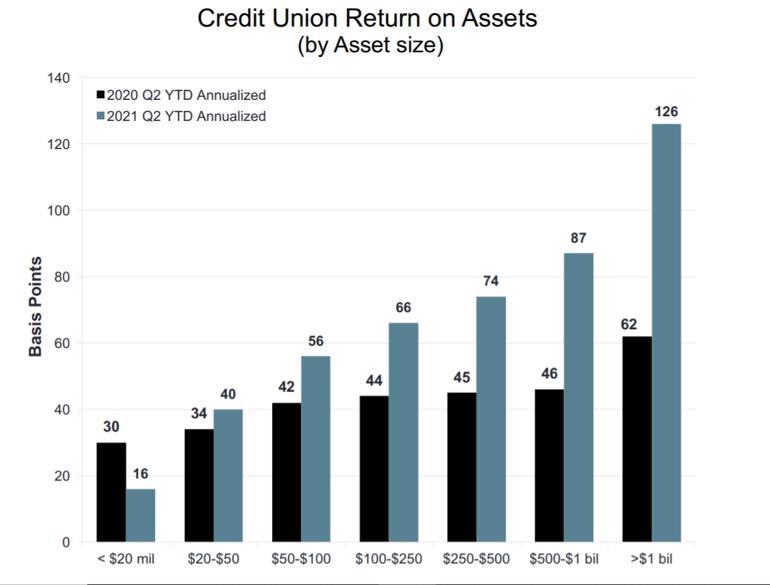
The credit union return-on-asset ratio rose to 1.11% in the first six months of 2021 on an annualized basis, up from 0.57% in the first six months of 2020. The 54-basis point increase in earnings during the last year was driven by a 51-basis point drop in provisions for loan losses as a percent of average assets, a 25-basis point drop in operating expense ratios and a 10-basis point rise in other income ratios. Offsetting those positive factors was a 32-basis point drop in net interest margins as the yield on asset ratios fell faster than the cost of funds ratios. Billion-dollar credit unions reported a larger jump in earnings compared to smaller credit unions due to larger decreases in their provision for loan losses.
Credit Unions and Members
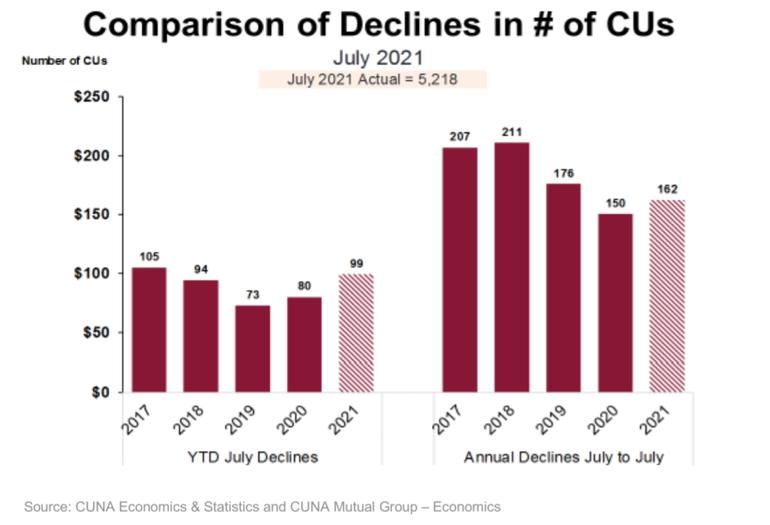
As of July 2021, CUNA estimates 5,218 credit unions are in operation, down 12 from June. Year-to-date, the number of credit unions fell by 99, which is more than the 80 reported in the first seven months of 2020. The shock of COVID-19 and the increased need for digital capabilities will increase credit union merger activity for the next couple of years. Recently released mid-year NCUA call report data shows 399 credit unions with assets over $1 billion and 292 credit unions with assets between $500 million and $1 billion. The greater than $1 billion asset category represents 7.7% of all credit unions, but more than 72.3% of the credit union system’s assets and 74.1% of the loans. The median asset size of a U.S. credit union rose to $47.3 million in mid-year, up 18.1% from the $40.3 million reported at mid-year 2020, CUNA Mutual Group explained.