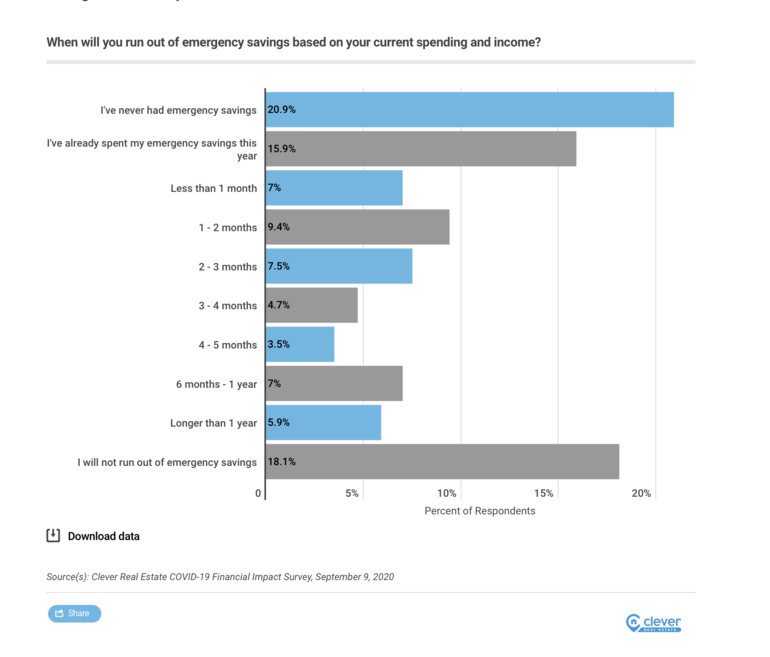
ST. LOUIS–The latest update in an ongoing series of surveys of Americans finds 61% saying their emergency savings won’t last through the end of the year or they’ve already run out of savings, while at the same time Americans overall are saying they are less worried about their financial futures than they were in April.
The COVID-19 Financial Impact Series is being conducted by Clever and launched in March. The most recent survey occurred when 1,500 Americans were polled on Sept. 9 to gain insights on where Americans stand six months later.
In the first survey 50% of respondents said their emergency savings had already run out or wouldn’t last them through the end of April. In April, the same Clever survey found 63% of respondents reported they were living paycheck to paycheck, making it impossible for them to save throughout the pandemic.
More details:
Debt and Savings Insights
· In addition to the reporting above on the 61% of Americans saying their emergency savings won’t last through the end of the year or they’ve already run out of savings, 37% of Americans have no emergency savings, 21% reported never having emergency savings, and 16% reported running out of their emergency savings earlier this year
· 74% of Americans reported seeking additional income, taking on credit card debt, digging into savings, or cutting spending during the COVID-19 pandemic to cover their living expenses
· 2.3x more people reported taking on additional credit card debt to cover expenses during the pandemic in September (18%) than in April (8%)
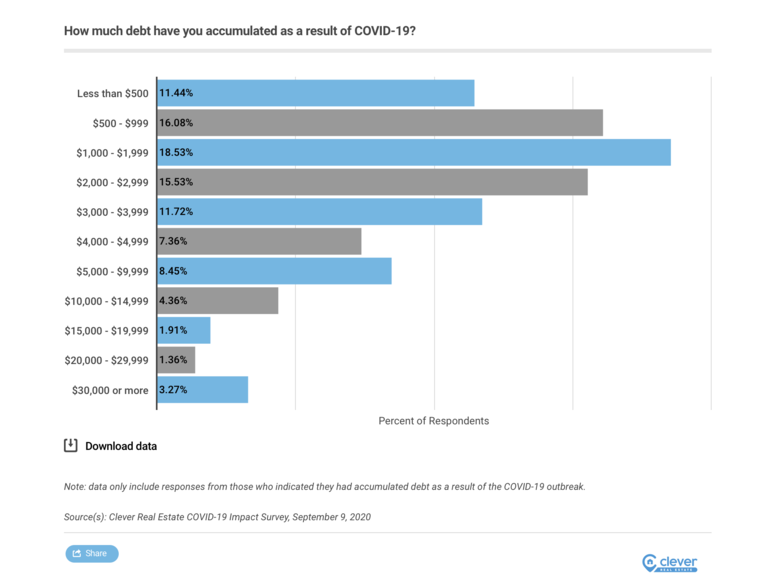
· 1-in-4 Americans reported taking on more non-mortgage debt as a result of the pandemic, and 54% of those in debt borrowed an additional $2,000 or more
· 62% of Americans reported living paycheck to paycheck in September, compared to 54% in April
· 42% of those earning more than $100k reported living paycheck to paycheck this month. Almost half of Americans (48%) reported helping out friends or family members financially as a result of the pandemic; however, 45% of those who helped reported negative effects like damaged relationships, lower credit scores, or financial problems of their own
· 33% of Americans intentionally cut their spending, 28% used savings or an emergency fund, 19% sold personal items, and 18% took out additional credit card debt to cover living expenses
Consumer Spending Habits & Concerns
Clever reported its survey also found:
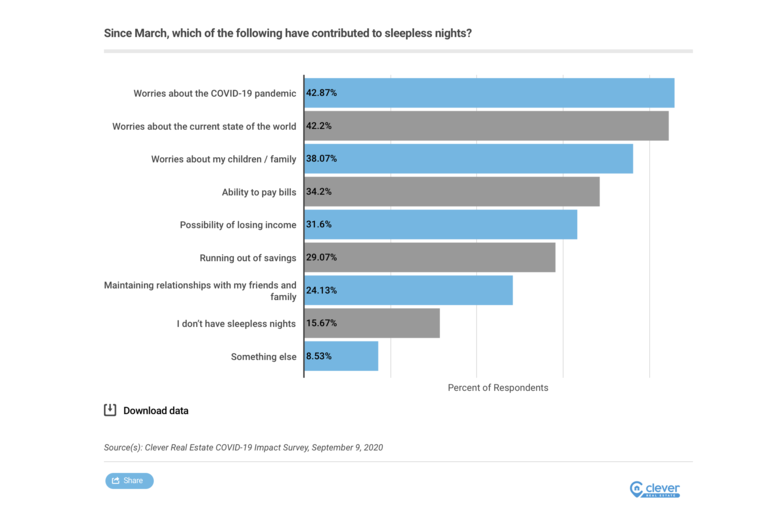
- 84% of Americans reported having sleepless nights since the beginning of the pandemic and lockdowns due to concerns about not being able to pay bills (34%), losing income (32%), and running out of savings (29%)
- In the light of the pandemic, the biggest regret among Americans is not having enough emergency savings (40%), followed closely by saving too little for retirement (32%)
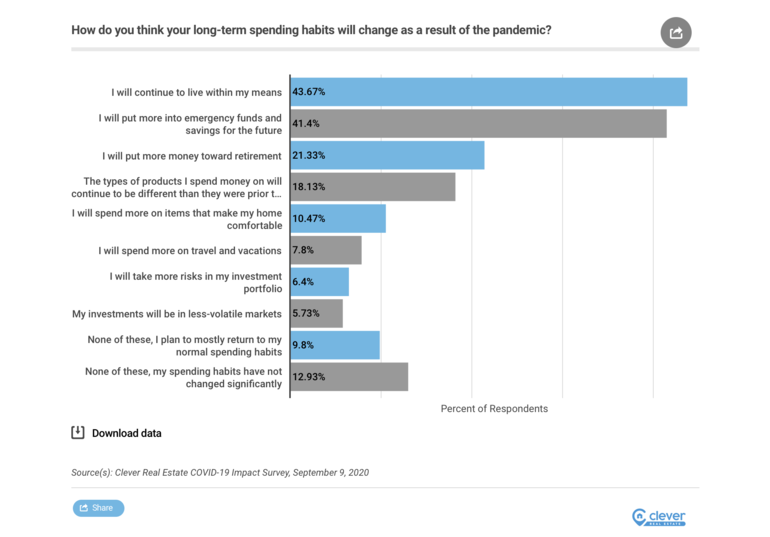
- The economic impact from the pandemic might have a long-term impact on saving and spending: 41% of Americans say they’ll put more into emergency funds and save for the future, and only 10% of Americans say their spending habits will return to normal after the pandemic
- Americans’ biggest financial concerns include job stability (40%), paying for unexpected expenses (40%), paying for everyday bills (37%), and running out of emergency funds (29%)
Homeowner vs. Renter Insights
When it comes to how homeowners and renters fee, Clever reported:
- Homeowners might not be able to pay back their deferred mortgage payments: 46% of homeowners who missed payments in 2020 reported being at least $2,000 behind on their mortgage
- 33% of renters reported missing or deferring rent payments since March, compared to 19% of homeowners missing or deferring mortgage payments
- 72% of renters are living paycheck to paycheck compared to 55% of homeowners
- Renters (30%) are twice as likely as homeowners (15%) to report not having stable income
- 39% of renters are not saving for retirement, while homeowners are twice as likely to save for retirement (78%)
- Renters were more likely to report having taken money from retirement savings, selling personal items, working a gig job, moving, and borrowing from family or friends to help cover everyday expenses than were homeowners
- On the other hand, homeowners were more inclined to take on additional credit card debt or dip into emergency savings
- Homeowners were more 25% likely to say they’ll put more toward retirement in the future than were renters
Additional details and information can be found here.