MADISON, Wis.–Is a credit union director worth the cost of a well-used Honda Civic?
The Filene Research Institute is examining that question in a new study that examines what it acknowledges is a “divisive” issue, that of credit union board compensation. The findings in the study, titled “Should Credit Unions Pay Their Directors,” are based on analysis of the 145 credit unions that operate in the 12 states where director compensation is permitted for state charters.
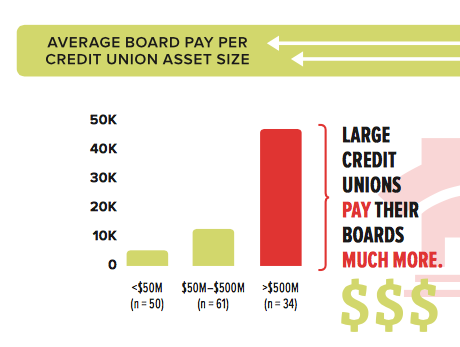
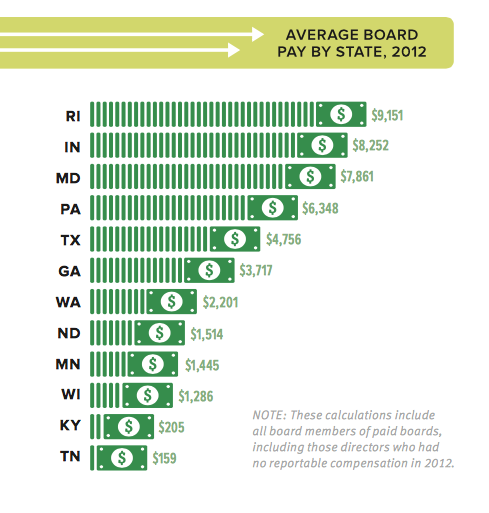
In those states, the study found the compensation for directors ranges from $60 to $37,597 annually, with an average of $4,245 (the price of a well-used Honda Civic). The number is skewed somewhat by larger credit unions, which compensate their director at significantly higher amounts than do smaller CUs.
The study was authored by Matt Fullbrook, manager of the Clarkson Centre for Business Ethics and Board Effectiveness at the Rotman School of Management at the University of Toronto.
As the study notes, federal credit unions are allowed to compensate a single board officer, but are expressly forbidden from paying other directors. Otherwise states are free to write their own rules. Tennessee and Washington recently joined 10 other states that have long allowed compensation in various forms.
“In most cases, credit union director compensation is dwarfed by fees paid to directors of commercial banks, but the pay trend is slowly catching on, especially among large credit unions,” the study observes.
The research probes what its author admits is a “divisive” question: should “volunteer” board members be paid.
“Many feel that paying boards is anathema to the cooperative spirit of credit unions,” the report states, acknowledging “that dilemma while trying to quantify just what existing compensation trends look like.”
Questions explored include how prevalent is director pay? What does it look like? And how does it affect the performance of credit unions that use it?
“We find that credit union board pay is still, on average, modest,” the report states. “Most credit unions that could compensate their boards do not, but compensation is more prevalent among larger credit unions. Larger credit unions pay directors more. Credit unions that compensate their boards perform, on average, better than credit unions that do not. That does not mean compensation causes better performance, but at least it doesn’t seem to have large adverse effects.”
But the report readily notes that just about every argument for director compensation comes with a corresponding caveat. “Yes, board pay may help you attract and retain more qualified candidates, but it could also lead to greater entrenchment among existing board members,” the study states. “Yes, paying directors allows for greater director accountability, but it could also affect credit unions’ tax exemption. And so on. “
The goal of the research, according to the author, is to lay the “the groundwork for a productive discussion.”
Beyond the discussion guide, the author also urges readers to consider five recommendations:
- Continually assess the flow of accountability and authority in your credit union. Before you get to compensation, get the board on a solid leadership footing. Without a deep understanding of the board’s legal, fiduciary, and philosophical duties, the impact of potentially valuable tools such as board compensation is limited and governance risks are magnified.
- Assess the effectiveness of your board and directors on an ongoing basis. The implementation of formal board and director evaluation processes is a good way to identify opportunities for improved effectiveness. With or without compensation, evaluation processes such as peer review yield similar opportunities at the individual director level, providing directors with guidance and highlighting when turnover may be necessary.
- If compensation is important, petition your state league. Recent compensation changes in Tennessee and Washington show that motivated credit unions can make the change.
- Create and maintain a board skills matrix. Monitoring the balance of your board’s skills is a simple and highly valuable exercise. A simple skills matrix compares the skill sets of the cur- rent directors against the skills that the board as a whole needs to function effectively. This helps to illustrate areas of strength and redundancy and any current or emerging skills gaps. Use this information to inform the compensation discussion, guide your board’s nomination processes, and search for ideal candidates.
- Monitor your governance performance. Although we do not have sufficient data to show that paying directors causes better performance, we believe that the true goals of good governance are effective leadership and decision making. With or without compensation, boards should optimize meeting time allocation, appropriately engage outside advisors, and manage the information gap between directors and staff.
“Compensation can be a valuable tool,” the report advises. “But before your board allocates real dollars for each director, make sure you can show how members will reap value from the expense.”
For info: www.Filene.org.