

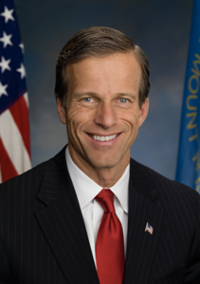
John Thune
WASHINGTON–Two U.S. senators say a bipartisan bill they have introduced could go a long way toward addressing the problem of student debt in the U.S.
Sen. Mark Warner (D-VA) and Sen. John Thune (R-SD), noting that half of all jobs paying more than $35,000 annually require a bachelor’s degree and pointing to the 44 million Americans who hold a total of $1.5 trillion in student loan debt, pointed to their own states when it comes to the situation many face. In South Dakota, more than 109,000 borrowers hold $3.3 billion in total outstanding federal student loan debt, which averages out to more than $30,000 per borrower. In Virginia, more than one-million borrowers hold $38 billion in total outstanding debt. Across America, it’s estimated that the average borrower has more than $37,000 in debt, while more than two-million student loan borrowers owe $100,000 or more — and these figures continue to rise, the senators wrote in an op-ed on Time.com.

Mark Warner
“While the federal government already provides some assistance to those who are eligible, much more can be done to help graduates responsibly pay down their student debt and help employers recruit and retain qualified candidates for good-paying jobs,” wrote Thune and Warner.’’
Expansion of Benefit
The senators said that scenario is the reason they introduced the bipartisan Employer Participation in Repayment Act. Noting employers can already contribute up to $5,250 each year tax free to help cover the education expenses of students who are working while taking classes, the new legislation would expand the benefit to allow employers to provide the same tax-free contributions to their employees who are no longer in school and help them pay down their student loan debt.
“Right now, borrowers pay taxes on any contributions their employer makes toward their student loans,” Thune and Warner said. “Our bill would help employees pay down their student debt more quickly and put more of their hard-earned money toward buying a home, starting a business, or saving for the future.”
According to the two senators, there is an “obvious benefit” for graduates, but the bill would also give employers a new tool and benefit option that would help them attract and retain top-level talent.
‘Win-Win’ Scenario
“This is a win-win scenario for graduates, for businesses and for the American economy,” the senators stated. “We know this bipartisan legislation isn’t a silver bullet. More must be done to bring down the cost of higher education and expand opportunities for those Americans who choose not to go to college. But for the millions of Americans currently saddled with student debt, our bill would begin to ease that burden almost immediately.”
Thune and Warner said they believe the bill can pass Congress and get President Trump’s signature this year, as more than one-third of both the House and the Senate have signed on as cosponsors.