

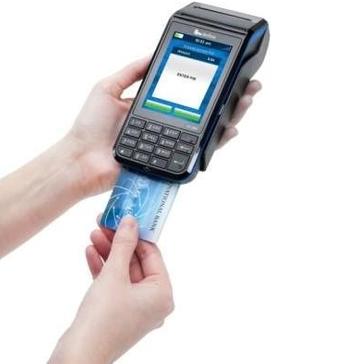
WASHINGTON–Retailers told a congressional hearing that the move to the new EMV or chip cards is “extremely frustrating” for many. But NAFCU said the retailers' complaints are really a "red herring."
During the hearing before the House Small Business Committee, one gift shop owner told Congress that making the change to chip-and-signature credit cards has been “overwhelming” for many small businesses and that owners are disappointed that without PINs they are being pressured to make an expensive investment without receiving the full level of security that could be provided.
“The EMV transition is overwhelming and expensive for an independent, small retailer,” Keith Lipert, owner of The Keith Lipert Gallery, a single-location, three-employee store in Washington, said. “Small retailers are entirely at the mercy and whims of the big players. We have no say and no way to use the marketplace to make our objections heard and our concerns valued.”
“EMV is all new to me, and banks and the networks are not contacting small businesses to help the transition in any way,” Lipert continued. “No one from my bank, processor or existing supplier even contacted me about the need to add a new EMV device, let alone a deadline by which to do so.”
Lipert testified on behalf of the National Retail Federation on EMV. The NRF has been outspoken in its criticism of the migration to EMV cards and the challenges to its members.
Lipert said a key concern is that the EMV cards being issued by banks in the United States are chip-and-signature cards rather than the chip-and-PIN cards used in virtually all other countries where EMV cards are used. He cited Federal Reserve statistics showing that using a secure, secret personal identification number to approve transactions is seven times more secure than an easily forged and often-illegible signature.
“We find it extremely frustrating that the card industry expects retailers and other businesses to upgrade when it will not allow the U.S. to adopt the most secure form of this technology – chips with PINs,” Lipert said.
Lipert said small businesses in particular are seeing “significant delays” in obtaining chip card readers or getting them certified once they are installed.
“Small business updates are simply not a priority for the hardware manufacturers, the software providers or the certification entities,” he said. “I asked my payment technology rep when I could expect new devices if I ordered it this month and was told the equipment is on backorder.”
With each chip card terminal costing as much as $2,000 when installed, software and other expenses are included, Lipert said the price is “extremely high.” And without PIN, “it makes little sense in any serious customer protection or basic return-on-investment analysis.”
Following the hearing, NAFCU President and CEO Dan Berger said, “As expected in the hearing today, retailers continued to focus on the red herring of PINs at point of sale, even though a PIN does nothing to solve the increasing pattern of fraud with card-not-present transactions, such as those that occur online. The EMV technology already makes cards safer at point of sale if a merchant is compliant.”
“While we are not surprised by their focus, we are disappointed that retailers completely disregarded the need for national data security standards,” continued Berger. “The retailers’ ‘chip-and-PIN’ argument is a smokescreen to avoid working together with financial institutions to help safeguard consumers’ valuable personal and financial information. NAFCU will continue our push for Congress to establish national data security standards for retailers and all those who handle sensitive consumer information.”