SAN FRANCISCO–A new report says it has identified the ROI that can be had when employers help employees improve their overall financial wellness and reduce financial stress.
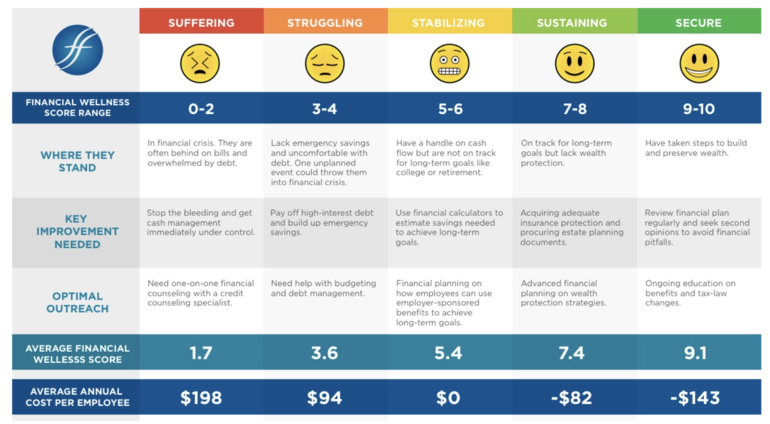
Financial Finesse said its 2016 ROI Special Report includes a case study of a Fortune 100 company’s comprehensive workplace financial wellness program from 2009 to 2014. As part of the study, Financial Finesse said it separated participants into one of five levels of financial health based on their financial wellness score: suffering, struggling, stabilizing, sustaining, and secure.
“The study found that employees who suffer from overwhelming financial stress or struggle to maintain financial stability tend to incur both immediate and future financial costs for their employer in the form of absenteeism, garnishments, payroll taxes, and delayed retirement. As employee financial health improves these costs diminish,” Financial Finesse said. “From the case study, we are able to estimate the potential cost savings of an incremental shift in the median workforce financial wellness score from 4 to 5, and for a longer-term shift from 4 to 6 (on a 0-10 scale, with 10 indicating optimal financial wellness).”
According to Financial Finesse, employers can help facilitate a shift in the overall workforce financial wellness score from 4 to 5 by offering financial education in the following areas: personal financial basics, retirement planning, and investment planning.
For employees that improved their financial wellness score from 5 to 6, the most common steps taken were: Developing a master asset allocation strategy (+142%); rebalancing investment accounts (+68%), and taking a risk tolerance assessment (+41%)
“Employees with the lowest financial wellness scores are in financial crisis. They ricochet from one cash management emergency to another,” Financial Finesse said. “Only 14% indicate they have a handle on their monthly cash flow. In general, they are spending more than they make and carry uncomfortable levels of debt.
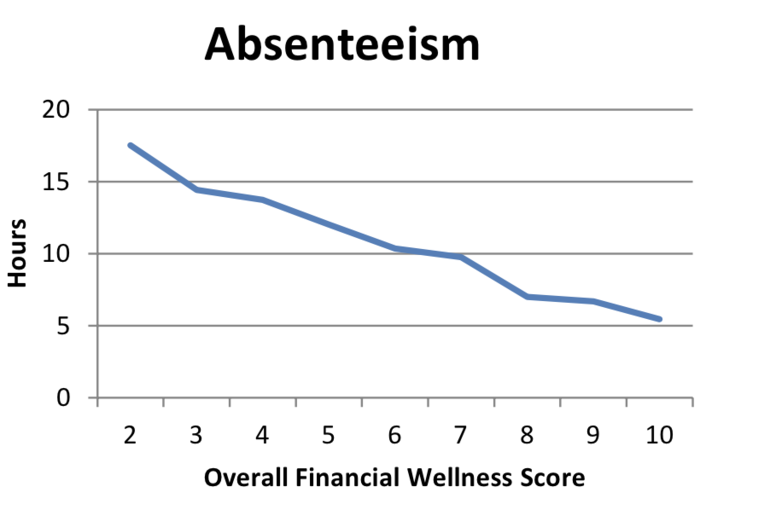
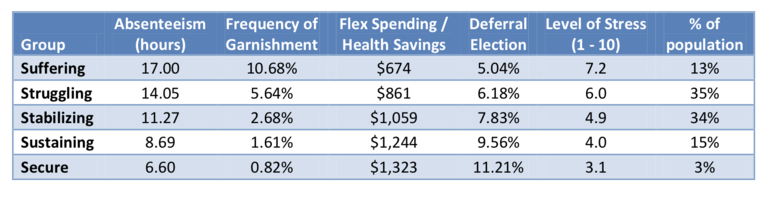
“To assess measurable costs to the employer of employee financial difficulties, the survey tied scores to incidence of absenteeism in annual hours, number of employees experiencing garnishments, and the extent of employee participation in flexible spending and health savings accounts,” Financial Finesse said. “The results coincide with our observed experience from employee consultations and present a value proposition to the employer for customized programming to promote score improvements. The data suggests the reduction of absenteeism hours accelerates as financial wellness scores improve.”