WASHINGTON—A remote workforce has led to productivity gains and operating cost savings among lenders, a new report reveals.
However, those gains came at the expense of employee collaboration, the report from Fannie Mae—Mortgage Lender Sentiment Survey (MLSS) special topic analysis—shows. The report also indicates a large majority of lenders expect to employ a hybrid workplace model going forward.
The Findings
Among the findings:
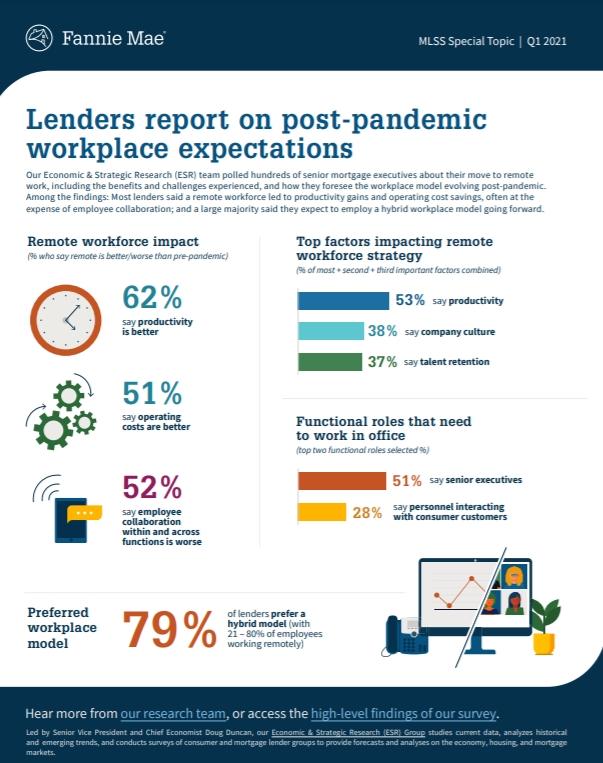
- A large majority of lenders (73%) reported a significant increase in their remote workforce compared to the pre-pandemic era. More than half of lenders said shifting to a remote workforce improved productivity and lowered operating costs; however, a majority also reported worse employee collaboration within and across business functions
- Looking longer term, most lenders expect the share of employees working remotely or in a hybrid model to be higher post-pandemic than pre-pandemic. This includes employees who may split work between in-office and remote setups. Additionally, 77% of lenders said they anticipate an increase in employee requests for long-term or permanent remote work arrangements.
- Despite this expectation, most lenders (79%) reported a preference for a hybrid model featuring a mix of remote and in-office workforces. When considering their workplace strategy, lenders cited productivity as the most important factor, followed by company culture, talent retention, and customer experience.
- Overall, the survey results indicated that while remote work has been a success, as measured by productivity gains and operating cost savings, the physical office will also play an important role in fostering collaboration, solving complex challenges, and generating ideas.
For more info: Fannie Mae Perspectives blog; access the high-level infographic, or read the research report.