NEW HAVEN, Conn. –While a new “climate of regulatory restraint from federal regulators” was again evident during Q1, according to one measure of new rules, there is also an “alarming new trend” that must be watched.
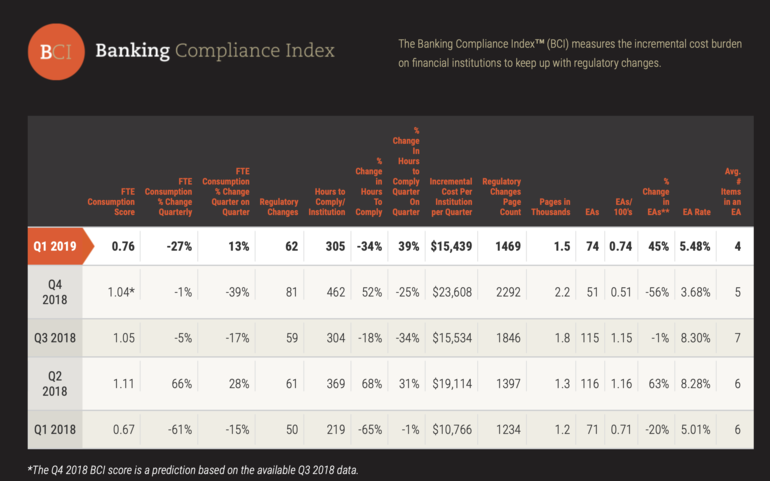
Continuity, a provider of change management solutions, said its Q1 2019 Banking Compliance Index (BCI) held steady in the first three months of the year, remaining on par with levels experienced in Q1 2017 and Q1 2018.
“These consistencies solidify new patterns in a climate of regulatory restraint from federal regulators,” the company said. “Yet bankers should be concerned about an alarming new trend: Q1 2019 was the third consecutive quarter in which more than 50% of enforcement actions by number were taken against bank officers and directors individually, versus their financial institutions.”
Credit union employees also felt the impact of individual enforcement at the frontline level, the company said.
‘Now is the Time’
“This quarter’s regulatory activity was in line with what we saw in the two preceding first quarters, so we’re starting to identify what is typical in this pro-business administration,” explained Pam Perdue, Continuity’s chief regulatory officer. “Even though regulatory change still consumes considerable human and financial resources, the pace of new regulation has slightly leveled off. Now is the time for institutions to capitalize on this trend and take advantage of this opportunity to approach compliance management intentionally and strategically instead of merely reacting to changes.”
The Banking Compliance Index, published quarterly by Continuity’s Regulatory Operations Center (ROC) quantifies the incremental burden on financial institutions in keeping up with regulatory changes, the company said. The typical $400-million community financial institution needed approximately three-fourths of a full-time employee (.76) just to keep pace with regulatory changes, not including the resources institutions are already dedicating to existing compliance obligations, according to Continuity’s calculations. Compliance costs at the typical institution averaged $15,439, and 305 hours were required to comply per institution last quarter, it added.
Likely Increase in Q2
As has been true in previous years, there is evidence that activity will elevate in Q2. According to Donna Cameron, Continuity’s director of regulatory I/O, there was a 50% increase in the number of regulatory items issued from February 2019 to March 2019. This mirrors identified cyclical patterns in compliance operations, but may differ from patterns observed in loan growth or account opening, Continuity said.
“With several major rules taking effect this spring and summer, including the Prepaid Accounts rule, Private Flood Insurance, and Payday Lending, banks and credit unions should get ready for another hectic season,” Cameron advised.
Perdue said she believes the steadier pace of new regulation may allow institutions to focus on enhancing their overall compliance culture and their compliance management systems.
How Index Is Compiled
The Banking Compliance Index (BCI) is a quarterly tracking index published by Continuity’s Regulatory Operations Center. It measures the incremental cost burden on financial institutions to keep up with regulatory changes.
The BCI is calculated each quarter using a multivariate analysis that can be weighted across different contexts and is calibrated to determine the regulatory impact on financial institutions of varying sizes, product mixes and regulatory oversight.