

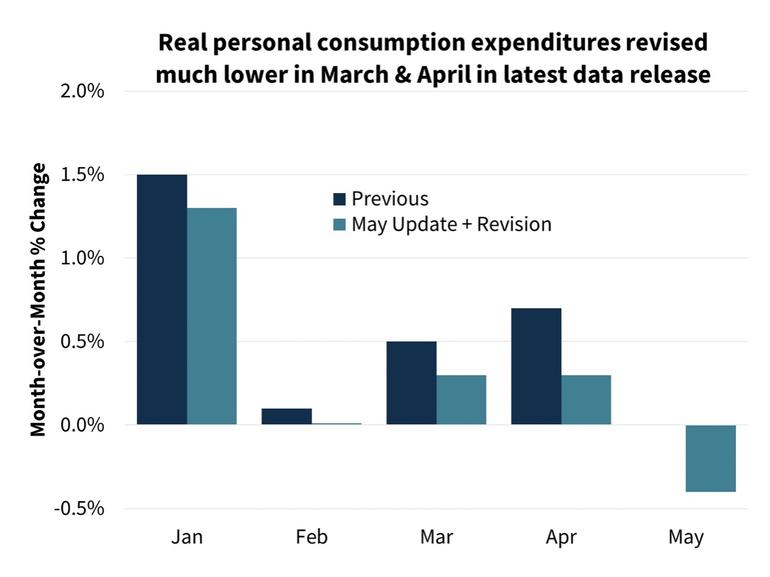
WASHINGTON—Amid record inflation and higher interest rates, expectations for full-year 2022 and 2023 real GDP growth were downgraded in July due to softening consumer spending and a downward revision to business inventory investment data, according to the July 2022 commentary published by the Fannie Mae Economic and Strategic Research (ESR) Group.
The ESR Group forecasts real GDP will increase 0.1% in 2022 and decrease 0.4% in 2023, down from the previously predicted 1.2% increase and 0.1% decrease, respectively.
Notably, reported Fannie Mae, the ESR Group now expects a recession to begin in the first quarter of 2023, earlier than previously forecast, due to the aggressive monetary policy response required of the Federal Reserve to bring inflation down from its current decade-high levels.
Moderation in Inflation Expected
By Q4 2022, the ESR Group expects inflation, as measured by the Consumer Price Index, to have moderated to 5.7% on a year-over-year basis, down from the June reading of 9.1%, and then to 1.6% by the end of 2023, below the Fed’s 2% target, Fannie Mae added.
The ESR Group also revised downward its forecast for total home sales growth in 2022 to a decline of 15.6%, compared to a decline of 13.5% predicted last month, but revised upward its home price appreciation forecast to 16% year-over-year-growth in 2022 from the previously projected 10.8%.
According to the ESR Group forecast, it continues to anticipate strong deceleration in home price growth going forward due to the lagged effects of higher mortgage rates and the slowing economy weighing on purchase demand.
Uneven Slowdown
“The economy slowed significantly, though unevenly, in the first half of 2022 on the expectation that the Fed will aggressively raise interest rates,” said Doug Duncan, Fannie Mae senior vice president and chief economist. “With inflation running well above the target rate, the market’s expectation that further, substantial monetary tightening is needed has driven interest rates even higher, and interest rate-sensitive sectors, including housing, are slowing in response.
“Homes listed for sale are increasingly seeing asking-price reductions, and both construction and home sales – both existing and new – are slowing.
“Consumer confidence measures increasingly indicate dissatisfaction with current levels of inflation, offering support to the Fed’s aggressive posture,” Duncan continued. “We continue to believe that it’s unlikely the economy will avoid a modest recession, but given recently released consumer spending and business investment data, we currently anticipate that it’ll begin in the first quarter of 2023, slightly earlier than we previously predicted.”