

MONTEREY, Calif.–Working to keep yourself and your credit union ahead of the obvious trends? Stop—and start paying attention to the non-obvious trends, instead, by doing things like reading old-fashioned print magazines that aren’t for you at all.
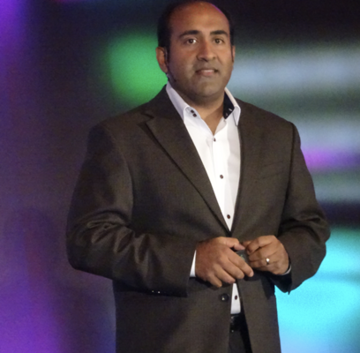
Rohit Bhargava addresses REACH meeting.
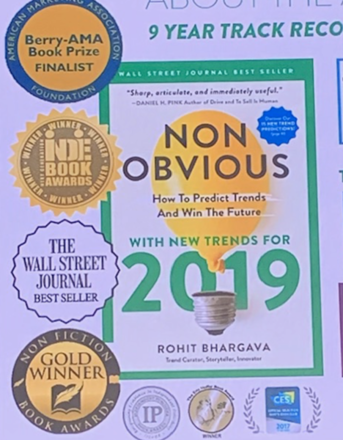
That was some of the advice given to CU leaders gathered here by Rohit Bhargava, who calls himself a trend curator, an “occasional professor” and a nice guy, who has also been the author of more than a half-dozen best-selling books, including a series on spotting non-obvious trends that can become business drivers. He also runs The Non Obvious Co.
Bhargava told the California and Nevada leagues’ REACH Conference he learned early on in life, when he was 17 and his father sent him to an engineering camp where his role became that of a “cruise director,” that he is more of a people person and it has shaped his life.
Asking ‘Why?’
His slow-starting career in advertising only began to get traction after he began to ask “why” questions, Bhargava related.
“Maybe the key to being more creative is paying attention to the things no one else sees,” said Bhargava. “I eventually started calling that non-obvious thinking. It’s not that easy to do.”
Bhargava added he has always been guided by Isaac Asimov’s observation, “I am not a speed reader. I am a speed understander.”
Three Barriers
What’s not so obvious, according to Bhargava, is there are some big barriers to seeing the non-obvious, including:
Unquestioned Assumptions. “There are things we have that are habits, things that are truths.” As an example, he cited Sr. James Dyson’s initial difficulties in getting any company to license his bagless vacuum cleaner, as every manufacturer knew they made the real money on the bags and always would.
Disruption. “We have to embrace this disruption, but what does it mean?” As examples, Bhargava pointed to the “produce butcher” who cuts up fruits and vegetables for customers in some Whole Foods stores; a food sniffer to tell you if the food has gone bad; and an app that allows you to have gas delivered to your car while it’s parked in San Francisco.
“Think about that person who is about to come into your credit union to have a meeting and they expect to have every option presented to them as the empowered consumer, and then they walk in and you present them with a financial plan that gives them one option,” said Bhargava. “Are they thinking, ‘Thank goodness someone distilled this into one option? They expect to see those now. Do we show people the undesirable option?”
The Believability Crisis. Constant sensationalism is making people feel skeptical, said Bhargava. “Marketing has to take some of the blame. We have all kinds of ads that tell us we could be better.” He showed an ad for Cocoa Krispies that included the word “Natural,” and then he asked his audience to consider how that is even possible. He also reminded Evian is just naive spelled backward.
“When it’s harder to build trust, that affects all of us,” said Bhargava. “It is harder to build trust than ever before.
Five Ways to Predict the Future
What does it take to predict the future?
“If we can see around the corner and understand people and see what other people don’t and put the pieces together, we can insulate ourselves and conquer these problems,” he told the meeting. “We can manage the destruction, be more innovative.”
Bhargava offered these five behaviors to improve one’s ability to see future trends.
Be Observant. That means paying attention to everything around you all the time.
Be Curious. “This means find something you would ordinarily never look at. One of my favorite ways to do this is to look at magazines not targeted at me, like Teen Vogue, or Modern Farmer or Hispanic Mother. Every time you do that you have a chance to step into someone else’s world. Unlike a Google search, what you see in a magazine is what I see. Algorithms create divisions. We have to be more open-minded and be independent nonobvious thinkers, and magazines are great way to do that. I get to go to all these events and learn about different industries.”
Be Fickle. “That’s usually not seen as a good thing, but being fickle with ideas means you save something and move on and find the connections later on.”
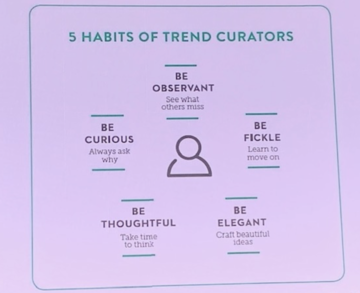
Be Elegant. “This probably comes from my English/advertising background, where we choose words really carefully. Variety of vocabulary helps.”
Be Thoughtful. “When you put these pieces together, the last piece is being thoughtful.”
Steal These Ideas
Bhargava urged credit union leaders to pay attention to some non-obvious trends that he believes will “change the future of financial advice.” He also offered some ideas to steal.
Those trends include:
Retro Trust. “We’re often unsure of whom to trust, and consumers look back to organizations and experiences with brands that have a legacy, or those with which we have a personal history.” It’s the reason Kodak is again manufacturing certain films and why vinyl records are again popular, he said.
(Kodak film, vinyl records, farmers who strategically downgrade because they know how to fix the old one).
From this, the idea CUs should steal, said Bhargava is, how to empower CU members with options. “What is the downgraded option you could offer?”
Light Speed Learning. Learning is increasingly an everyday activity through small digestible chunks of educational content and experiences about everything from quirky trivia to time-saving useful life hacks, he said.
Noting tasty cooking tutorial videos now see 500-million views per month, Bhargava asked, “How do we help our clients to get smarter faster? We have to invest our time and effort in educating our clients. The smarter they become the more indispensable we become. You have that high level of trust, and part of that means helping educate your clients.”
Human Mode. “As automation increases, people become hungrier for human touch.” He noted Tesco markets in the U.K. offer a relaxed, slow checkout line for people with dementia or people who need more time.
Idea to steal: How to use the idea of “made with empathy” as a strategy.
Back Storytelling. This is about organizations taking people behind the scenes to tell their stories. It’s all about the power of stories and emotion, he said, which is how people connect. As an example, he showed this video.
Don’t Bury Your Story, Lead with It. “How often do we show our work? How often do we show how hard we struggled to get to what they see? Or do we just show them the perfect end-result? When we show the perfect end-result we miss the opportunity to tell the story and to build trust. So don’t bury it; bring it back.”
Approachable Luxury. “Luxury is no longer defined by scarcity and privilege, but rather through experiences that put consumers at the center and create unforgettable moments. When we bucket people into one category or the other, we miss the opportunity to find out what luxury means to them.
“Rethink what luxury actually means,” Bhargava continued. “It’s not always the most expensive or most comfortable. It’s what we value most, and that’s what we want to afford, not just financially, but time and resources. Sometime the biggest luxury is more time.”