

ONTARIO, Calif.–Three credit union marketers have offered some interesting insights on what they’ve learned during the coronavirus pandemic, how tactics and investments have changed, what really resonates with members now, and what they have planned for 2021.

Michelle Hunter
Speaking to a session of the California and Nevada Credit Union Leagues’ REACH Conference titled the “New Marketing Paradigm for 2020 & Beyond,” held virtually for the first time, Erica Dias of SAFE CU in Sacramento, Calif., Michelle Hunter, of CU SoCal in Whittier, Calif., and Royce Ngiam of Partners FCU in Burbank, Calif., revealed what they have learned and are doing during a Q&A moderated by Larry Palochik, SVP-member solutions at the leagues.
Here’s a look at what was discussed:
Palochik: With the significant impact of COVID on operations, how has it changed your strategies for 2020 and beyond?
Hunter: I think we all agree 2020 has been a crazy year, but I think the question for us is not that we changed our strategy as much as we leaned into it more and into the credit union philosophy of people helping people. Credit unions…were founded as financial co-ops to help one another. Our strategic advantage is really rooted in our culture and our brand. I think our team members had a renewed calling, a greater sense of purpose in their work during COVID. We believe we are more than just a place to bank. The industry is filled with people who can count; at CU SoCal, we strive to be a place with people you can count on.
Ngiam: We have been so focused on member relationships and how we engage. From a strategy standpoint, (COVID) might be a curveball, but at the end of the day we are really committed to our mission and taking care of our members.
Dias: We had just launched last year a rebrand with a creative play on the word union to ‘YOUnion,’ putting you at the center, both for staff and for members. When the pandemic hit nothing proved more true. You were still at the center. It’s been an honor to see in the day-to-day decisions what is best for the member. You get to really test your brand in a crisis like this to see if it will stand the test of time, and that has definitely been true.
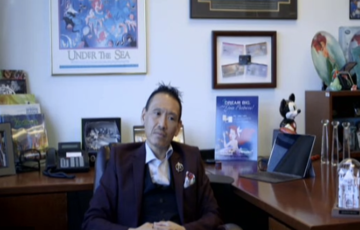
Royce Ngiam
Certainly strategies had to change in significant ways in reduced spend, for instance away from billboards due to reduced traffic, to television.
Ngiam: Our tactics have changed. We have really focused on our interactions in digital channels, allowing us to better communicate, better message, better target. We are really trying to migrate the channel analytics. We want to focus on communicating with the member in the way they want to be communicated with. It’s the how and when and upping those messages.
And then there has been all the shift away from the in-person. Members who come into a branch and make a check deposit should automatically get an email with a tutorial from us showing them, ‘Look how easy it is to deposit a check electronically.’ We have tackled this from the member experience (point of view).
Dias: We were fortunate in that we had just stood up appointment management. As those appointments served the branches so well, it helped manage the capacity, and because team members were in that member-obsessed mindset they took it to the next level and would reach out to the member in advance. Appointment times went down because the member came in prepared. We have learned we needed some more tutorials and have used internal communications to learn where we should invest our time.
Hunter: We pivoted, too, with our messaging and our frequency. We had read a Gallup poll that found there are three things consumers want from financial institutions: Build my hope, increase my peace of mind, and reduce my stress. Our messaging centered around those three pillars. We, too, have done a digital conversion that had complexities, but it was also very timely. We are saying, ‘We’re here for you, we’ve got your back.’
Tactically, we went all in on digital. The cost of digital has really decreased and allowed us to buy more and reach more people. There has also been less clutter in that space, so if you were willing to spend there, there are some great opportunities there.
We also pivoted and decided that rather than just deny loans and not communicate to the member the reason why, we are now reaching out, personally calling and coaching and counseling on what they can do to get approved. In some cases we were able to reverse some of those denials.
Palochik: In-branch physical locations remain an integral part of omnichannel. How has that changed?
Dias: I think looking to the future is really exciting. A lot of these things we have wanted to do for some time have been propelled ahead. I don’t think we’re going to see a return to the prior state. I think creativity reigns supreme as does listening to the members.
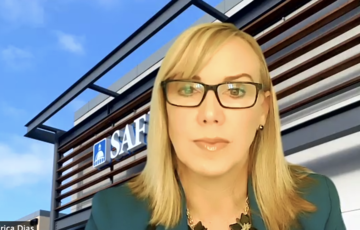
Erica Dias
For us, our workplace financial wellness is a big part of our strategy. Our workplaces where we provided on-site education were essential employers. In those circumstances we had to have a balance between the service needs of those individuals and the education needs in a safe environment. We tested and adjusted based on adoption. Some of our seminars went digital, but we also moved to offer a 15-minute consulting call. It’s not in-person, but it does have a personal touch. That has been well received.
Hunter: Where I think we’re going to see the biggest change is in ATM usage. We’re continuing to see declines in ATM usage with more contactless cards, more PTP, more shopping online. I think that shift will stick around for a while.
Ngiam: We have adapted in very much the same way. In thinking of our own cast members (Partners CU serves Disney): how do we keep everyone safe when one person exposed can wipe out the entire branch? Somebody here came up with these cohorts where we split up people into pods and shifts, working maybe Monday-Wednesday-Friday or Tuesday-Thursday. We have found ways to keep everybody working and moving forward.
More specifically, would you believe we are doing banking sessions via Zoom (with members)? It’s encrypted, password protected. I can talk to you, authenticate you. You can show me your driver’s license. There is so much we can do. Prior to COVID, we never would have thought about doing this via Zoom. It’s changing the dynamic and building the trust.
Thinking about this post-COVID. The possibilities are very exciting.
Hunter: People don’t want technology—that’s just to make things move faster--they want relationships and trust which are built on doing the right things for the right reasons. I think our members have felt our team members have a greater sense of purpose. They could see the positive difference they were making. It really starts from the heart.
I also think data is going to be huge; no longer is it great service or exceptional experience if the employee asks the member, ‘How can I help you?’ We need to be answering that before they ask and be ready and prepared through the channels they prefer to use.
Palochik: What about 2021?
Ngiam: We learned early on about changing the messaging. We are being sensitive and not being tone deaf. We brought in our branch teams and asked, ‘When you talk to our members every day, what are you saying to them?’
When we think about 2021, we are very fortunate to have a fully developed business intelligence team. What we are really talking about is how to have the most relevant message.
The second thing we are looking at is moving into content marketing. If the only reason the member is coming to us is price, we send them to another shop. To offset, that’s where the content marketing comes in with education and lifestyle marketing. We also want to be consistent in marketing in all channels. We’re probably going to see an increase in direct mail in 2021; we like email because it’s free, but not every member opens it.
Dias: One of the things we deployed last year was pretty robust media monitoring and social listening and that has given us insights we were otherwise missing. What are members are saying about us? What are stakeholder groups saying? We can see what’s resonating in the marketplace.
Hunter: One of the beauties of digital is you can pivot and shift and measure so quickly. One of the things I think we all believe that is worth noting is it really starts inhouse. For us to be successful, we can overlay all of these wonderful messages to our members, but for us it really starts with our team members and making sure we have that engagement, especially when so many of our team members are working remotely. That’s going to be our biggest challenge--keeping team members feeling like their work is valuable and purposeful and part of the larger group. That’s going to be foundational; it starts from within.