

WASHINGTON—Major weaknesses in state laws have led to practices that obscure the true cost of small installment loans, discourage safer lending, and harm customers, according to a new report from The Pew Charitable Trusts.
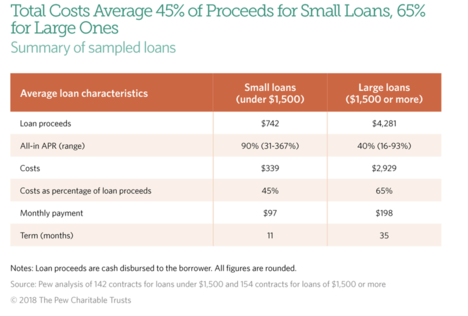
The report, “State Laws Put Installment Loan Borrowers at Risk,” found approximately 10-million Americans use installment loans annually, spending more than $10 billion on fees and interest to borrow amounts ranging from $100 to more than $10,000. The loans are issued at roughly 14,000 stores in 44 states by consumer finance companies, which differ from lenders that issue payday and auto title loans, and have much lower prices than those products, Pew noted. The loans are repaid in four to 60 monthly installments that are usually affordable for borrowers.
Saying this segment of the small credit market had not been well-studied until now, Pew noted its report found the pricing, affordability, and structure of installment loans are more consumer-friendly than those of other subprime credit products, such as payday and auto title loans.
Detrimental Practices
“However, the study also finds that state regulatory frameworks enable and often encourage three practices detrimental to consumers: front-loaded fees, stated annual percentage rates that do not reflect the total costs of the loans plus ancillary products, and the selling of credit insurance and other low-value products with upfront premiums,” Pew stated.
“Many state laws lead to unsafe lending practices that put borrowers at unnecessary financial risk,” said Nick Bourke, director of Pew’s consumer finance project. “With sensible safeguards, installment loans can be better alternatives to payday and other high-cost loans for borrowers with low credit scores.”
Recommendations Made
Pew has published recommendations for lenders, legislators, and regulators that it said will improve outcomes for consumers who use installment loans. Those recommendations include:
- Spreading costs evenly over the life of the loan. “Origination or acquisition fees should be nominal, proportional to the amount financed, and pro rata refundable to minimize lenders’ incentives to refinance loans—and to avoid harm to borrowers.”
- Requiring credit insurance to function like other standard insurance policies, “with typical loss ratios and monthly premiums rather than premiums that are charged upfront and financed.”
- Mandating that the sale of ancillary products be separate from the issuance of credit. “Credit insurance and products unrelated to the loan should be offered only after a loan transaction is completed and the borrower has either received the proceeds or been notified that the loan has been approved.”
- Setting or continuing to set transparent maximum allowable costs that are fair for borrowers and viable for lenders. “If policymakers want small installment loans to be available and safe for consumers, they should allow interest rates that are high enough to enable efficient lenders to operate profitably and prohibit ancillary products rather than setting lower rates and then permitting lenders to sell ancillary products to boost their bottom lines,” Pew said. “Existing research is mixed on the overall impact of small credit on consumer well-being, so policymakers may—as those in some states already have—effectively ban small credit by setting low rate limits and forbidding fees and ancillary products.”