

ST. LOUIS–The increase in wealth during 2021 and 2022 likely contributed to the fall in labor participation, but that trend and others is reversing, according to a new analysis by the St. Louis Fed.

The report, from the St. Louis Fed, defines labor force participation as the percentage of the civilian noninstitutional population age 16 and older that is employed or actively looking for work. During 2020-21, returns on some common asset classes—housing and stocks—were “abnormally high” and leading to large increases in household net worth, the St. Louis Fed noted.
“Standard economic theory offers a natural link between the two trends of rising wealth and declining labor force participation,” the Fed Bank analysts wrote in the report. “We call this link the wealth effect on labor supply: Holding everything else constant, an increase in wealth tends to reduce labor supply both at the intensive (how many hours should I work?) and extensive (should I work at all?) margins.”
That rise in household wealth also plausibly contributed to the fall in labor force participation in those years, with one analysis cited saying it contributed about 15% of the observed drop in LFP in that time frame.
A ‘Reversal’
“More recently, during 2022, we observed a reversal of these two trends: The recovery of labor force participation seemed to accelerate somewhat; this was especially true among older workers,” the St. Louis Fed said. “Additionally, we observed a stabilization or even reversal of the large real gains posted by asset classes such as stocks and housing observed in 2020-21.
“In 2022, the Federal Reserve started tightening monetary policy, which may have affected asset prices. Thus, standard economic theory suggests that we should have seen the opposite effects in 2022—falling asset prices and returns should have contributed to people returning to the labor force,” the analysis continued. “There are, naturally, other reasons why the LFP rate should have recovered: The risk of contracting serious illness from COVID-19 was plausibly lower in 2022 than it was in 2020, and labor markets were extremely tight. Tight labor markets mean that employers have to compete for workers, with many doing so by raising worker compensation.”
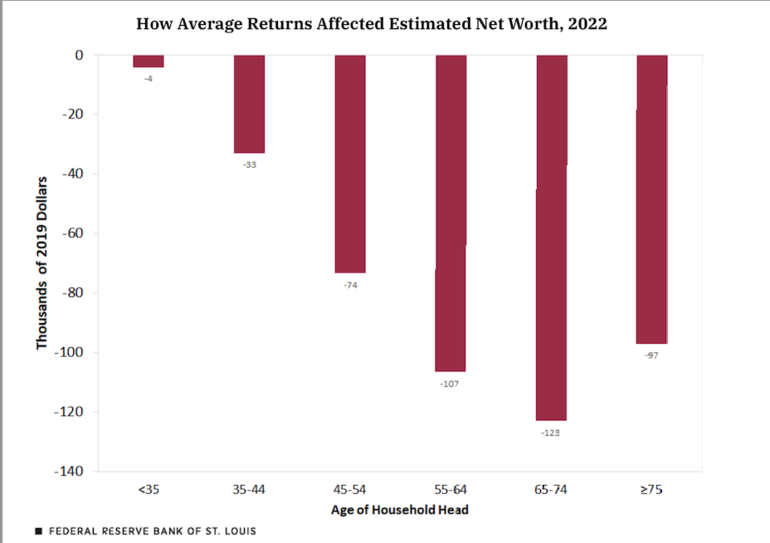
The ’Influence’
The LFP rate recovered slightly during 2022, from 61.9% in December 2021 to 62.2% in October 2022, the report points out.
“The large declines in net worth shown in the last figure could have influenced the decision to return to the labor force by many who left during 2020-21,” the St. Louis Fed stated.
Still Free in ’23! The Freshest CU Headlines. Right to Your Inbox.
The biggest, best and freshest news reporting in credit unions remains free in ’23! Each morning CUToday.info delivers its daily update offering the latest headlines and breaking news right to your email, with the easy-to-read headlines format allowing you to click on the stories that interest you most in order to learn more.
If you haven’t yet signed up for the new email solution on which CUToday.info has partnered with ResponseGenius, you can do so here. Signing up requires less than one minute of your time—and it’s free!
Please note that after signing up you may need to go to your Spam/Junk folder and mark the morning headlines email as safe. CUToday.info does not provide its list of readers and emails to outside parties, and we will not be contacting you to sell you an extended warranty or sending you any links so you may cash in on an inheritance you didn’t know was coming.
And did we mention it’s free?
Please note and/or make your IT department or email administrator aware the emails will be coming from the domains CUTodayinfo.com and CUTodayinfoReply.com.