

NEW YORK–Described as a year of “penny-pinching and Pelotons,” a new analysis of how the COVID-19 era has changed consumers has identified three key trends, including “seemingly contradictory” consumer behaviors.
The new report from The Conference Board, Consumer Behaviors and Business Opportunities in the COVID-19 Era, maps the convergence—and divergence—of those three key trends, including:
- First, a year of shutdowns and job losses has sparked a renewed focus on frugality, with many consumers switching to value-priced products, services, and brands.
- Second, even as this economic anxiety fueled vices like drinking, gambling, and overeating, COVID-19 also spurred a segment of Americans to spend more on health, wellness, and self-care—including pricey connected exercise bikes.
- Third, digital convenience has become the third key driver of consumer behavior, with the crisis-fueled all-digital lifestyle heightening expectations for what technology should deliver.
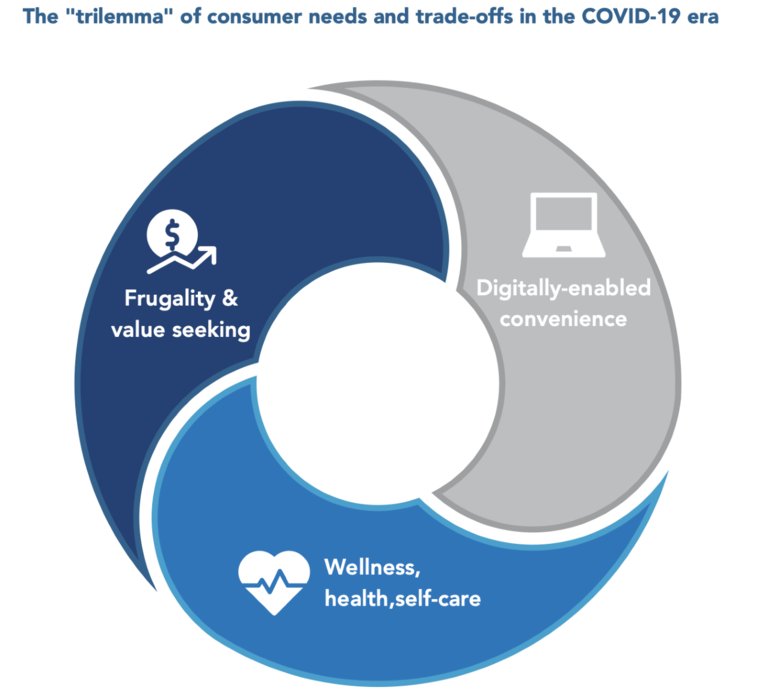
“For American consumers, COVID-19 has accelerated pre-existing trends and crystallized new preferences and priorities,” said Denise Dahlhoff, senior researcher, consumer research at The Conference Board. “The three trends promoted by the pandemic—digitally enabled convenience, frugality, and health and wellness—will continue to drive consumers’ behavior as the pandemic subsides. The most successful brands will be those that address these needs, ideally offering solutions for consumers that don’t force trade-offs but rather balance these three at-times divergent priorities.’”
Key Insights
According to The Conference Board, which also provided the commentary below, the key insights from the new report include:
- Pandemic stress drove unhealthy behaviors—but also strengthened consumers’ focus on health, personal wellbeing, and self-care.
- Infection fears aside, the economic insecurity and social isolation forced by COVID-19 has unleashed a “mental health tsunami.” Many consumers turned to familiar coping mechanisms: drug and alcohol use, gambling, less healthy diets, and under-exercising all rose during the pandemic. For trending “vices” like legal cannabis and online gambling, COVID-19 may prove to be a turning point toward broader consumer adoption.
- At the same time, the health crisis and home-centered way of life brought on by the pandemic motivated many Americans to focus on healthier lifestyles. Regardless of where people fall on the spectrum of current health behaviors, the longer-term legacy of COVID-19 may be that health, wellness, and self-care needs play an even bigger role in consumer decision making.
Opportunities Created
“This trend creates opportunities for businesses to cater to people’s health needs. It has already fed sharply higher sales in natural products, fresh produce, and anti-anxiety products and services—from medication to meditation, CBD, and aroma therapy,” The Conference Board said.
Greater Frugality
The Conference Board analysis further forecast “greater frugality and value-seeking forced on consumers by COVID-19’s economic shock may endure beyond the pandemic in significantly altered spending patterns.”
Those altered spending patterns include:
- At the peak of the pandemic, 64% of US consumers reported actively cutting back on spending, according to The Conference Board Global Consumer Confidence Survey. After a drop in late 2020, it was back up at 62% in Q1 2021. “Frugality will continue to reign for many consumers, especially if the jobs recovery remains sluggish if and when government fiscal support recedes,” the study suggests.
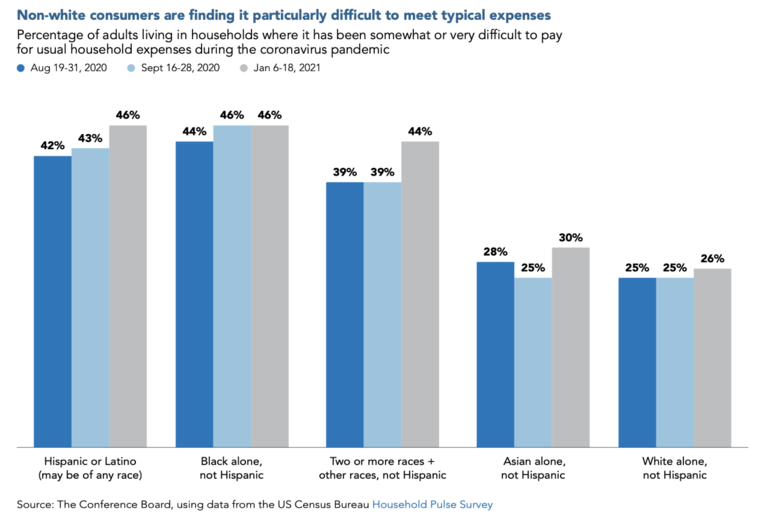
- Black, Latino, lower-paid, and less-educated workers bore the brunt of lost jobs and wages. In January 2021, over 40% of consumers in each of these demographics reported having difficulty meeting regular household expenses.
- Consumers’ focus on frugality will “reward companies that invent novel offerings and business models catering to more frugal wallets.” These include secondhand markets, rental services, and “sharing economy” businesses—all likely to be facilitated by digital features.
Accelerated Digitization
The pandemic accelerated the move to digitized lifestyles, permanently raising expectations for convenience, the report found.
Among the related findings:
- Faced with pandemic lockdowns, consumers have become accustomed to digital capabilities that save time and effort in every stage of the customer journey. In both consumer and B-to-B industries, brands will need to meet new standards: “anytime–anywhere” access, real-time information, high-quality filtering, search, and review functions, and responsive support across multiple channels.
- E-commerce surged during the pandemic, peaking at 16.1% of total retail sales in Q2 2020. This figure—a metric of where a purchase took place—dramatically understates digital’s true influence, though. Consumers now expect digital convenience at every stage of the shopping experience, even if the final sale occurs in a brick-and-mortar outlet.
- Mobile devices have become the “remote controls” of our lives—a decade-long trend intensified by the pandemic. “As 5G networks proliferate, the centrality of mobile will only become more entrenched, and must shape all business decisions in the post-pandemic economy,” the analysis states.