

CHICAGO–According to findings released by TransUnion’s global intelligence network and a specially commissioned consumer survey, the pivot to increasingly digital transactions since the beginning of the pandemic means the overall risk to individuals and organizations is even greater than it was pre-pandemic.
The study by TransUnion found 4.6% of all customers’ digital transactions globally were suspected to be fraudulent.
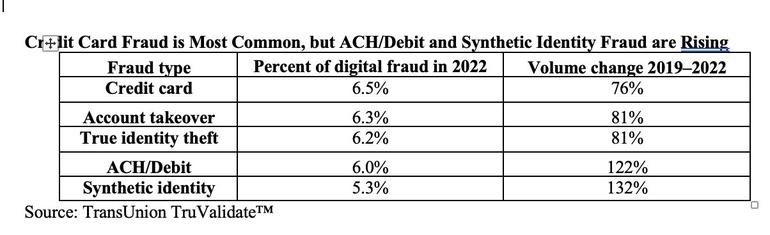
“This percentage is in line with the rates found in 2019,” TransUnion said. “However, despite the similarities to the percentage prior to the pandemic, because the number of transactions conducted digitally has markedly risen in the last few years, the total volume of suspected digital fraud attempts has increased dramatically.”
Globally, such attempts have increased by 80% from 2019 to 2022, while rising 122% for digital transactions originating in the U.S. during that time, TransUnion stated.
Bad Actors are Focused
“The pandemic crystallized the fact bad actors focus their efforts on organizations and institutions that have direct access to money, products or services with easily transferable monetary value,” said Shai Cohen, senior vice president and global head of fraud solutions at TransUnion. “While government-funded pandemic relief programs experienced headline-grabbing levels of fraud, digital fraud trends pointed to industries that saw significant growth in consumer digital engagement.”
The Top Industries Targeted
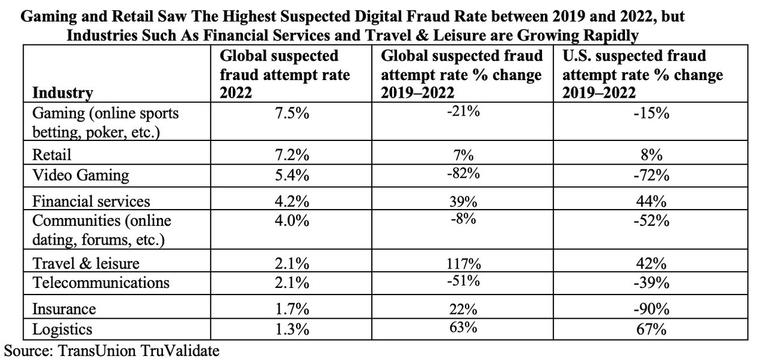
According to TransUnion, globally, the gaming and retail industries saw the highest rate of suspected digital fraud at 7.5% and 7.2%, respectively. These were followed by video gaming at 5.4%, financial services at 4.2% and communities (i.e., online dating and forums) at 4.0%.
“However, the highest rate of growth globally since 2019 was observed in the travel & leisure industry. This group saw a 117% increase in suspected digital fraud globally as more and more consumers looked to resume traveling following the pandemic period,” TransUnion said. “For transactions originating from the U.S., the travel & leisure industry also saw a significant rise in suspected digital fraud, where it increased by 42% since 2019. The logistics and financial services industries also experienced significant growth in digital fraud attempts, up 67% and 44% over the time period, respectively.
More Than Half of Consumers Targeted
The study by TransUnion surveyed consumers across 18 countries and regions globally and found 52% of respondents indicated that they were targeted by fraud via email, online, phone call, or text messaging in the three months beginning September 2022.
With U.S. respondents, 58% said they had been targeted by fraud attempts via those communications channels over the same time period, TransUnion reported.
“The explosion of digital transactions, the accelerated adoption of digital technologies, and increasing appetite for faster access to funds/credit, have led to an increase in fraud losses, particularly in digital channels,” said Naureen Ali, vice president of product management at Transunion. “Consumers are expecting organizations to protect their identities and online accounts, and those companies that do not adequately honor those preferences may lose business as a result.”
The Findings
TransUnion said its study explored other types and channels of fraud, with additional findings showing:
- 85% of calls received by its U.S. financial services call center customers were from mobile phones in 2022, just 14% of all high-risk calls were made from them last year
- Conversely, for the 3% of U.S. financial services call center calls that were made from non-fixed Voice over Internet Protocol (VoIP)—a phone number that isn’t associated with a physical address—62% of all high-risk calls into the call center came from them last year making it the riskiest channel for the call center.
Data Breaches & Synthetic Identities
The study also examined the volume and severity of data breaches over the course of 2022 and compared them to previous years, using publicly available data analyzed by Sontiq, a TransUnion company.
According to the company, results showed that the number of data breaches in the U.S. increased by 83% from 2020 to 2022. In addition to the overall increase in volume, the severity of data breaches also rose, reflected in an increase of 6% in Sontiq’s Breach Risk Score over that time period, the report added.
“These breaches have played a key role in helping to fuel an explosion in identity engineering, with synthetic identities becoming a record-setting problem in 2022,” TransUnion stated. “Outstanding balances attributed to synthetic identities for auto, credit card, retail credit card and personal loans in the U.S. were at highest point ever recorded by TransUnion—reaching $1.3 billion in Q4 2022 and $4.6 billion for all of 2022.”
The Conclusions
TransUnion said its conclusions are based on intelligence from its identity and fraud product suite, TruValidate.
“The rate or percentage of suspected digital fraud attempts reflect those which TransUnion customers either denied in real time due to fraudulent indicators or determined were fraudulent after reviewing—compared to all transactions it assessed for fraud,” the company stated.
It’s Called Fresh for a Reason. And We Offer Home Delivery. For Free!
The biggest, best and freshest news reporting in credit unions remains free in ’23! Each morning CUToday.info delivers its daily Fresh Today news update offering the latest headlines and breaking news right to your email, with the easy-to-read headlines format allowing you to click on the stories that interest you most in order to learn more.
If you haven’t yet signed up for the new email solution on which CUToday.info has partnered with ResponseGenius, you can do so here. Signing up requires less than one minute of your time—and it’s free!
Please note that after signing up you may need to go to your Spam/Junk folder and mark the morning headlines email as safe. CUToday.info does not provide its list of readers and emails to outside parties, and we will not be contacting you to sell you an extended warranty or sending you any links so you may cash in on an inheritance you didn’t know was coming.
And did we mention it’s free?
Please note and/or make your IT department or email administrator aware the emails will be coming from the domains CUTodayinfo.com and CUTodayinfoReply.com