SEATAC, Wash.–Credit unions in Idaho, Oregon, and Washington delivered $7.8 billion in economic support to their states’ economies last year, according to a new report from ECONorthwest, the region’s largest economic consulting firm.

The report, “2018 Economic Impacts of Credit Unions in Idaho, Oregon and Washington,” was commissioned by the Northwest Credit Union Association. Economists measured jobs, economic output, and income supported by credit unions. The analysis will be shared with federal lawmakers during the CUNA Governmental Affairs Conference in March, and with state legislatures in the Northwest this month, the NWCUA said.
“It’s our policy officials who originally gave us the opportunity to be cooperatives in this marketplace,” said Troy Stang, NWCUA president and CEO. “That authority came with the promise that real, tangible benefits would be delivered to the participants, the consumers, in the markets credit unions serve. The economic report gives an opportunity for credit union stories to be told.”
Direct Benefits
A large portion of the economic impact – over $603 million – was in the form of benefits delivered directly to the region’s 7.3 million members.
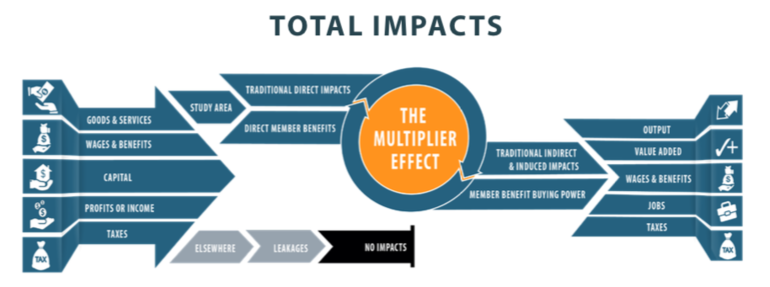
“The $603 million benefit to members is unique to credit unions because of their not-for-profit, cooperative model,” said Dr. Michael Wilkerson, ECONorthwest project director and partner. “Our analysis found that those benefits, and credit union members’ reinvestment of them in local communities across Idaho, Oregon, and Washington, generated a total impact of $1.3 billion.”
One-Half of Population
When it comes to membership, the NWCUA noted Northwest credit unions far outpace the national average of 32% of the population. ECONorthwest’s analysis tracked memberships in credit unions headquartered in the three-state region, and in credit unions with a presence in the Northwest and found that over 55% of the region’s consumers have chosen a credit union as their financial services partner.
Membership in Idaho credit unions grew by nearly 75,000 consumers since ECONorthwest performed its last analysis in the Gem State in 2017. Nearly one million Idahoans – 992,000 consumers – belong to a credit union, the NWCUA reported.
“Since ECONorthwest’s last analysis of Washington and Oregon credit unions was completed in 2016, membership has grown by 14%, compared to 3.4% population growth,” the NWCUA said. “In Oregon, 2,053,000 consumers, 50% of the population, are credit union members. In Washington, 58% of the population – 4.3 million people – belong to a credit union.”
Nearly 20,000 Employees
Credit unions in the Pacific Northwest employed approximately 18,700 professionals during the analysis year. Each job in the three-state economy supports approximately one and a half additional jobs, meaning credit unions supported a total workforce of 46,800 in the three states, the NWCUA said. Family wage income supported by Northwest credit unions was nearly $3 billion, the report found.
Support for Rural Communities
ECONorthwest said it also found credit unions offer vital financial services in rural communities.
“While many out-of-state, for-profit financial services institutions have closed branches in rural communities, local credit unions remain committed to serving these populations, providing services such as agricultural, home, vehicle, and small business loans that area consumers need,” the report states.
ECONorthwest reported that 312,000 consumers—33% of the Northwest’s rural residents—are leveraging the benefits of credit union membership.