WASHINGTON– While overdraft programs are often marketed as a service that financial institutions provide to cover occasional budgeting errors, in practice they are not well understood by consumers and often fail to meet their needs, according to a new report.
The Pew Charitable Trusts’ consumer finance project has released, “Overdraft Does Not Meet the Needs of Most Consumers,” a chart book that highlights key findings of a nationally representative survey examining the behaviors of consumers who use bank overdraft programs. Pew said the findings, based on a phone survey of more than 1,000 adults who reported having been charged a fee for overdrawing their accounts in the last 12 months, are being released during a time of year when consumers are facing financial struggles and overdraft more frequently.
According to the Pew findings:
- Nearly three in four overdrafters do not understand that they have the right to have transactions declined without a fee if their account does not have sufficient funds to cover a debit card purchase. One-in-three overdrafters treat FI programs as a way to borrow small amounts of money.
- FIs’ communication about overdraft programs is ineffective
- Even among customers who have had a conversation with their FI, understanding of overdraft programs is low
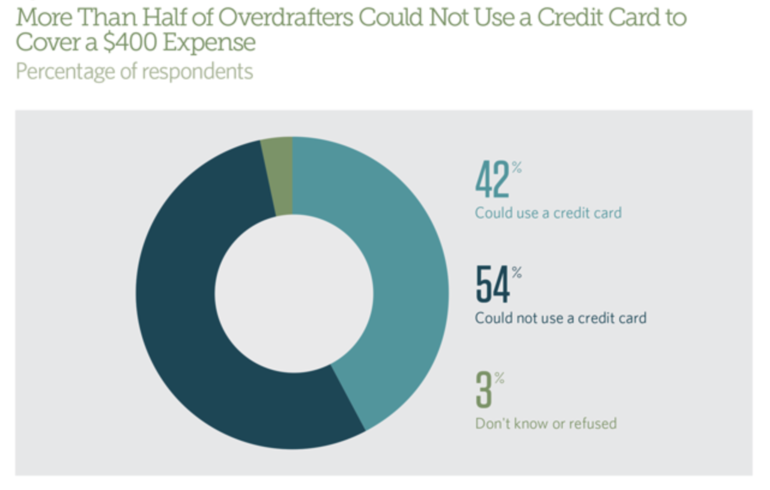
- Most overdrafters face significant financial stress, and many have inadequate access to safe and affordable credit products.
"Most consumers don’t know they can have transactions declined at no cost- that’s a multi-billion-dollar problem,” said Thaddeus King, officer of The Pew Charitable Trusts’ consumer finance project. “"Better information, stronger protections, and allowing small installment loans are the three tools to fix the overdraft problem."
Pew said its chartbook shows that a significant portion of overdrafters misunderstand their rights regarding overdraft fees, which suggests that consumers need more information and support to better comprehend and exercise those rights.
“At the same time, the research indicates that a sizable group of overdrafters use their banks’ overdraft programs as a small-dollar credit product,” Pew said. “Consumers who use overdraft as a way to borrow could benefit from access to small installment loans with lower costs, affordable payments, and more time to repay. Without such loans, many consumers will continue to use expensive overdraft programs—as well as high-cost nonbank credit, such as payday loans—to cover expenses.”
Pew said it found that among those who have overdrawn their accounts in the past 12 months, more than half are “heavy overdrafters” (at least three overdrafts per year). Most of the heavy overdrafters—as well as nearly 70% of all consumers who paid debit card overdraft fees in the past year—did not know that they have the right to have debit transactions declined at no cost, Pew reported.
“Banks automatically decline onetime debit and ATM overdrafts without a fee unless the customer has opted to have such transactions processed for a fee,” the report states. “However, among overdrafters who think their debit overdraft would be declined, 54% wrongly believe they would be charged a fee. This suggests that many consumers do not understand their rights and may be opting in to overdraft programs based on incorrect assumptions.”
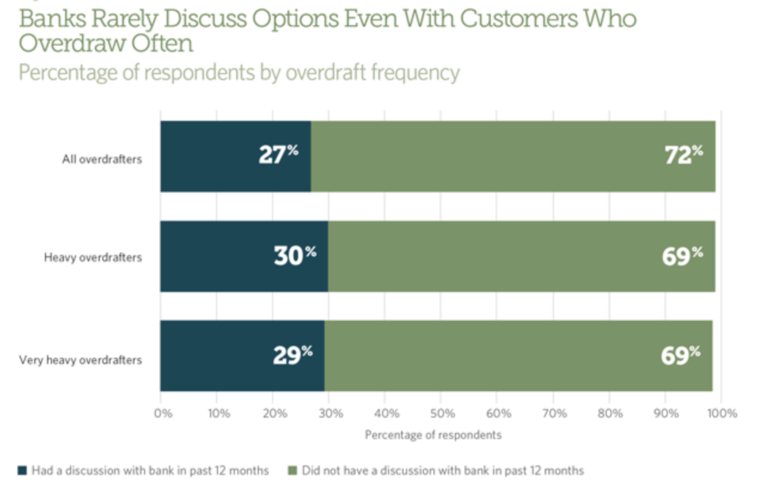
Pew said it found fewer than 30% of overdrafters have discussed options with their bank in the past year. Even among heavy and very heavy overdrafters, such conversations are uncommon, it said.
“Among the minority of overdrafters who say their banks have discussed alternatives with them, the information provided does not appear to have enhanced understanding of their rights,” Pew added.
In releasing its findings, Pew advocated for successful policy to include three elements:
- Better information for consumers about their right to have debit card transactions declined without a fee.
- Limits on the number of overdraft penalty fees that each consumer can be charged annually and heightened regulatory scrutiny to prevent frequent overdrafting.
- Clear regulatory rules or guidance permitting banks and credit unions to offer small installment loans profitably with streamlined underwriting and compliance standards.
“Bank and credit union regulators should act to enable institutions within their purview to offer small installment loans with payments of no more than 5% of an applicant’s paycheck,” Pew said. “Such products have been endorsed by numerous banks, credit unions, trade associations, nonprofit organizations, and editorial boards.”
For the complete analysis, go here: http://www.pewtrusts.org/en/research-and-analysis/issue-briefs/2017/12/overdraft-does-not-meet-the-needs-of-most-consumers