

LAS VEGAS–Credit unions are at the cusp of a “Renaissance,” and history offers some reasons to be excited as well as cautious, according to the leader of the Filene Research Institute.
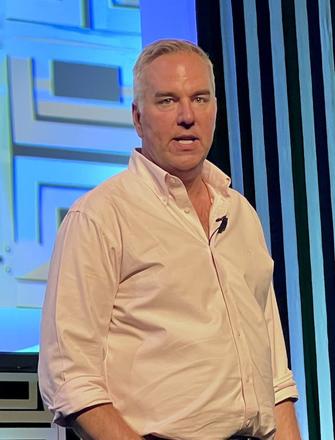
Mark Meyer
In remarks to Origence’s Lending Tech Live event in Las Vegas, Mark Meyer focused on three themes:
- The credit union “Renaissance”
- Emerging consumer and industry trends
- Key areas of focus in 2023 and beyond, including lending opportunities and the value of data.
Noting the events of the last few years, Meyer shared this quote from Arundhati Roy: “Historically, pandemics have forced humans to break with the past and imagine their world anew. This one is no different. It is a portal, a gateway between one world and the next.”
Meyer reminded that after the Spanish Flue pandemic of 1918 there was a decade now called “the Roaring Twenties.”
Shift Happens
“If you look underneath what’s happening, shifts are happening. They are big shifts, and they are rapid,” he said. “My hypothesis is we are undergoing a Renaissance, but we just don’t feel it. Just like the scholars who went back to Roman and Greek History for inspiration after the Middle Ages, we see credit unions going back to their roots and building on their strengths.”
Meyer said there are reasons to believe credit union strengths can overcome threats that include fintechs big banks, rising rates, and tighter margins. Those reasons include “focusing on what your credit union does well, leveraging those strengths to show and improve member value: that is the path to see those threats.”
Leaning Into the Model
Meyer urged credit unions to think about the industry’s long-term motto: Not for profit, not for charity, but for service.
“In a crisis, you are there,” said Meyer. “You are the core of the business model—(lenders) are the fiduciaries of that. You put the deposits out into the world and create economic opportunity. You have a model that gives you the ability to think beyond the next quarter, but into the next quarter and the next season.”
Meyer said it’s no surprise the CU business model is under duress, given the uncertain operating environment, accelerating competition and digital delivery, among other challenges.
But for those CUs that don’t want to be “investment clubs,” Meyer advised, “Doubling down and identifying the right lending opportunities in this environment is critical.”
Can Credit Unions Win?
To win, Meyer advised credit unions to “play to your strengths. And to do that will require CUs to think about how they compete in a digital world. He asked attendees when was the last time they attempted to join a CU online? His shared his own experience in recently doing so, noting the credit union responded by saying it could deliver a debit card in nine days.
“Ever applied for an Apple card?” he asked, referring to the instant approval and delivery of card.
To that end, Meyer urged CUs to think about themselves in terms of ubiquity, convenience, ease of use, value and security.
He told CUs they are “under attack,” and much of that attack is coming in payments, especially in the form of what he dubbed “pinhole leaks,” a reference to all the payments cards, stored value cards and more on which members have placed their funds.
“Do you know how much money is going from your members to Starbucks? How much is going to crypto?”
Key Areas of Focus
Meyer said the first opportunity for credit unions in the current market is home equity lines of credit, given the increased home values most members have seen. The second opportunity lies in the heavy debt loads many members are carrying, offering opportunities for loan consolidation. And the third opportunity, according to Meyer, is financial wellness, especially given that debt and the stress it is causing.
Looking to auto lending, the reason CU Direct (now Origence) was created, Meyer pointed to a number of factors increasing volatility and the likelihood the composition of auto loan portfolios of the future will look very different from those of today (with loans for more shared driver vehicles and shared autonomous vehicles).
“Are we prepared for those kinds of portfolios?” he asked. “Change is afoot.”
Other loan portfolios are also transitioning, Meyer said, as CUs not only need to be looking at new lines of lending business, but also will be lending more deeply into various markets, including doing more preapprovals, using trended and alternative data, credit-building products, and moving into new acquisition channels.
He urged CUs to also look at where they have “gaps” when it comes to meeting the life-events of members, including costs related to caregiving and even death.
Meyer said Filene research has also found opportunities for CUs in expanding opportunities in ITIN lending for immigrants, many of whom are undocumented and who need funds, including to become citizens.
He added that Filene offers a toolkit for CUs looking to begin offering ITIN loans.
The Key to Relevance
According to Meyer, member compatibility is the key to growth. Compatibility, he said, is the fit between member needs/expectations and what the credit union offers.
Finally, he urged CUs to take advantage of the trust consumers have in them.
“Trust” is one way to win, “but part of your trust is how you operate digitally,” he said. “Trust is the critical differentiator.”
However, digital delivery, especially self-service, can flatten the experience and make it difficult for credit unions to stand out, he added.