

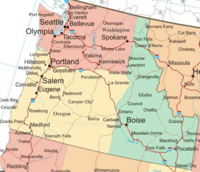
BOISE, Idaho/TIGARD, Ore./SEATAC, Wash. — The Northwest Credit Union Association is reporting that in the three states in which it represents credit unions a number of advocacy achievements have been accomplished.
The NWCUA said its “Advocacy Army” also saw the passage of a series of significant bills beneficial to the region’s 175 credit unions and 8.1 million consumer members.
Among those achievements, according to the NWCUA:
Idaho
Three legislative proposals directly related to credit union operations passed in Idaho, including:
- HB 49, Emergency Perfection of Vehicle Title. The NWCUA said it worked with legislative leaders and theIdaho Transportation Department (ITD) to provide an emergency protocol to protect financialinstitutions from losing their legal lien rights on secured assets during a titling backlog brought on by the pandemic.
- SB 1102, Electronic Titling and Registration for Vehicles. “This bill allows third party vendors to apply for a technology license at the Idaho Transportation Department, to electronically process vehicle titles and registration through a secure platform tied to the ITD Titling and Registration System,” the association said.
- SB 1131, Garnishment Alignment and Clarification. “The bill aligns Idaho’s garnishment “look back” period with the look back period established in federal garnishment statute, according to the NWCUA.
Oregon
Two “priority bills” passed in Oregon include, according to the NWCUA:
· HB 3079, Updating the Credit Union Act. “This legislation removes barriers for credit union investments in CUSOs, modernizes the language on emergency mergers, and maintains state- chartered credit unions’ abilities to obtain parity with federal credit unions.”
· HB 3080, Scan Identification Bill. Effective Jan. 1, 2022, the law will allow credit unions to scan a driver’s license or state issued ID card to process loan or deposit account applications, after obtaining a member’spermission to do so, the NWCUA said.
Washington
Credit unions and municipal governments saw key public funds legislation pass in the Washington StateLegislature this session, the NWCUA said, including:
- SB5016, Municipal Access to Local Financial Services. “Passing with broad, bi-partisan support, this new law gives municipal governments the ability to deposit unlimited public funds in credit unions, providing them with more competitive and safe investment options,” the NWCUA said. “The law previously excluded unlimited public funds deposits in the state’s five largest counties. While the legislature adjourned before a bill to update the Washington Credit Union Act could receive a full Senatevote, the measure is already officially in the queue for the 2022 session.”
An Inclusive Process
The NWCUA said it has worked closely with member credit unions in determining short-and long-term advocacy priorities, and that every two years a State Issues Work Group (SWIG) is convened in Idaho, Oregon, and Washington to “think broadly about opportunities to modernize the state’s credit union act, discuss challenges and pain points, and consider ideal legislative and regulatory flexibilities that would enhance services to members.”
Participants include branch and operations level professionals, legal counsel, compliance experts, CFOs, and CEOs. In addition, NWCUA noted it hosts a Governmental Affairs Committee in each of its states, all of which meet several times a year. In 2021, nearly 100 members were actively engaged in the GAC process.
‘Best Environment Possible’
“NWCUA, the State Issues Work Groups, and the Governmental Affairs Committees are committed toprotect and evolve the best operating environment possible,” said Jennifer Wagner, NWCUAs EVP and chief advocacy officer. “This work is always done with the members’ best interests in mind, so consumers canchoose, and do choose not-for-profit, cooperative credit unions as their trusted financial partners.”