

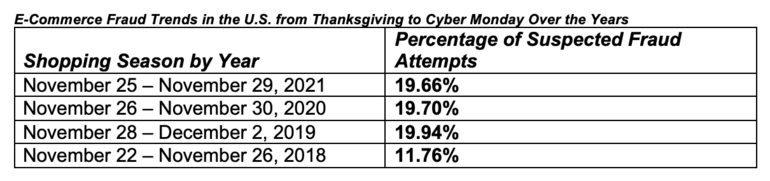
CHICAGO– A new analysis from TransUnion has found 17.46% of all global e-commerce transactions between Thanksgiving and Cyber Monday were potentially fraudulent, with numbers slightly higher in the U.S., where 19.66% were suspected fraudulent.
TransUnion said the number of suspected e-commerce fraud attempts during the 2021 holiday shopping season was also a 25% increase over the 15.73% of fraud attempts observed earlier in the year (Jan. 1 to Nov. 29).
Globally, the percentage of suspected fraudulent e-commerce transactions from Nov. 25-29 was about 4% higher than the same period in 2020, when the rate was 16.83%, according to TransUnion. In the U.S. the percentage remained relatively flat compared to last year when it was 19.70% during the Thanksgiving to Cyber Monday holiday shopping period.
The company said the findings are based on intelligence from billions of transactions contained in TransUnion’s fraud analytics solution suite, TruValidate.
Top Two Reasons
“The analysis also observed the top two reasons for potentially fraudulent e-commerce transactions between Thanksgiving and Cyber Monday,” TransUnion said in releasing the findings. “The top reason was the number of accounts per device – which triggers when a device has accessed the minimum number of accounts during the set time period.”
The second was evidence exists – which occurs when an account or device has previously had a fraudulent transaction, TransUnion added.
“The holiday shopping season is a popular time for bad actors to engage in fraudulent activity, particularly in the e-commerce and retail industry,” said Shai Cohen, senior vice president of global fraud solutions at TransUnion, in a statement. “Online shopping is the new norm for the majority of consumers and that trend has been further accelerated due to the COVID-19 pandemic. Consumers want to shop with online retailers that not only provide a seamless user experience, but also take consumer security and privacy seriously. It is imperative that those businesses equip themselves with the proper tools to better assess the overall risk of a potential fraudulent transaction without inhibiting the consumer journey. ”
More Concern, Yet More Attempts
According to TransUnion, the spike in fraud attempts is occurring even as more consumers concerned about holiday fraud.
“These trends and spike of fraudulent activity early in the shopping season, compared to the rest of the year, aligned with TransUnion’s recent Consumer Holiday Shopping Report,” the company said. “The report showed that 50% of consumers have a positive view of additional identity validation requirements at check-out, while 45% are neutral, saying the requirements don’t affect shopping habits. However, 15% say not having enough security on a site is their top reason for abandoning their cart. Additionally, one-in-four consumers cited they are more concerned about becoming a victim of digital fraud this holiday season compared to last year.”
The report also found that in anticipation of supply chain issues and possible low inventory, 33% of consumers are shopping earlier this year. With consumers shopping earlier and conducting much of their shopping online, TransUnion said its analysis found that in the U.S., Saturday, Nov. 27 was the day with the highest percent of suspected digital fraud attempts at 21.99%.
TransUnion’s holiday fraud trends can be found here.