NEWARK, N.J.–Nearly half of all federal workers and contractors who missed paychecks during the recent partial government shutdown fell behind on their bills, according to new research.
One interesting finding: The federal workers were actually better prepared to weather missed paychecks than Americans in general.
The research, conducted by Prudential and titled “Financial Fragility: How the Shutdown Affected the Household Finances of Federal Workers,” was conducted Jan. 29-31 among 352 furloughed or unpaid federal workers or contractors. The shutdown lasted 35 days before ending on Jan. 25, 2019.
The Findings
Among the findings:
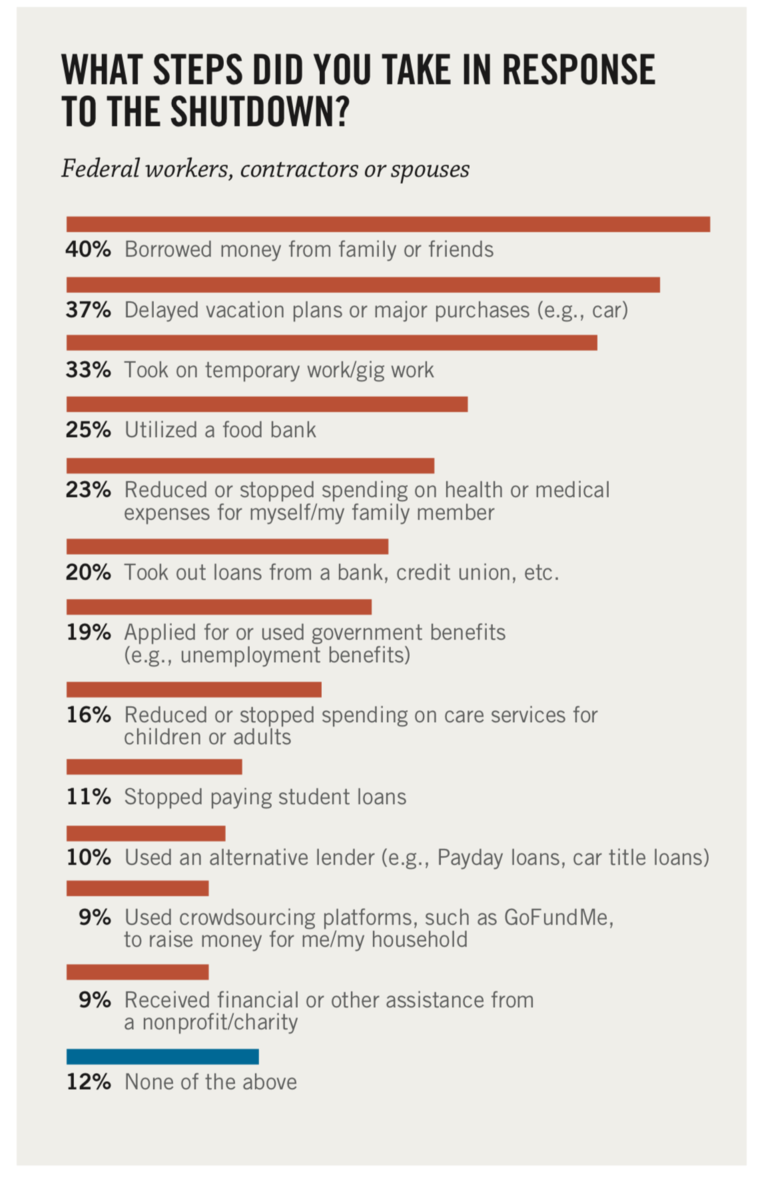
- Federal workers’ physical and emotional wellness suffered along with their financial wellness. Eighty-three percent of survey respondents reported an uptick in their overall stress levels as a result of the shutdown, including 50% who were “much more stressed.” Twenty-three percent reduced or stopped spending on health and medical expenses for themselves or family members during the shutdown, and 16% reduced or stopped spending on care services they normally provided for children or adults.
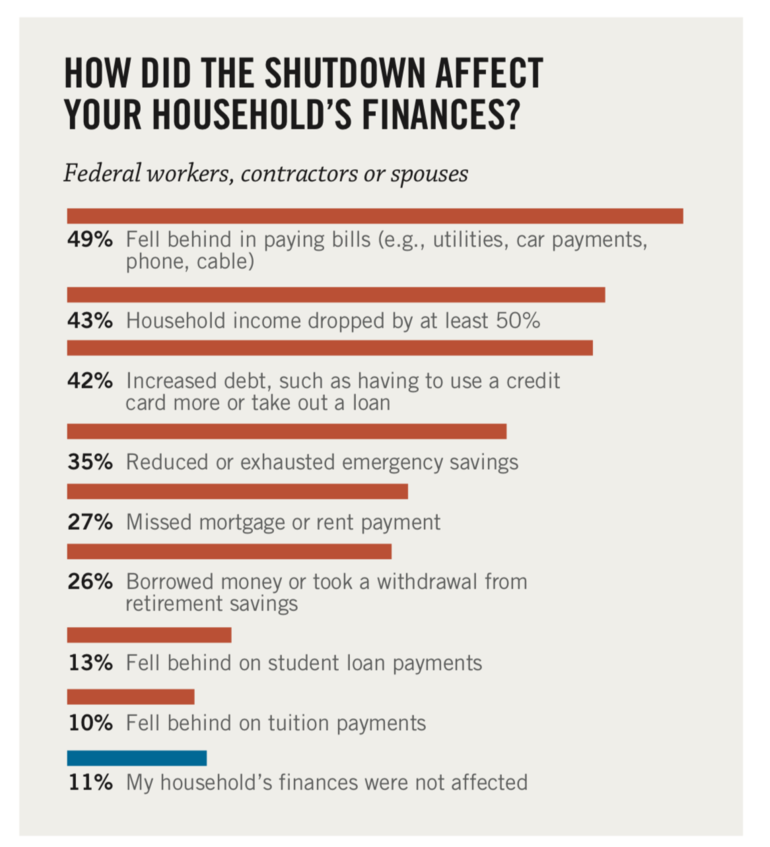
- Household finances took a hit. Forty-nine percent of survey respondents fell behind on their bills. Twenty-seven percent missed a mortgage or rent payment, 13% fell behind on student loans, and 10% missed a tuition payment. “Falling behind on bill payments could have consequences that extend long past the shutdown,” said Prudential in its analysis. “Some federal workers may find that missing these payments has compromised their credit score, for example, which could make it harder to secure financing for a big purchase like a house or car, or simply make the cost of borrowing to do so higher. In turn, that could make it harder to save for long-term goals like retirement or manage other day- to-day expenses.”
- Retirement savings accounts were compromised. Twenty- six percent of survey respondents said they dipped into their retirement accounts to pay bills or manage other day-to-day expenses during the shutdown, either by borrowing from their account or taking an outright distribution.
- Workers turned to family, friends and lenders for money. Forty-two percent of survey respondents took on new debt to help meet financial obligations and day-to-day expenses during the shutdown. Some tapped multiple sources. Forty percent borrowed from family or friends, 20% borrowed from a bank or credit union, and 10% borrowed from an alternative lender. In addition, 25% utilized a food bank during the shutdown, and 9% turned to crowdsourcing platforms to raise money.
- Federal workers entered the shutdown more likely to have emergency savings than the general population. Sixty-one percent of survey respondents said they entered the shutdown with $1,000 or more in emergency savings, compared with just 46% of the general population. Twenty-nine percent of federal workers and spouses said they had emergency savings of less than $1,000, versus 14% of the general population. Just 11% of federal workers and spouses reported having no emergency savings heading into the shutdown, versus 40% of the general population, Prudential reported.
- Still, in a majority of cases, federal workers burned through most or all of their emergency savings. Sixty-two percent of surveyed federal workers and spouses said they depleted all or most of their emergency savings during the shutdown. Thirty-one percent spent less than half their emergency savings, while 8% said they didn’t spend any of their savings. Households with two federal workers were most likely to have emergency savings over $1,000, with 81% of those households saying they did. Nonetheless, they also were most likely to have used the bulk of their savings.
Research Supplement
Prudential said the research was designed to supplement its 2018 Financial Wellness Census, which polled more than 3,000 Americans on how they are managing their day-to-day finances, saving for long-term goals like retirement and protecting themselves against common financial risks. The Census found the country almost equally split between those who are financially healthy and those who are struggling to meet current living expenses and save for long-term goals, Prudential said.