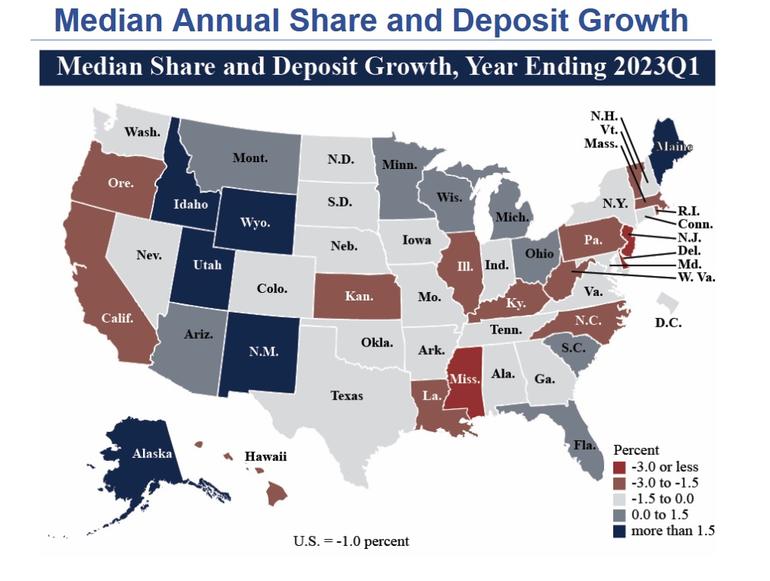
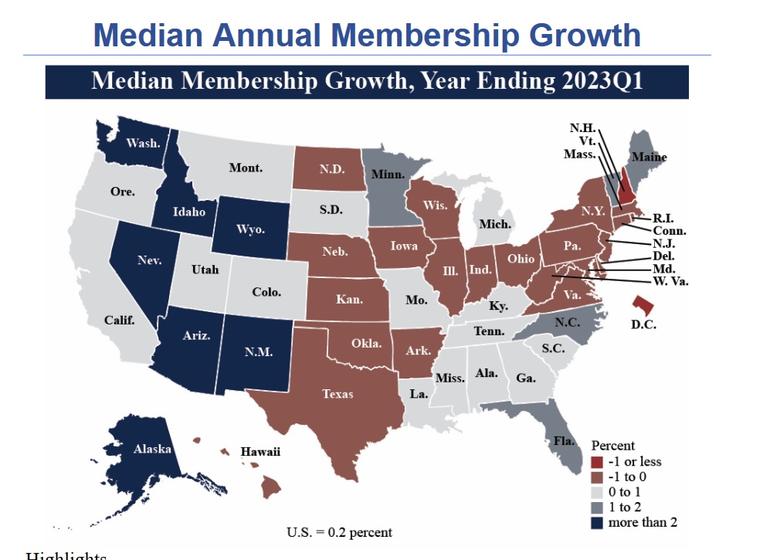
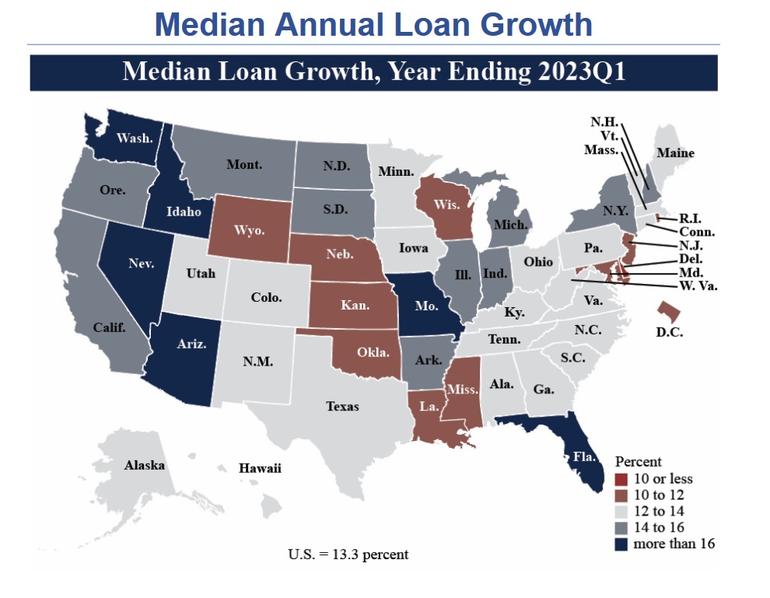
ALEXANDRIA, Va.—Idaho is leading the way in asset (7%) and share and deposit growth (3.8%) among federally insured CUs, while Alaska (5.9%) and Nevada (20.3%) outpaced all others in membership and loan growth, respectively, NCUA reported, citing Q1 data.
Overall, for federally insured credit unions, median asset growth and growth in shares and deposits declined slightly over the year ending in the first quarter of 2023. At the same time, loans outstanding grew at the median, according to NCUA's Quarterly U.S. Map Review
According to the agency, while aggregate assets in federally insured credit unions continued to grow during the year ending in the first quarter of 2023, at the median, assets declined 0.1%. In the year ending in the first quarter of 2022, the median asset growth rate was 5.2%.
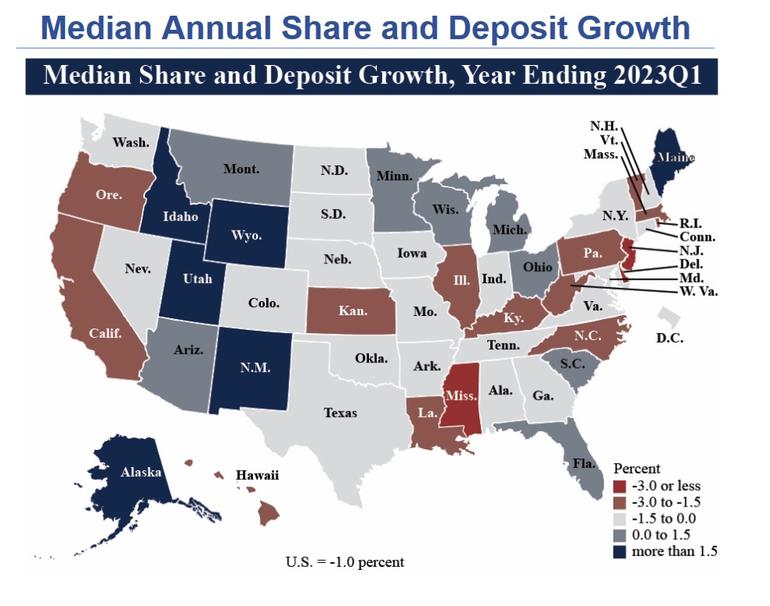
Nationally, shares and deposits continued to increase in the aggregate during the year ending in the first quarter of 2023, while the median growth in shares and deposits was negative 1.0%. In the year ending in the first quarter of 2022, the median growth rate in shares and deposits was 5.7%, NCUA said.
Other Data Points
Other data points released as part of the Quarterly U.S. Map Review include:
Loans
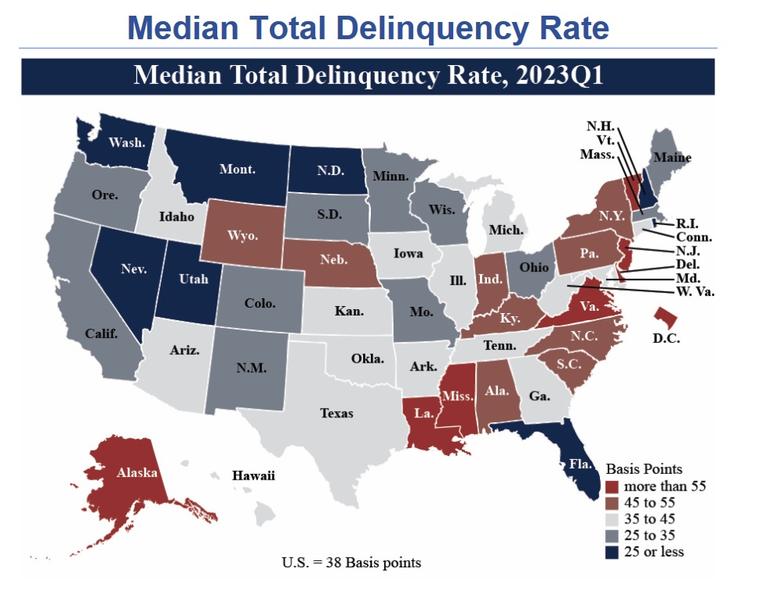
Loans outstanding rose 13.3% at the median over the year ending in the first quarter of 2023. During the previous year, loans grew by 4.6% at the median. The median total delinquency rate among federally insured credit unions was 38 basis points at the end of the first quarter of 2023, compared with 32 basis points in the first quarter of 2022, the data show.
Net Income
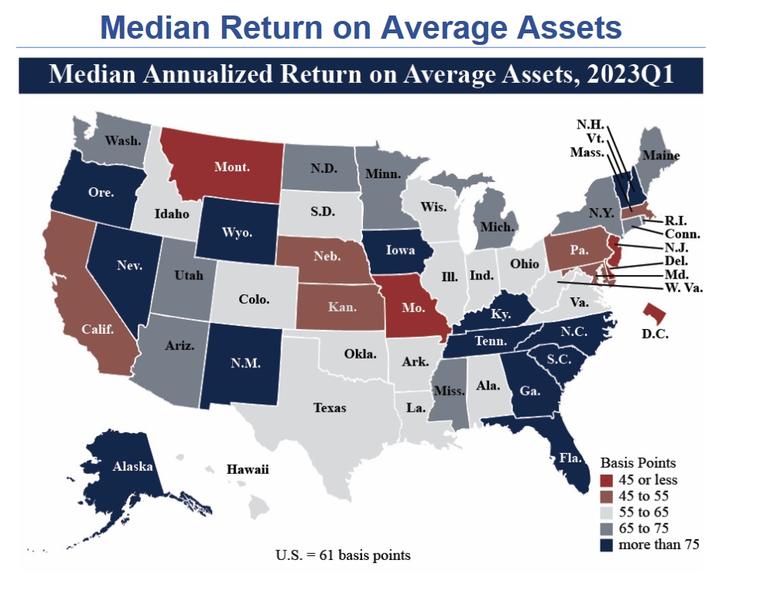
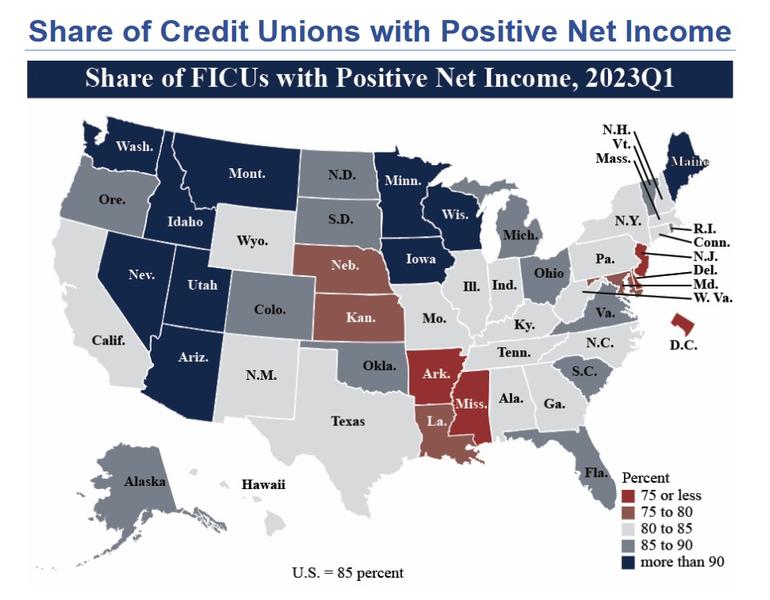
Overall, 85% of federally insured credit unions had positive net income in the first quarter of 2023, compared with 77% in the first quarter of 2022. At least 70% of credit unions in every state and the District of Columbia had positive net income in the first quarter of 2023. The median annualized return on average assets at federally insured credit unions was 61 basis points in the first quarter of 2023, compared with 42 basis points in the first quarter of 2022.
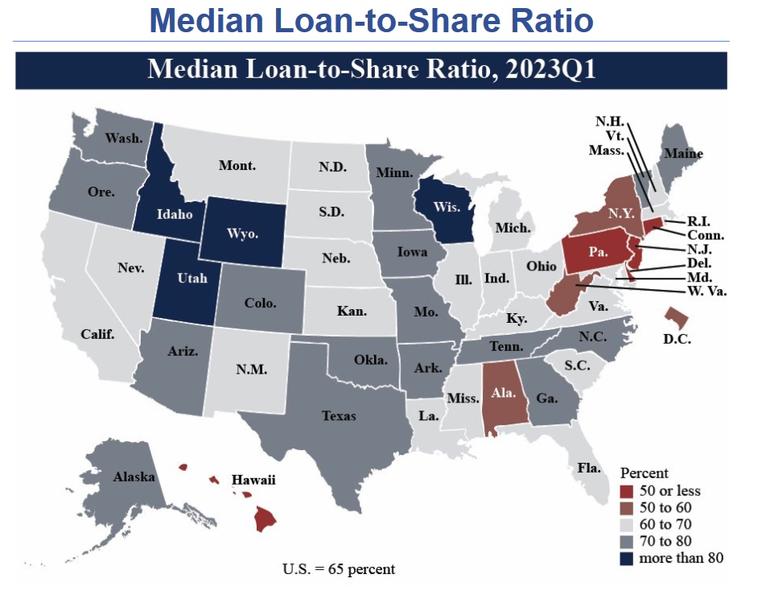
Additional performance data is shown in the charts below.