

EL SEGUNDO, Calif.–A new study offers insights into the primary drivers of American workers’ level of financial stress.
The same study finds women often feel the most stress due to financial issues.
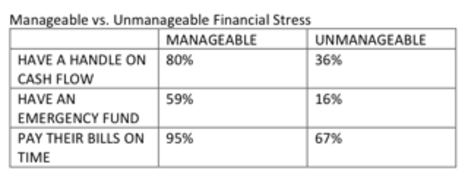
The annual Financial Stress Research study identified cash management as a primary underlying factor in determining an employees’ financial stress level. The cash management divide is wide, with employees making up two main groups: those dealing with manageable financial stress levels (some or none) and those with unmanageable levels (high or overwhelming), Financial Finesse said. Employees who have manageable financial stress generally exercise good money management behaviors, with most having a strong financial foundation in place to achieve longer-term financial goals, Financial Finesse said.
Unmanageable stress levels, however, reflect a sense that one’s finances are out of control, and that there is little hope for turning things around. Generally these are the employees who are living paycheck to paycheck, with expenses exceeding their incomes and/or with large debt balances and no emergency savings, according to the company.
Liz Davidson, CEO and founder of Financial Finesse, said the only way to address unmanageable financial stress is to help employees get a handle on what they’re doing with their wallets every day.
In response, the company recommends consumers use its C.A.L.M. Financial Stress Reduction Model to help employees get a handle on their cash management:
C: Create a plan to manage cash flow, working with a coach if necessary
A: Automate bill payment and saving for emergencies
L: Lower nonessential spending and debt
M: Make progress one step at a time
Davidson said the C.A.L.M. Model is particularly helpful for women in the workforce, as they are at heightened risk of unmanageable financial stress compared to men. At highest risk are women under the age of 30 who have minor children at home and make under $60,000 a year with a whopping 54% reporting high or overwhelming financial stress.
“This level of financial stress is expensive, both to employers and employees,” Financial Finesse said. “Stress has been linked to unhealthy habits like overeating, and unmanageable levels of financial stress can lead to serious health issues…They also experience more relationship issues and substance abuse problems. The direct blow to employers comes in the form of lost productivity, increased risk of on the job accidents and absenteeism.”
The report can be downloaded at https://ffinesse.box.com/v/FinStressResearchReport