

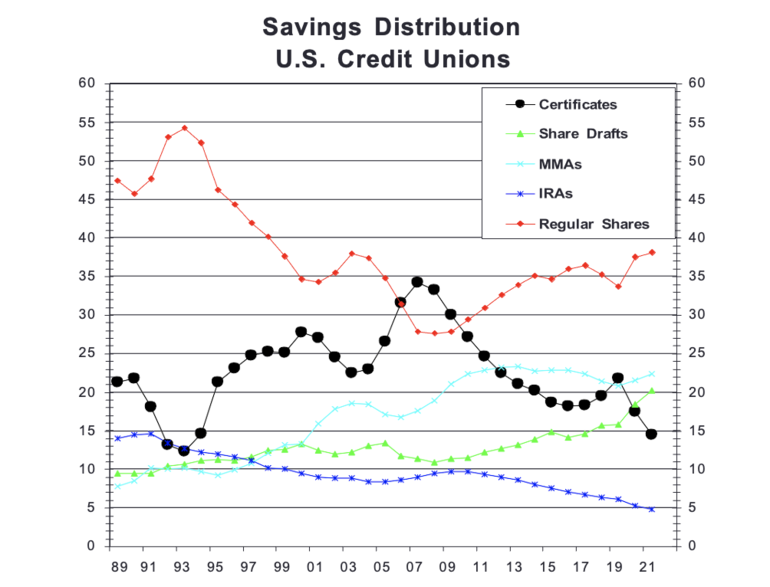
MADISON, Wis.– For the first time in credit union history, September 2021 data show share drafts make up a larger percentage of credit union total deposits(20.2%) than share certificates (14.5%), according to CUNA Mutual’s November Trends Report.
The latest Report also projects that cost-of-funds ratios will continue to fall into the new year as members keep moving maturing certificate balances into liquid savings accounts, while credit union membership grew 3.7-million during the month, up significantly over the same period in 2020 as the result of the rising demand for credit and increased employment.
Here’s a look at how credit unions performed by category:
Total Credit Union Lending
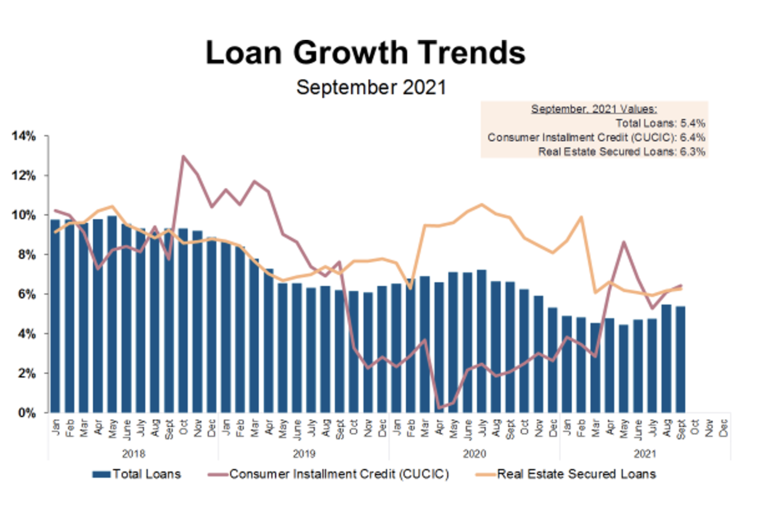
Credit union loan balances rose 0.5% in September, slower than the 0.6% pace reported in September 2020, according to the Trends Report. Driving overall loan growth was strong growth in unsecured personal loans (2%), used auto loans (1.1%) and fixed-rate first mortgages (0.8%), the CUNA Mutual analysis stated.
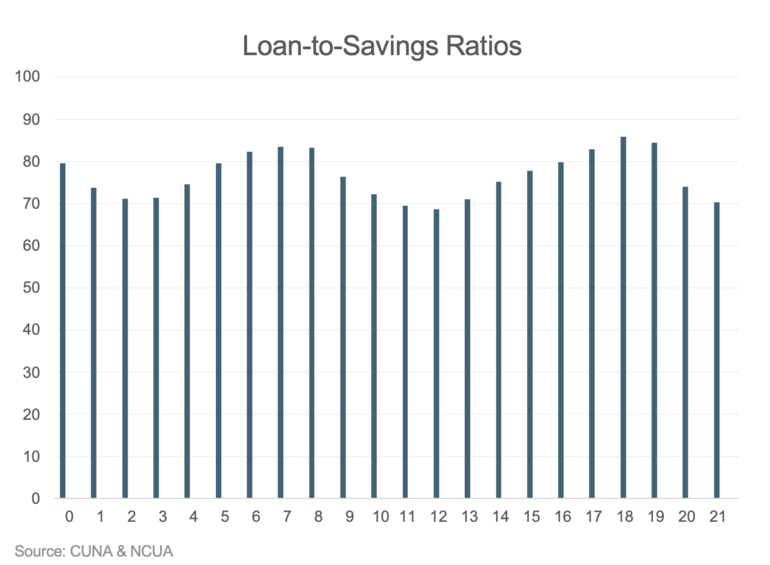
“The credit union average loan-to-savings ratio fell to 70.3% in September, down from 76.3% in September 2020, due to deposit growth exceeding loan growth,” the Trends report states. “Loan-to-savings ratios peak right before recessions and may contribute to the economic slowdown that follows due to tight liquidity from credit unions reducing their pace of lending and high levels of members’ debt reducing their demand for loans.”
Based on current trends, CUNA Mutual Chief Economist Steve Rick is projecting credit union lending growth is expected to rise 9% in 2022 while savings balances increase only 5%. This will raise the average loan-to-savings ratio to 72% at year’s end of 2022, almost equal to the 40-year average of72.8%, according to the Trends Report.
Consumer Installment Credit
Credit union consumer installment credit loan balances (auto, credit card and other unsecured loans) rose 0.8% in September, faster than the 0.5% rise set in September 2020, the Trends Report shows. During the last 12 months, credit union consumer installment credit grew 6.4%, slightly above the 6.3% for real estate secured loans.
“Going forward, expect credit growth to accelerate into 2022 as consumers begin spending on leisure and hospitality again and the unemployment rate drops below full employment and economic uncertainty declines,” the Report states.
Vehicle Loans
Credit union new-auto loan balances rose 0.1% in September, below the 0.2%growth pace set in September 2020. New-auto loan balances fell 0.7% during the last 12 months while used auto loan balances rose a “robust” 8%, the Trends Report states.
Total auto loan balances rose 4.7% since September 2020, which is slower than the overall loan growth of 5.4%, and in turn has led to auto loans making up only 32.2% of the credit union loan portfolio, down from 32.4% last year and below the all-time high of 41% set back in October 1996.
“Given the current state of auto production and inventories, it may take another year for the auto market to normalize, and inventories and production rates to return to their long-run average,” the Report predicts.
Real Estate
Credit union fixed-rate first mortgage loan balances grew 0.8% in September,below the 1.7% pace set in September 2020 due to the slow down in the mortgage refinance boom, the Trends Report observes. Adjustable-rate mortgage loan balances rose 0.7% in September, above the 1.1% decline recorded in September 2020.
The contract interest rate on a 30-year, fixed-rate conventional home mortgage rose to 2.9% in September from 2.84% in August and just barely above the2.89% reported in September 2020.
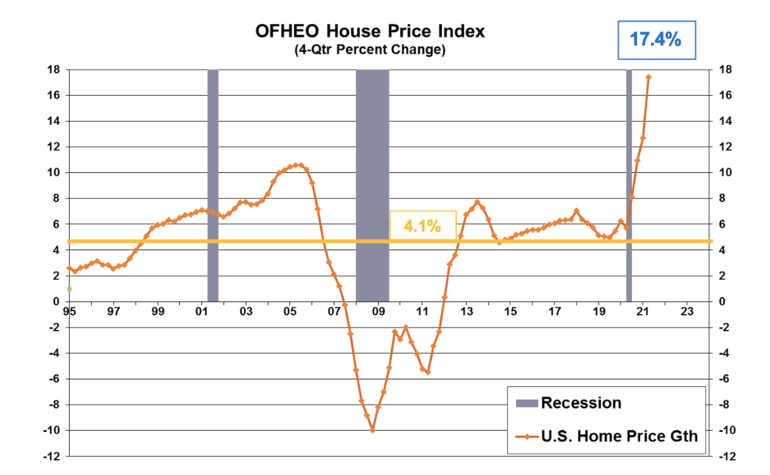
“Some people are concerned that home prices are becoming overvalued again and creating another home price bubble,” stated Rick. “One way to measure overvaluation is to compare today’s home price-to-income ratio and home price-to-rent ratio to their historical averages. Historically, a house in the U.S. cost around 3 to 3.5 times the median annual income. During the housing bubble of 2004- 2005, the median price for a single-family home cost more than 5.1 times the median annual household income in November 2005.Today, that ratio stands at 5.3.”
Savings & Assets
The Trends Report notes that for the first time in credit union history, share drafts make up a larger percentage of credit union total deposits (20.2%) than share certificates (14.5%). Three factors drove this savings distribution shift, according to the Trends Report.
First, record-low interest rates by the Federal Reserve allowed credit unions to follow suit and lower deposit interest rates on share certificates and money market accounts, like what they did in 1998, 2001 and 2008. “This reduced credit union members’ appetite for term share certificates,” the Report states.
Second, three rounds of COVID-19 stimulus checks swelled members’ checking account balances. Third, the pandemic led to a record surge in the national savings rate and therefore a record level of credit union members’ liquid savings.
According to the Trends Report, credit union cost of funds is expected to fall 30 basis points in 2021 to 0.4% from 0.7% in 2020, the lowest in credit union history due to the Federal Reserve lowering the Fed Funds interest rate 0.1%and members’ moving deposits from higher-cost share certificates to low-cost share draft and regular shares.
“Expect cost-of-funds ratios to keep falling into the new year as members keep moving maturing certificate balances into liquid savings accounts.
Capital and Other Key Measures
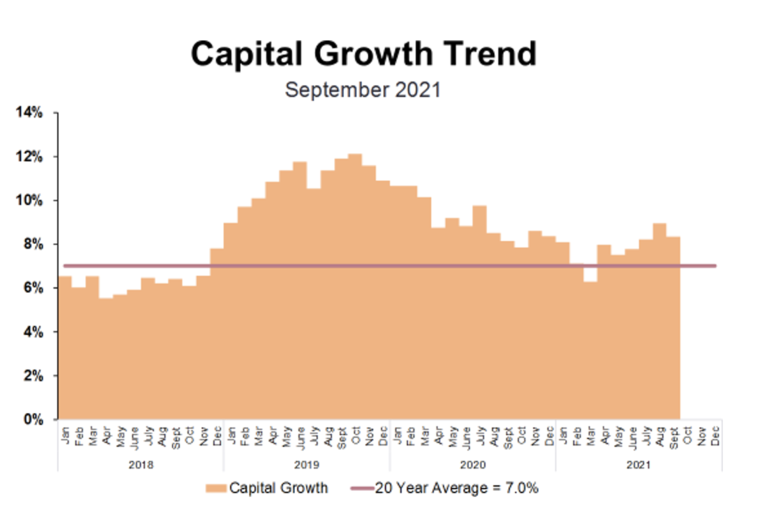
The credit union system’s capital-to-asset ratio fell to 10.1% in September, down from 10.5% in September 2020 due to a surge in deposits and assets compared to the increase in capital, according to the Trends Report.
The capital ratio is down 0.4% from what was reported in September 2020 due to asset growth of 12.9% outpacing capital growth of 8.3%.
“The capital growth rate is also known as the return-on-equity ratio and is one of the most important credit union financial ratios. For most of the last three years, the return-on-equity ratio has been running above the 7% average recorded over the last 20-years,” Rick stated in the Trends Report. “This ratio is important because it determines the credit union movement’s asset growth “speed limit” over the long run. So faster capital growth allows for faster asset growth while still maintaining a constant capital-to-asset ratio.”
Numbers of Credit Unions
As of September 2021, CUNA estimates 5,171 credit unions were in operation, down 182 from September 2020. Year-to-date, the number of credit unions fell by 146, slightly faster than the 107 decrease reported in the first nine months of 2020, the Report states.
The Trends Report notes NCUA’s Insurance Report of Activity showed 43 mergers were approved in the third quarter (up from 34 in the third quarter of2020), with an average asset size of $37 million. The average asset size of the continuing credit union was $1.5 billion. Twenty-eight of the mergers were due to credit unions wanting expanded services, eight were due to poor financial condition, three were for a lack of sponsor support, three were due to an inability to find officials and one was because of a lack of growth.
“Expect mergers to accelerate into 2022 as smaller credit unions which to expand the services offered to their members by merging with larger institutions,” the Trends Report states.
Credit Union Membership
Credit unions added more than 3.7 million memberships in the first nine months of 2021, significantly above the 3.4 million added in a similar period of 2020. The rising demand for credit was the major driver for the pickup in memberships. Also driving the increase in memberships was the acceleration in job creation in the U.S. during the last nine months, the Trends Report states.