

WASHINGTON—Ahead of today’s hearing to conduct a semi-annual review of the CFPB, NAFCU and CUNA each wrote to the House Financial Services Committee to comment on the Committee's oversight of the Bureau.
With the Senate set to hold its CFPB oversight hearing tomorrow, the hearings will be the first at which the Bureau’s new director, Rohit Chopra, will appear.
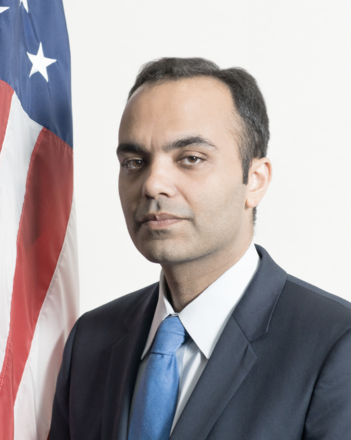
Rohit Chopra
In NAFCU’s letter, Vice President of Legislative Affairs Brad Thaler said the trade group’s issues of concern with the CFPB include the use of small entity exemption authority, stating the CFPB “should utilize its statutory exemption authority to recognize the unique nature of and constraints faced by the credit union industry.”
In addition, Thaler said credit unions have faced massive consolidation since the enactment of the Dodd-Frank Act, which is why the CFPB should provide regulatory relief for small entities “that cannot afford to comply with complex rules and would otherwise be forced to stop offering services to members.”
UDAAP, Other Issues Raised
Meanwhile, when it comes to Unfair, Deceptive, or Abusive Acts and Practices (UDAAP), Thaler wrote that credit unions have devoted more resources to UDAAP compliance as a result of unclear standards and unpredictable enforcement. “CFPB should issue a rulemaking to clarify its UDAAP authority,” stated Thaler.
Of note, Thaler also suggests the CFPB strengthen its coordination with NCUA examiners to limit exam burden and help streamline the examination procedure. The letter contains several other NAFCU priorities, including E-sign flexibility, suggested CFPB oversight over underregulated fintech companies, and ensuring the Electronic Funds Transfer Act (Reg E) has a “clear error resolution mechanism that ensures that third parties are also held accountable for helping resolve the issue when a dispute arises.”
In concluding NAFCU’s comments, Thaler reiterated NAFCU’s support for legislation that would create a five-person commission to oversee the agency, saying it would “allow multiple perspectives and robust discussion of consumer protection issues throughout the decision-making process.”
CUNA Input on CFPB
Meanwhile, in its letter to Congress, CUNA said the CFPB hasmissed many opportunities in its first decade of existence to leverage the credit union mission for consumers, adding that the new CFPB leadership can “recalibrate this approach.”
“Because of the not-for-profit, member-owned cooperative structure, credit unions are not subject to the same profit-first motives that have become characteristic of for-profit financial services providers,” the letter reads. “This distinction, combined with a track-record of providing consumer-friendly financial services, is a key reason that rules and regulations should be tailored so they are not overly burdensome on credit unions.”
Points for Guidance
CUNA also said it believes the following points should guide future CFPB action, including:
- Using its authority in a manner consistent with its original purpose and spirit of the Dodd-Frank Act by focusing on bad actors engaging in objectionable practices
- Appropriately tailoring regulations to reduce disruption for community-based financial institutions
- Being consistent and transparent during the development and implementation of rulemakings and supervision and enforcement policies
- Consult with NCUA during the policymaking process and avoid implementing duplicative or contradictory policies
- Provide certainty to regulated entities by adopting clear “rules of the road” and prioritizing internal consistency
- Conduct thorough research prior to the adoption of a new rule or policy and base policy decisions on relevant data
- Ensure continued access to credit from reputable providers
- Encourage and support innovation in the consumer financial services marketplace
Chopra’s Comments
According to new Director Rohit Chopra’s prepared testimony, he is set to outline three main priorities before the Committee, including:
- A focus on increasing competition in consumer financial markets, specifically in the mortgage refinance market
- Increased scrutiny of repeat-offender companies
- A focus on finding ways to “restore relationship banking in an era of big data”
The Bureau will also work on expanding their monitoring of the mortgage market conditions to try to “minimize avoidable foreclosures,” as the economy gets back on track, according to the prepared testimony released ahead of his actual remarks to Congress.