

WASHINGTON—Credit unions, other financial service providers, consumer groups, Congress and others have now gotten their first insights into the priorities of new CFPB Director Rohit Chopra, who testified twice before Congress this week.
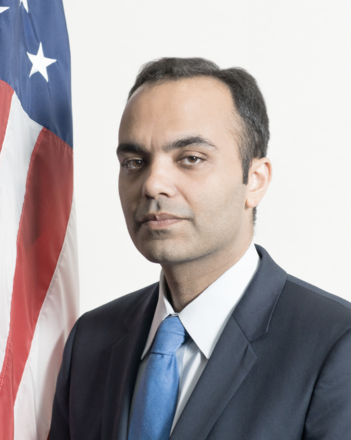
Rohit Chopra
Chopra appeared before both committees in both the House and Senate during hearings conducted as part of the semi-annual review of the CFPB.
Much of his testimony was not a surprise, as the CFPB has sent a number of signals on its future direction under the Biden administration, and Chopra limited much of his testimony to three main themes.
In an announcement certain to be welcome by credit unions, Chopra expressed his desire to focus his oversight on the largest, nationwide offenders as opposed to smaller institutions.
Three Priorities
Of note, Chopra's three main priorities include:
- A focus on increasing competition in consumer financial markets, specifically in the mortgage refinance market
- An increase in scrutiny of repeat-offender companies
- A search for ways to “restore relationship banking in an era of big data.”
Other Issues Raised
During the hearings, lawmakers raised several issues that affect credit unions, including:
- UDAAP: The CFPB in March rescinded its policy statement related to the "abusive" prong of the unfair, deceptive, or abusive acts or practices (UDAAP) provision. The statement was issued in January 2020. During the hearing, Chopra explained his desire to create a strong jurisprudence on the subject.
- Qualified Mortgage: Chopra was asked whether the CFPB has seen an uptick in concerns since the extension of the qualified mortgage (QM) patch, to which he responded that the economic uncertainty and housing market boom has not been normal, and it is hard to say how it has worked so far. The Bureau in April issued a final rule to delay the mandatory compliance date of its general QM rule to Oct. 1, 2022.
- CFPB structure: Many committee members raised concerns with the Bureau's single-director structure. Last year, the Supreme Court found that the Bureau's "leadership by a single individual removable only for inefficiency, neglect, or malfeasance violates the separation of powers." Both credit union trade groups have expressed support for changing the leadership structure to a five-person commission.
- Payday lending: When asked about whether or not he would go beyond restoring the 2017 rule cracking down on payday lenders, Chopra did not address the rule specifically and only stated the Bureau will “monitor consumer financial markets carefully.”