ALEXANDRIA, Va.—Federally insured credit unions across the country saw continued improvement in nearly every category during the second quarter of 2017, according to state-level data released by NCUA, which also shows that Nevada and Washington, respectively, are leading the nation in loan growth.
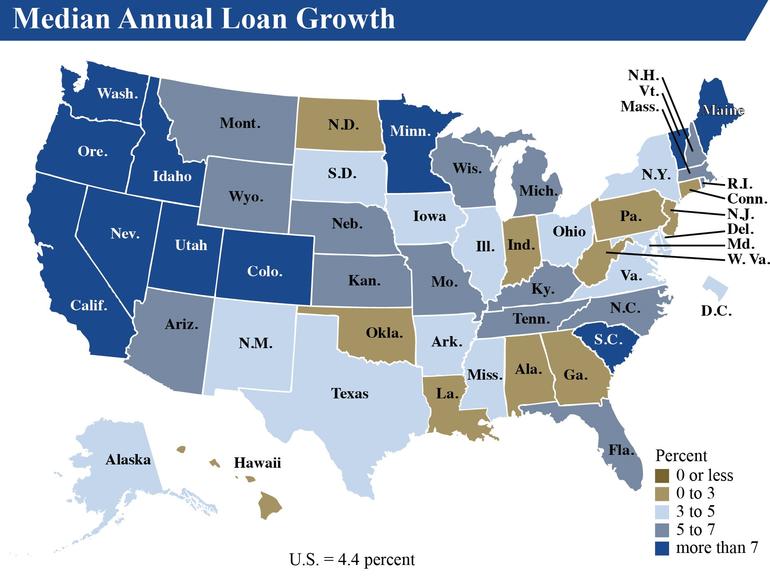
Nationally, median loan growth in federally insured credit unions was 4.4% during the year ending in the second quarter. Median asset growth was 3.9%; the median rate of growth in deposits and shares was 4.1%; and the median loans-to-shares ratio was 63%.
The NCUA Quarterly U.S. Map Review, available online here, tracks performance indicators for federally insured credit unions in all 50 states and the District of Columbia. The review also includes information on two important state-level economic indicators: unemployment rates and home price changes.
All States Report Positive Loan Growth in Second Quarter
Nationally, median growth in loans outstanding was 4.4% over the year ending in the second quarter of 2017, compared to a 4.3% growth rate a year before. The highest median growth rates for loans were in Nevada (13.4%), followed by Washington (10.1%). Median loan growth was lowest in Connecticut and New Jersey (both 0.9%), followed by Pennsylvania (2.1%).
Idaho, Oregon Report Highest Median Asset Growth Rates
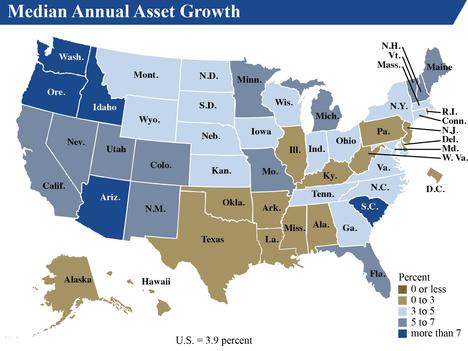
Median asset growth was 3.9% nationally in the year ending in the second quarter of 2017, up from 3.2% the year before. Median asset growth was fastest in Idaho (9.0%), followed by Oregon (8.3%). Median asset growth was lowest in the District of Columbia (0.1%), followed by Arkansas (1.0%).
Shares and Deposits Growth Continues in Every State
At the median, shares and deposits rose in every state over the year ending in the second quarter.
Nationally, the median growth rate in shares and deposits was 4.1%, up from 3.3% a year earlier.
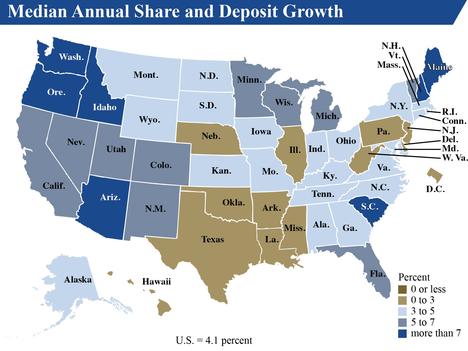
The median growth rate in shares and deposits was highest in Idaho (9.8%) and Oregon (9.1%). The median growth rate in shares and deposits was lowest in the District of Columbia (1.1%), followed by Arkansas and New Jersey (both 1.3%).
80% of Credit Unions Report Positive Net Income
Nationally, 80% of federally insured credit unions had positive net income during the first half of 2017, up slightly from 79% in the same period in 2016.
At least 57% of credit unions in every state had positive net income during the first half of 2017. The share of federally insured credit unions with positive net income was highest in Nevada (100%), followed by Oregon (97%). The share of federally insured credit unions with positive net income was lowest in the District of Columbia (57%) and Arkansas (67%).
Median Returns on Average Assets Highest in Nevada, South Carolina
Nationally, the median annualized return on average assets at federally insured credit unions was 36 basis points during the first half of 2017, compared to 35 basis points during the first half of 2016. Nevada (83 basis points) had the highest median annualized return on average assets during the first half of 2017, followed by South Carolina (63 basis points). The District of Columbia (14 basis points) reported the lowest median return on average assets, followed by New Jersey (20 basis points).
Alaska, Idaho Report Highest Median Loans-to-Shares Ratio
Nationally, the median ratio of loans outstanding to total shares and deposits was 63% at the end of the second quarter of 2017, compared to 62% at the end of the second quarter of 2016. The median loans-to-shares ratio was highest among credit unions in Alaska (88%) and Idaho (87%). The median loans-to-shares ratio was lowest in Delaware (45%) and Hawaii (48%).
Median Total Delinquency Rate 69 Basis Points in Q2 2017
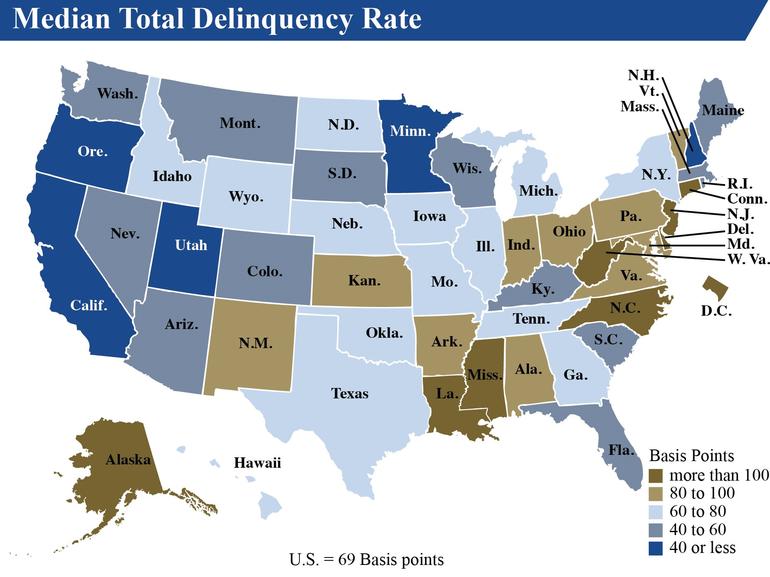
The median total delinquency rate among federally insured credit unions was 69 basis points at the end of the second quarter of 2017, compared to 70 basis points in the same period in 2016. At the end of the second quarter of 2017, the median delinquency rate was lowest in Oregon (32 basis points), followed by New Hampshire (33 basis points). The median delinquency rate was highest in New Jersey (155 basis points), followed by Mississippi (133 basis points).
Larger Credit Unions Continue to Lead Membership Growth
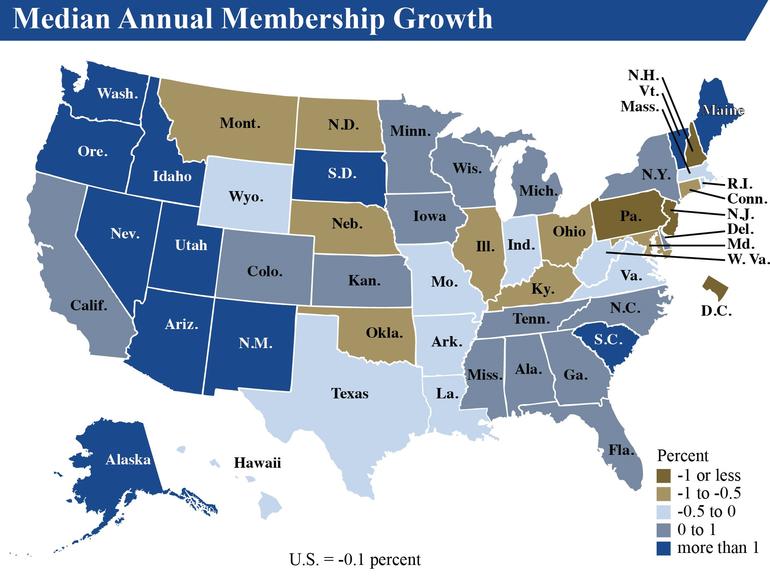
Overall, growth in credit union membership continued during the year ending in the second quarter of 2017, though at the median, membership declined 0.1%. Membership was unchanged at the median over the previous year.
Overall, 50.3% of federally insured credit unions had fewer members at the end of the second quarter of 2017 than a year earlier. Median membership growth was negative in 23 states. About 75% of credit unions with declining membership had assets of less than $50 million.
Washington (2.7%) had the highest median membership growth rate over the year ending in the second quarter of 2017, followed by Oregon and Alaska (both 2.4%). At the median, membership declined the most in Pennsylvania (-1.4%) and the District of Columbia (-1.3%).