

ALEXANDRIA, Va.–Failed taxi medallion lender credit unions caused a more-than-three-quarters-of-a-billion-dollar loss to the credit union share insurance fund—now NCUA’s Office of Inspector General (OIG) has made three recommendations to correct problems that contributed to those failures.
According to the OIG, NCUA is in the process of implementing all three of those recommendations.
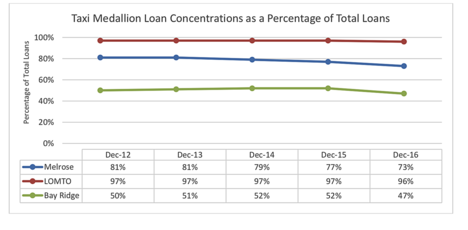
In a new report, the OIG said it contracted with Moss Adams LLP to conduct a Material Loss Review (MLR) of three New York-based, federally insured credit unions, Melrose CU, LOMTO FCU and Bay Ridge FCU, all of which were taxi medallion lenders whose combined failures resulted in an estimated $765.5 million loss to the National Credit Union Share Insurance Fund.
As CUToday.info has reported, all three credit unions have now been liquidated and merged into other CUs.
“We determined the credit unions failed due to significant concentration of loans collateralized by taxi medallions, unsafe and unsound lending practices, and weak board and management oversight and inadequate risk,” the OIG said. “…Except for credit unions that qualify for an exception, the Federal Credit Union Act limits the aggregate balance of member business loan (MBL) portfolios to 175% of the credit union’s net worth. This statutory requirement is implemented in NCUA’s regulations. All three credit unions qualified for an exception from this limit based on NCUA granting their charter for the purpose of making MBLs or having a history of primarily making MBLs prior to Sept. 30, 1998.”
Failure to Identify Threats
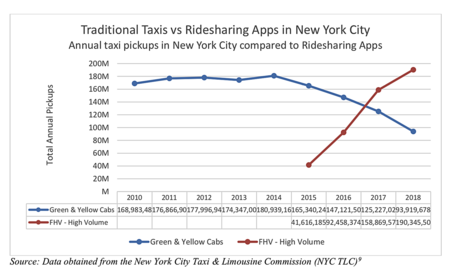
The OIG report notes the emergence of ride-sharing services such as Uber and Lyft drastically eroded the underlying value of the taxi medallions that were the collateral for the loans.
“The credit unions also failed to identify and appropriately monitor loans to associated borrowers.” The OIG report states. “For MBLs, regulations limit lending to associated borrowers to 15%of net worth. Examination reports reflect several instances when the credit unions exceeded the regulatory limit to associated borrowers, resulting in additional concentration risk to the loan portfolios. Because the credit unions did not appropriately identify and document loans made to associated borrowers, the number of instances in which the credit unions exceeded the regulatory limit is not clear.
“The credit unions failed to manage their respective loan portfolios in a safe and sound manner,” the report continues. “Examiners repeatedly noted the credit unions were engaged in unsafe lending practices, in particular inadequate loan underwriting and monitoring of taxi medallion loans. Specific examples of inadequate underwriting include frequent failure of the credit unions to fully analyze borrower financial information, insufficient detail included in credit memoranda to make a fully informed lending decision, risky loan terms, unsupported cash out refinances, inadequate credit risk management policies, and failure to identify and account for modified loans as Troubled Debt Restructures (TDRs). Additionally, the credit unions frequently based lending decisions on inflated market values of taxi medallions rather than industry accepted best practices for loan underwriting such as cash flow analysis, debt service coverage, and secondary sources of repayment.
Board & Management Failure
The OIG said it is its position the CUs’ boards and management “failed in their responsibilities” and “were unresponsive to repeated issues raised by examiners related to lending practices, concentration, liquidity, and overall risk management…The lack of governance created a corporate culture that inhibited or discouraged effective risk management policies for institutions with such high concentration risk.”
NCUA, the OIG said, might have mitigated the loss to the Share Insurance Fund had it taken a timelier and aggressive supervisory approach regarding the credit unions’ concentration risk and failure to follow industry accepted lending practices for MBLs.
“Specifically, had the NCUA acted more aggressively through formal enforcement actions for repeat DORs, which had not been corrected by management, improvements may have been made to inadequate lending practices and risk management policies, thus reducing the loss to the Share Insurance Fund,” the OIG said.
Observations & Recommendations
The OIG report offers two observations and three recommendations, including:
Observations
- “When the NCUA makes the decision to use enforcement actions, those actions should be executed aggressively and in a timely manner,” the OIG said. “If informal enforcement actions related to safety and soundness concerns are ignored and are repeated during examinations, the NCUA should execute formal enforcement actions in a timely manner to effect corrective action.”
- “Although a credit union is profitable and ‘well capitalized,’ formal enforcement actions may still be necessary. Based on our interviews, examiners involved in supervision of the credit unions felt they had insufficient grounds for formal enforcement actions for repeat DORs prior to 2015 due to the profitability and strong capital positions of the credit unions.”
Recommendations
The OIG’s three recommendations to NCUA management include:
- Instituting a formal process to regularly identify, analyze, and document concentration risk issues in credit unions or groups of credit unions, including but not limited to loan concentrations, that could potentially pose a significant risk to the share insurance fund. “Additionally, the NCUA should consider developing appropriate thresholds for different concentrations that would require increased levels of risk mitigation and resources to minimize the risk to the Insurance Fund.” The OIG said agency management has agreed with the recommendation and already started to evaluate ways to enhance their processes through their Enterprise Risk Management Counsel (ERMC). A plan is to be in place by Dec. 31, 2020.
- Revising examination quality control procedures to prioritize assessing and developing risk responses for credit unions with high levels of concentration risk. “The procedures should require escalated review of repeat informal enforcement actions for unresolved recommendations. If the repeat actions represent safety and soundness concerns, require escalated enforcement action, including formal enforcement action, when warranted.” The OIG said agency management has agreed with this recommendation and will have changes in place by Dec. 31, 2020.
- Including an update to the annual examination scope requirements that examiners review credit unions’ lending procedures with respect to analyzing the ability of the borrower to meet debt service requirements. “Ensure examiners address through the enforcement process any credit unions not sufficiently considering the borrower’s ability to repay the loan due to undue reliance on the value of the collateral. If left unresolved, ensure the quality control procedures review the need for elevated enforcement action.” The OIG said management has also agreed with this recommendation and indicated that by Jan. 31, 2020, they will update the annual examination scope instruction to ensure there is a renewed emphasis on reviewing credit union underwriting practices with respect to determining a borrower’s ability to meet debt service requirements.
The full NCUA OIG report can be found in CUToday.info’s the Gov. http://www.cutoday.info/THE-gov/