

ALEXANDRIA, Va.—NCUA Board Chairman Rick Metsger is initiating a review of the agency’s examination process, beginning with the removal of requirement that all federal credit unions, and all federally insured, state-chartered credit unions with more than $250 million in assets, be examined each calendar year.
Metsger said he hopes to implement that change within the next two months. Removing the calendar year requirement will not alter the general objective of examining credit unions every 12 months, he said, but it is a necessary first step towards establishing an extended examination cycle for well-managed, financially sound credit unions.
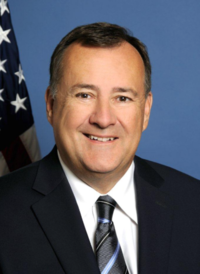
Rick Metsger
“This prescriptive requirement creates a logjam of exams at the end of each year, which is neither effective nor efficient,” Metsger said in remarks to the Idaho Credit Union League’s annual meeting.
Metsger said a focus will be on reducing time spent onsite at CUs and frequency of examinations.
Metsger said NCUA will form a working group to bring “all stakeholders” into the effort.
“We need to see how we meet our statutory responsibility to examine credit unions for safety and soundness with as small a footprint as possible,” Metsger said. “My number-one priority this year is to focus on continual quality improvement. Part of that is looking at our examinations. I want a thoughtful, thorough review of how we might reduce the time we spend onsite and the frequency with which we conduct examinations where performance standards for safety and soundness justify an extended cycle.”
Metsger also said he will form an internal working group, similar to the one that developed the agency’s proposed field-of-membership rule, so the agency can hear from stakeholders and make further changes to the examination process “sooner rather than later.”
Metsger said enhanced technology tools should enable NCUA’s examiners to collect more data without having to make onsite visits, benefitting both credit unions and NCUA’s workforce.
Metsger’s announcement was welcomed by CUNA CEO Jim Nussle.
"Reducing the frequency of examinations for credit unions would remove some unnecessary pressure on credit union resources –resources that can better be used to serve members," said Nussle. "Such an action by the agency would also be both prudent and appropriate as it would refine the cycle to be more consistent with the examination cycle for banks...Reducing exam frequency is a top priority for CUNA. We have used our 360-degree advocacy approach, working with NCUA as well as federal lawmakers, to seek relief for credit unions on this issue. We thank Chairman Metsger for acting on this important issue just days after taking the reins of the agency."
NAFCU Executive Vice President of Government Affairs and General Counsel Carrie Hunt also was positive about the NCUA announcement.
“We appreciate Chairman Metsger’s response to our concerns about credit unions’ exam cycles and continue to urge the agency to implement a longer exam cycle as soon as possible,” Hunt said. “Healthy credit unions that have acted responsibly should not have to deal with such frequent exams, which are unnecessary and burdensome for the industry.”
NAFCU President and CEO Dan Berger, accompanied by Hunt, met with Metsger in April to discuss exam frequency as well as how NCUA could do more to reform field-of-membership requirements. Metsger will preside over his first board meeting as agency chairman next week.

Lucy Ito, NASCUS
NASCUS' Lucy Ito issued a statement saying, "The calendar year requirement is a burden on both credit unions and state regulators. We welcome Chairman Metsger’s plans to review – and, hopefully, make a change within the next two months – to the required frequency of exams by the federal agency. From state regulators’ point of view, the annual exam requirement places the credit union system at a competitive disadvantage relative to the community bank system, for which the threshold is now $1 billion versus $250 million for credit unions. We also urge the chairman to include state regulators in any working group he appoints, as state regulators have firsthand insight into the relative risk posed by similarly sized credit unions and community banks. Past inclusion of state regulators on NCUA working groups has resulted in thoughtful, strong regulation for the entire credit union system."