ALEXANDRIA, Va.—Stating the agency has attempted to avoid charging credit unions a premium during the pandemic in order to replenish Share Insurance Fund’s sliding equity ratio, NCUA Chairman Todd Harper suggested credit unions should nonetheless prepare for a premium to be assessed.
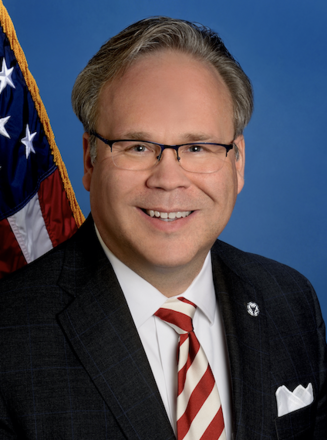
Todd Harper
But the agency’s other two board members didn’t sound so convinced, and at least one of them would have to vote in favor for any premium to be charged in the future.
Harper, during the agency’s board meeting, also said premiums are only a short-term solution and the agency should work with Congress to obtain greater flexibility to manage the NCUSIF, so funds can be built up during good times to avoid premium assessments during difficult periods.
The potential for a premium comes at the same time the credit union trade associations have argued no premium is necessary for several reasons, including that the declining equity ratio is the result of an influx of deposits and not due to the failure of any CUs or losses to the fund.
Harper, in his first meeting as chairman, said there has just been too much ongoing pressure on the NCUSIF equity ratio in the past year, and more concerns lie ahead—especially with another round of stimulus likely heading consumers’ way.
“With the growth in shares likely to remain elevated in 2021, it is increasingly clear the question is no longer if we have to assess a Share Insurance premium, but when and how much,” stated Harper, who is the lone Democrat on the board.
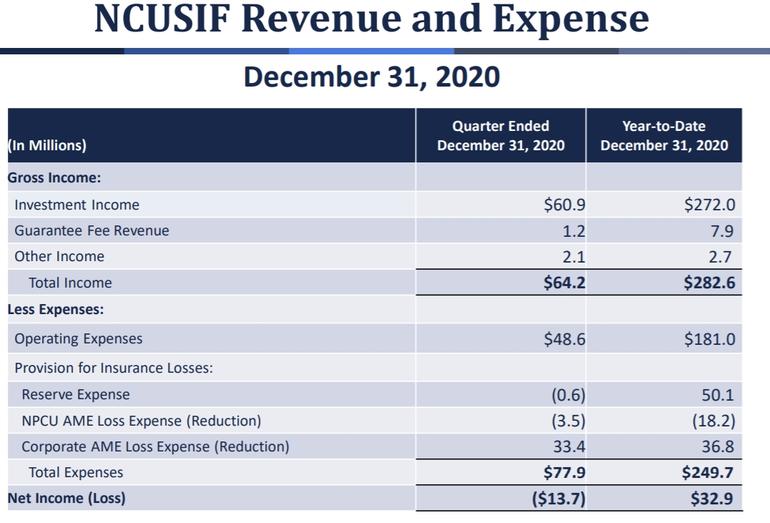
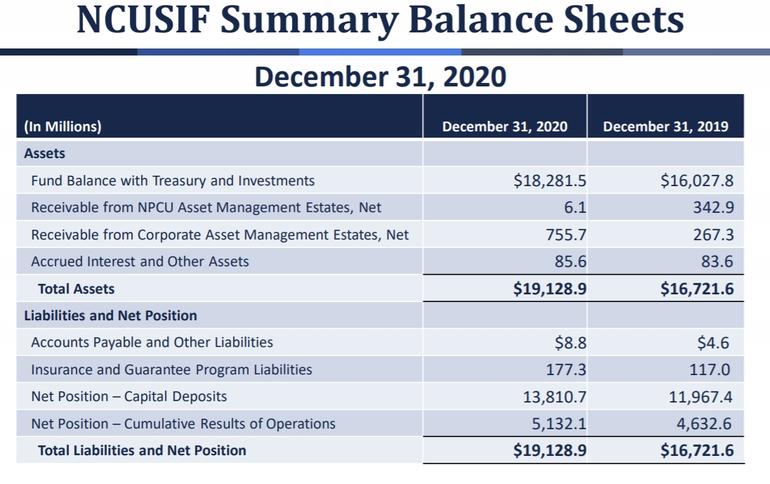
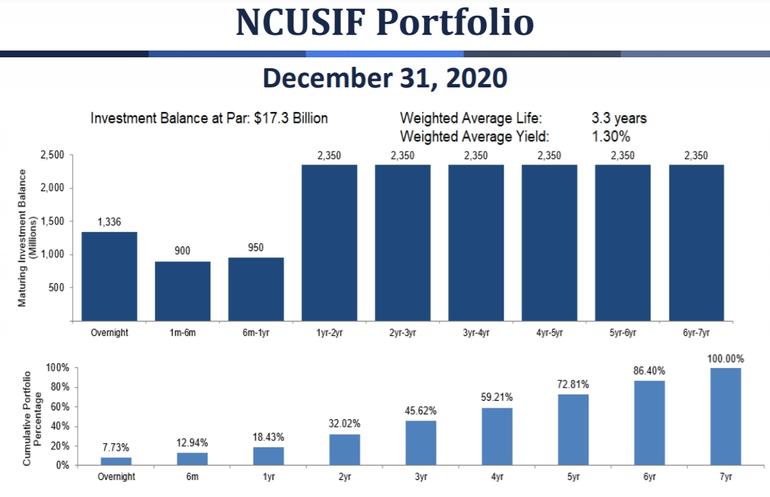
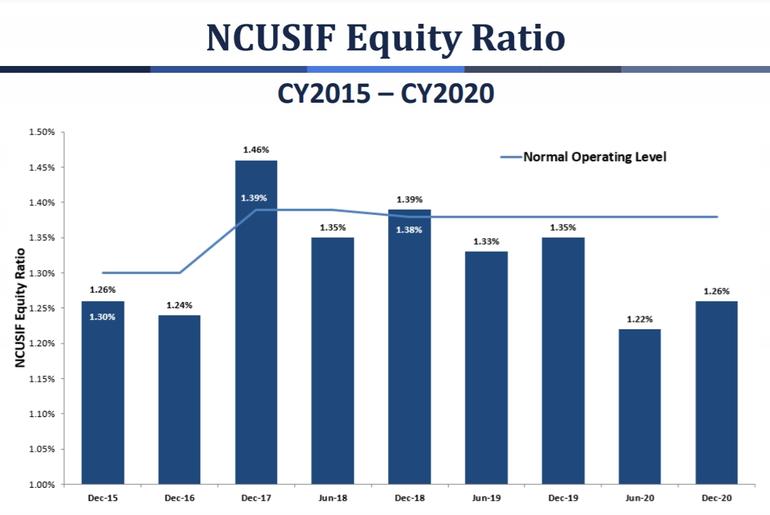
As CUToday.info has reported, the NCUSIF equity ratio stood at 1.26% as of Dec. 31, which is below the 1.3% equity ratio that is the standard measure for whether credit unions should be charged a premium to replenish the fund.
Other Board Members Respond
But it is that share growth that has the two other members of the board, Republican appointees Kyle Hauptman and Rodney Hood, saying they believe the agency should proceed cautiously in assessing credit unions a premium during these unique times, joining NAFCU in CUNA in noting the fund is healthy.
“The primary factors contributing most significantly to the continuing decline in the equity ratio—strong growth in insured shares and reduced investment returns—remain and will likely continue in the future,” said Harper. “Like the persistent current of a mighty river, we can only swim upstream for so long against these economic realities.”
But any future decision by the board to assess premiums must be data-driven, the new chairman added.
“We must analyze and evaluate several potential scenarios and rely on the staff’s recommendations and best judgment,” he said. “History has also shown the importance of building up the resiliency of the Share Insurance Fund, so it can handle the potential issues related to the pandemic’s economic fallout that we know are coming. Credit union members—and the taxpayers who ultimately guarantee the Share Insurance Fund—are counting on us to get it right.”

Rodney Hood
Not a Repeat of 2008
Former Chairman Rodney Hood, emphasized the drop in the equity ratio is not related to fundamental problems with the economy.
“This does not appear to be a repeat of the 2008 financial crisis when I was last on the NCUA board,” Hood stated. “The equity ratio of 1.26% is driven by a flight to safety, combined with the inflow of deposits, including the payroll protection program and other federal government stimulus programs.”
CFO Eugene Schied, who made a presentation on the NCUSIF to the board, concurred.
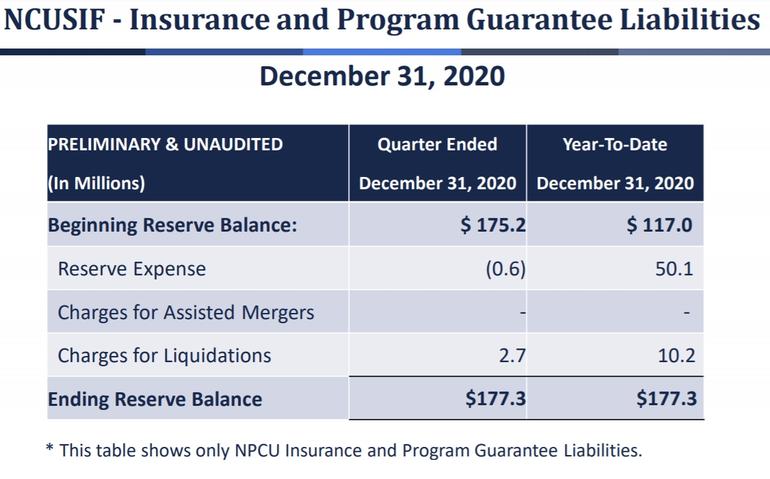
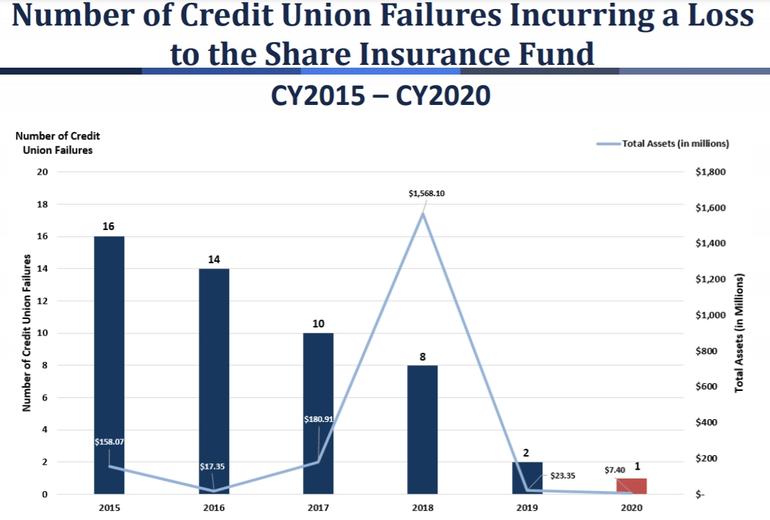
“I would agree the driver here is not losses to the fund from credit union failures, as you point out,” Schied said. “We have only had one in the past year and the reserves remain fairly steady throughout the year.”
Hood noted credit unions are sitting on record levels of liquidity.
“So while we can be concerned about capital and liquidity, there are records amounts of both in the system,” said Hood. “While we do not know what the future holds, I believe the fund is well positioned to handle whatever may come our way as we plan for the worst and hope for the best.”
Act Cautiously
Vice Chairman Kyle Hauptman encouraged the agency to act cautiously.
“The NCUA is responsible for safeguarding the Share Insurance Fund as well as evaluating the safety and soundness of the credit unions it supervises. The crisis brought on by the pandemic makes that work particularly difficult,” he said. “As a general matter, when someone may be facing financial difficulty, we’d prefer not to react to that by saying, ‘OK, now please now write us a big check.’”

Kyle Hauptman
Hood reiterated the agency must base its decision on charging a premium on sound information.
“I look forward to working with you all as we can get the data that will keep us updated on the state of the Share Insurance Fund, and what actions, if any, the board needs to take,” said Hood, adding that rebuilding the fund should be centered on covering losses within the industry and not “day-to-day” expenses.
Harper agreed the issue is complex.
“These are issues that merit close analysis and careful consideration,” he said. “I look forward to working with (Board Member Hood) and Vice Chairman Hauptman to forge a consensus.”
Another Issue
Harper, too, said there is another issue to consider.
“Ultimately in my view, premiums are a short-term solution,” he concluded. “With credit unions and insured shares continuing to grow, a possible long-term solution is working with Congress to grant the NCUA additional flexibility to manage the funds going forward. Allowing the funds to build up reserves during good times while avoiding potential premiums during bad times.”
NASCUS Response
In response to the discussion, NASCUS President and CEO Lucy Ito said, “The root cause for the downward pressure on the NCUSIF’s equity ratio has clearly been a dramatic and likely continuing increase in insured shares related to economic stimulus payments, and not unsafe or unsound operating practices by credit unions,” Ito said. “Harper, Hauptman and Hood are commended for their vigilance and caution in monitoring the equity ratio, and the impact on credit unions.
“NASCUS is intrigued by the suggestion of possible congressional action to expand the investment authority of the insurance fund that would maximize yield while assuring the protection of the fund. The state system will be studying the statutorily permissible investments by the NCUSIF compared to the FDIC to inform potential legislation.”
Finally, Ito commended Chairman Harper for considering state laws and rules in the agency’s deliberations over the final rule on joint ownership share accounts. NASCUS had supported the proposal, noting it acknowledges that account opening practices have evolved substantially over the last nearly 50 years.