

ALEXANDRIA, Va.–NCUA has sent a Letter to Credit Unions outlining its supervisory priorities for 2021. Separately, it also announced two personnel moves.
The agency said it will maintain its commitment to the extended examination cycle, and qualifying credit unions will be scheduled accordingly in 2021, and that the targeted Small Credit Union Exam Program exam procedures remain in place for most federal credit unions with assets under $50 million.
For all other credit unions, NCUA said its examiners will conduct risk-focused examinations, which concentrate on areas of highest risk, new products and services, and compliance with applicable laws and regulations.
NCUA said its primary areas of supervisory focus are listed below:
Allowance for Loan and Lease Losses (ALLL)
“Due to the ongoing economic impact of the COVID-19 pandemic and the Financial Accounting Standards Board’s decision to delay its requirement to comply with the current expected credit losses (CECL) standard until January 2023, NCUA examiners will not be assessing credit unions’ efforts to transition to the CECL standard until further notice. The NCUA encourages credit unions to continue to assess their needs and evaluate methodologies for the eventual implementation of the CECL standard.”
Bank Secrecy Act/Anti-Money Laundering Compliance
The NCUA said it will continue to conduct Bank Secrecy Act/Anti-Money Laundering (BSA/AML) reviews during every examination, and will take appropriate action when necessary to ensure credit unions meet their regulatory obligations.
Coronavirus Aid, Relief and Economic Security Act
For examination purposes, NCUA said its examiners will continue to review compliance with the provision of the CARES Act that suspended the requirement to categorize certain loan modifications as troubled debt restructurings or TDRs. The provision has been extended, through Jan. 1, 2022.
“NCUA examiners will continue to review credit unions’ compliance with the CARES Act and Consolidated Appropriations Act, 2021, including requirements for financial institutions related to the administrative provisions for the additional 2020 recovery rebates for individuals,” the agency said. “In addition, NCUA examiners will continue to review, as needed, modifications, credit reporting, forbearances, and foreclosures that were conducted in 2020 under CARES Act provisions.”
Consumer Financial Protection
NCUA said it will continue to examine for compliance with applicable consumer financial protection regulations during every federal credit union examination. The scope of each examination’s consumer compliance reviews is largely risk-focused, and is based on the credit union’s compliance record, products and services provided, and any new or emerging concerns, NCUA said.
Credit Risk Management
The agency said it continues to encourage credit unions to work with their members who were affected by the COVID-19 pandemic. “The NCUA reaffirms that examiners will not criticize credit unions’ efforts to provide prudent relief for borrowers, when such efforts are conducted in a reasonable manner with proper controls and management oversight.”
Information Systems and Assurance (Cybersecurity)
NCUA said it continues to promote cybersecurity hygiene in credit unions, and reviews of credit union information systems and assurance programs remain a supervisory priority for the agency. Building upon its outreach efforts to the industry in 2020, the NCUA added it will continue to provide guidance and resources to assist credit unions with this critical threat.
Other issues addressed in the letter include:
- LIBOR Transition
- Liquidity Risk
- Serving Hemp-Related Businesses
- Modernization Updates
- NCUA Exam Planning Questionnaire
The full letter can be found here.
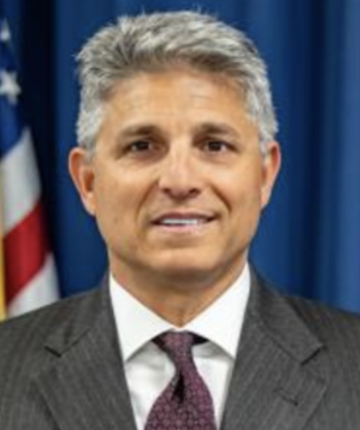
Frank Kressman
Agency Announces Personnel Changes
Separately,NCUA said it has named Frank Kressman as general counsel and Melane Conyers-Ausbrooks as board secretary.
Kressman currently serves as the agency’s acting general counsel and leads the NCUA’s Office of General Counsel. Kressman joined the agency in 1998 as a staff attorney and previously worked as an attorney at the Federal Deposit Insurance Corporation and the Commodity Futures Trading Commission.
Prior to being selected as board secretary, Conyers-Ausbrooks served as acting secretary of the board and worked in the NCUA Office of General Counsel managing the NCUA’s Ethics Program and serving as the agency ethics point of contact.
Previously, she served as legal counsel at Brown Foss and as vice president and chief counsel-retail channel at CitiMortgage Inc.