ALEXANDRIA, Va.—Warning the agency continues to see a slow, steady decline in the National Share Insurance Fund (NCUSIF) equity ratio, Chairman Todd Harper told credit unions NCUA will be monitoring the performance of the fund closely and will be “ready to act"--but there are no plans for a premium.
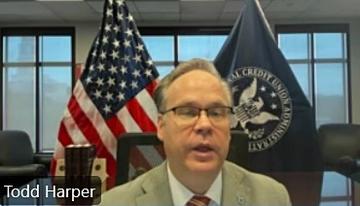
Harper's remarks came during the NCUA’s open board meeting at which the lone item on the agenda was a quarterly report on the share insurance fund.
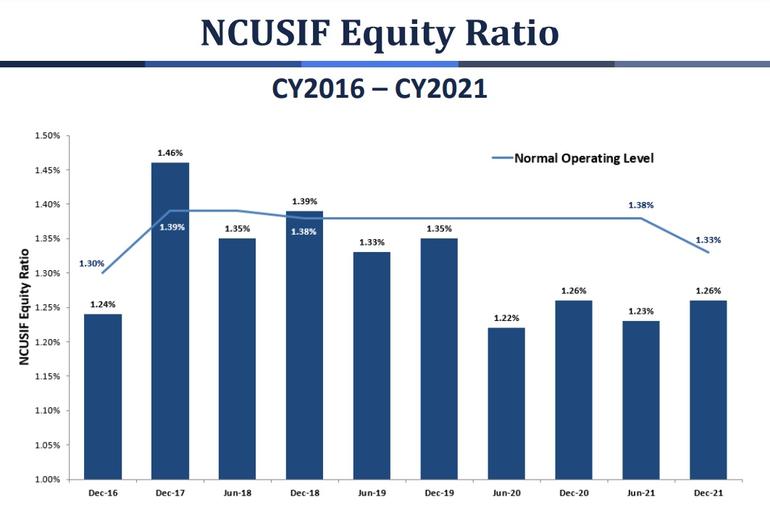
Of concern, the board noted, is staff forecast an equity ratio of 1.25% as of June 30, 2022—five basis points above the fund’s statutory minimum—and economic headwinds are on the horizon, including a possible recession.
The current rising-rate environment has the agency adjusting its investment strategy from a seven-year ladder to a 10-year ladder, agency staff said during the meeting. And not only is the equity ratio a concern, but also future credit union performance in a market in which rising inflation is challenging members’ balance sheets.
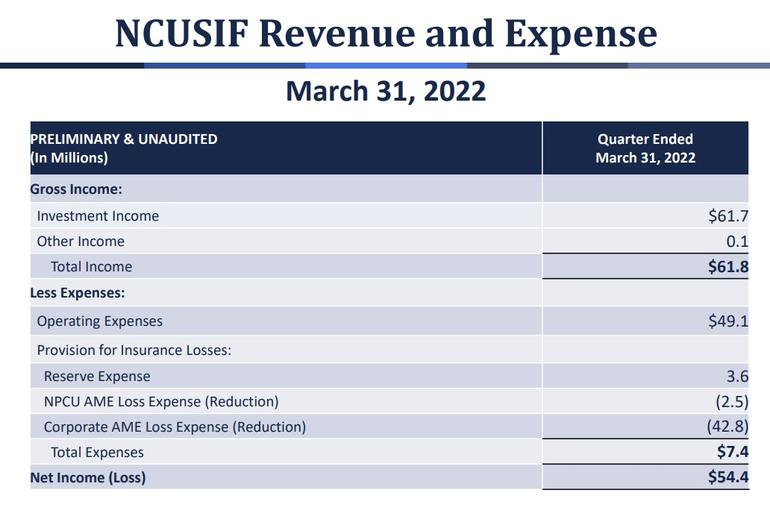
Chief Financial Officer Eugene Schied reported the Share Insurance Fund continued to perform well in the first quarter, with losses largely driven by fraud. Quarterly net income rose by approximately $42 million due to the continued reduction of expected losses associated with the remaining legacy assets of the Corporate System Resolution Program.
“That is positive news. We are now seeing a normalization of the Share Insurance Fund’s performance to what it was before the board decided to fold the Temporary Corporate Credit Union Stabilization Fund into the Share Insurance Fund,” said Harper. “Although the equity ratio sits below an ideal level, it remains relatively stable. Staff forecast an equity ratio of 1.25% as of June 30, down slightly from 1.26% at year-end 2021. This estimate places the equity ratio between the fund’s statutory minimum of 1.20% and the board-approved normal operating level of 1.33%.”
Downward Movement
But Harper emphasized the equity ratio is showing a consistent movement downward due to continued elevated insured share growth and low interest rates.

Rodney Hood
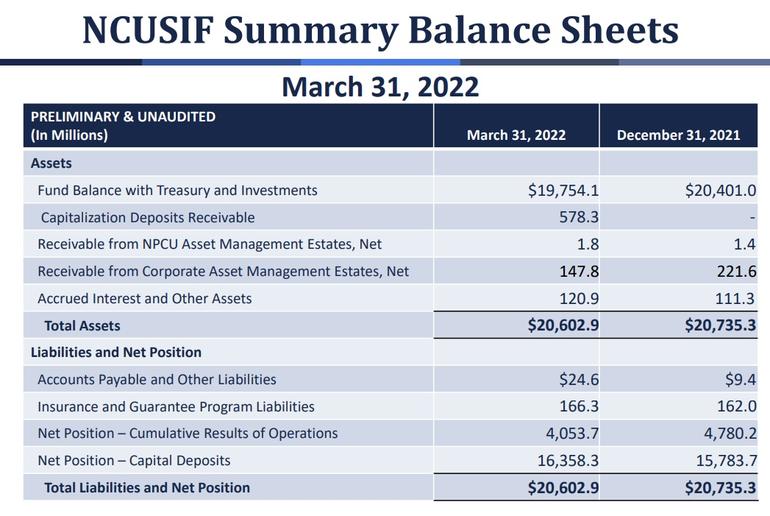
“As such, the NCUA board must continue to monitor the Share Insurance Fund’s performance and remain ready to act,” Harper stated. “Such monitoring includes assessing the effects of the changing interest rate environment on the fund’s portfolio. We already see the effects of rising interest rates on the fund’s balance, as we recorded unrealized losses in the first quarter.”
Board Member Rodney Hood, while lauding credit unions for their “solid footing” today, like Harper sees challenges ahead for the industry.
“Let’s face it, we find ourselves in an extraordinarily difficult time. Just go down the list: We’re in year three of a global pandemic that continues to be a concern. We have the conflict in Ukraine that has had both direct and indirect effects on almost every aspect of the larger global economy. We have serious supply chain disruptions that are affecting producers and consumers around the world. We have serious inflation challenges here in the United States, as well as in other countries. And we face a significant risk of an economic slowdown.”
Vice Chairman Kyle Hauptman pointed out that credit unions have consistently shown their resilience during economic downturns.
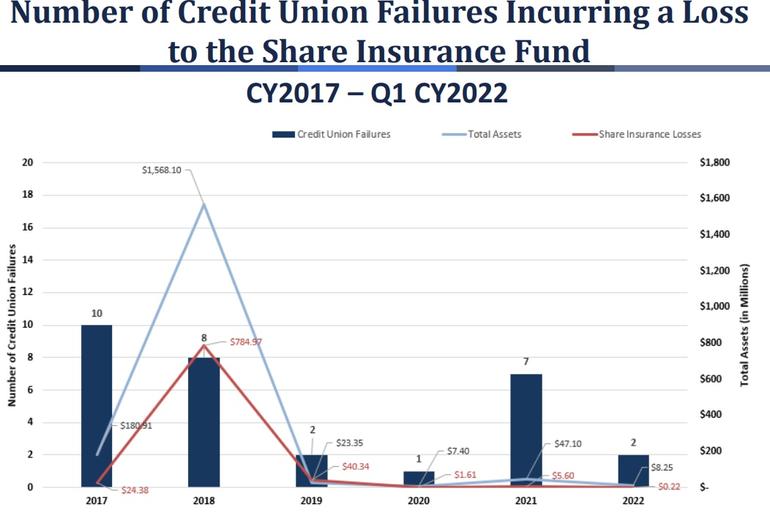
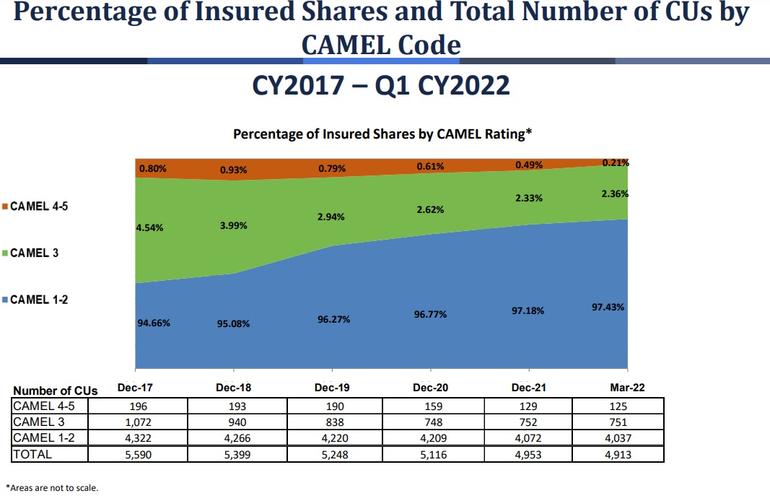
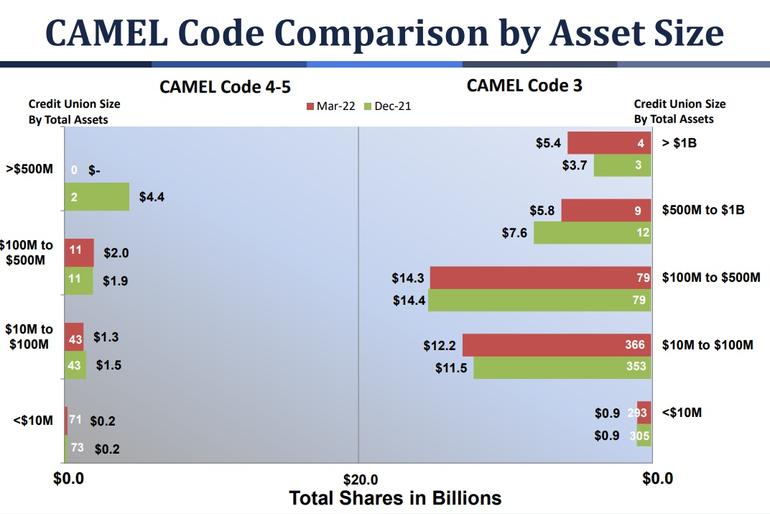
“The key thing is that both our insurance fund and the credit union system are in healthy shape as we possibly enter an economic slowdown,” Hauptman said. “Home prices are obviously a key indicator for us since mortgages are a core product for credit unions. I was reminded yesterday that more than half of our examiners started at NCUA after the last housing downturn. Our ground troops are excellent but don’t have much combat experience. The good news is the system has tried to prepare for the rainy day that may be heading our way—99.8% of assets are held in CAMEL 1, 2 and 3 credit unions with 97.4% in CAMEL 1 and 2 credit unions. Losses to the share insurance fund are at historic lows and a fraction of what they were over the past decade.”
Interest Rate Risk
Harper turned to concerns over interest rate risk within credit unions.
“Credit unions must pay careful attention to the fundamentals of capital, asset quality, earnings, and liquidity. Now is the right time for credit unions to review their policy limits and potential exposures. Credit unions should also remain disciplined in managing unique institutional risks as we navigate through this changing economic and interest-rate environment,” Harper said.
Harper said NCUA is aware of industry concerns about how examiners will supervise for market risk, given rising interest rates.
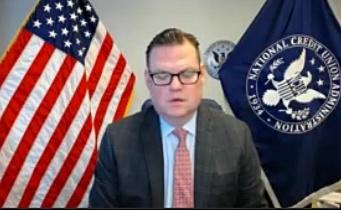
Kyle Hauptman
“Interest-rate risk has long been a supervisory priority for the NCUA,” he said. “We know that credit unions have planned accordingly for changes in interest rates over the years, even more so since the last update in the NCUA’s supervisory procedures in 2017. The NCUA, as a result, is now developing guidance for examiners on how to work with credit unions whose sensitivity to market risk and other risks has increased due to the ongoing uptick in interest rates and related economic uncertainty. We will continue to treat all credit unions equitably during the examination process in the months ahead.”
Letter To CUs On Blockchain
Before closing the board addressed a Letter To Credit Unions on distributed ledger technology, or Blockchain, that was sent this week.
“Indeed (the Letter) is just a set of broad principles, and we hope it sends the right message—which is credit unions can engage in responsible innovation when it comes to Blockchain technology,” stated Hauptman. “We expect the letter to lead to follow-up conversations about specific use cases.”
The vice chairman added he hopes the Letter sends a “signal to Silicon Valley and venture capital firms that America's credit unions are a market worth pursuing for new applications and partnerships.”