

ALEXANDRIA, Va. – NCUA has approved counting qualified service members who live on military bases at home and abroad when designating a low-income credit union. The decision was blasted by one bankers' group as "free rein to exploit the credit union tax subsidy."
To qualify as a low-income credit union, a majority of a credit union’s membership must meet certain low-income thresholds, based on data from the Census Bureau and requirements outlined in the NCUA’s Rules and Regulations.
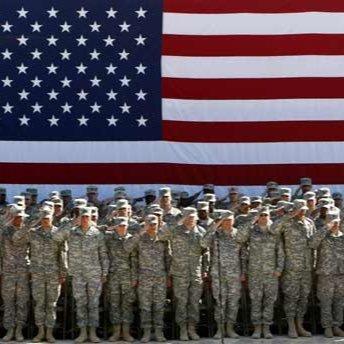
Under the new approach, military personnel will now be considered in a similar manner as students attending colleges, universities, vocational or technical schools when the NCUA evaluates a federally insured credit union’s low-income designation, the agency said.
“Active-duty military personnel constitute a highly mobile population with frequent transfers, both domestically and internationally, and often list Army/Air Post Office or Fleet Post Office mailing addresses,” noted the agency.
Prior to the change in the designation’s methodology, the NCUA’s income assessment tool only geocoded the incomes of members with physical street addresses. As a result, service members using APO or FPO addresses were omitted from the agency’s evaluation.
At the end of 2019, there were 2,605 low-income credit unions with 56.3 million members and $661.6 billion in assets.
Fostering Inclusion
“At the NCUA, we’re always looking for ways to foster greater financial inclusion, accessibility, and opportunity for all Americans, which I consider to be the civil rights issue of our time,” NCUA Chairman Rodney E. Hood said. “This is a great step in being more inclusive when it comes to the members of the military. Because so many military members are just getting started, they may not have much experience in working with financial institutions, at least not yet. Currently, the NCUA encourages higher education by counting students in our methodology, and under my direction, the agency has determined we can encourage military service in a similar way.”
The agency’s noted its announcement comes as the country recognizes the contributions and sacrifices of service members during National Military Appreciation Month.
In an interview with CUToday.info, Hood said changes the agency have made have eliminated much of the "arduous" process required to achieve the LICU status. Hood said dta indicate approximately 30 FCUs were right on the cusp of qualifying for LICU status, and the ability to count members of the military should help them to qualify.
Asked if he expects there might be some pushback from the banking industry over the change, Hood, who spoke with CUToday.info prior to a critical statement by the ICBA was issued, responded, "Anytime we can help the men and women of the military who protect us, we should do so. I can't think of why anyone wouldn't want to help them."
The agency said there are several benefits for credit unions that carry a low-income designation including an exemption from the statutory cap on member business lending, eligibility for grants and loans from the Community Development Revolving Loan Fund, the ability to accept deposits from non-members, and the authorization to obtain supplemental capital.
According to NCUA, additional information about the updated methodology and the new options credit unions now have to incorporate their military members into the low-income designation process will be detailed in an upcoming Letter to Credit Unions.
Banker's Respond
The Independent Community Bankers of America was strongly critical of the NCUA move.
"(Thursday's) sudden National Credit Union Administration move to change its methodology in designating low-income credit unions benefits neither low-income Americans nor military personnel—but the largest, most growth-obsessed credit unions, which continue to be subsidized by taxpayers," said ICBA President Rebeca Romero Rainey in a statement. "The NCUA's changes—made without a formal rule subject to public review and comment—is another example of this captive regulator expanding the powers of credit unions well beyond the limits established by Congress to justify their tax exemption.
"As the NCUA admitted after authorizing these changes with the stroke of a pen in the middle of an economic crisis and global pandemic, the agency has provided the nation's largest credit unions: free rein to allow outside investors to exploit their tax subsidy, unbridled commercial lending authority despite the credit union industry's taxi-medallion scandal, and the ability to accept non-member deposits," Romero Rainey continued. "In other words, these large financial firms may operate like full-service banks on a national scale while continuing to pay no federal income tax. While community banks continue to outnumber credit unions in low-income communities, today's action will benefit institutions like Pentagon Federal Credit Union, whose partnership with Goldman Sachs to finance a luxury mixed-use real estate development in the nation's capital contrasts sharply with the industry's founding purpose—serving people of modest means with a common bond."
The ICBA said it is strongly encouraging Congress to investigate the NCUA decision to re-examine the credit union industry’s "tax and regulatory subsidies."
Board Member Harper Response
In conjunction with the announcement, NCUA Board Member Todd M. Harper said, “Our country is in an economic war against COVID-19, and the NCUA needs to do all that it can to help federally insured credit unions serve their members, including our troops, during these difficult times. This decision will allow more credit unions that serve the military to qualify for designation as a low-income credit union and open the door to more resources.”
Harper said there are several benefits for credit unions with a low-income designation, including an exemption from the statutory cap on member business lending, eligibility for grants and low-interest loans from the Community Development Revolving Loan Fund, the ability to accept deposits from non-members and obtain supplemental capital, and consulting assistance.
Harper noted he has championed this issue of low-income credit unions serving the troops since joining the NCUA board, and in May 2019 became the first board member to ask staff to identify solutions to the issue of accounting for the individuals who have lower incomes and who live on military bases. Harper has since spoken repeatedly about the issue.
“Ultimately, today’s action advances economic dignity and inclusion by counting everyone when determining whether a credit union meets the low-income designation,” Harper concluded. “I’m very grateful for the efforts of the NCUA staff who worked diligently and creatively to fix this problem and to the leaders of the Northwest Credit Union Association and the Defense Credit Union Council who alerted me about the need to act.
CUNA Response
In response to the announcement, CUNA CEO Jim Nussle, noting the association has pushed the agency in March to consider the policy, said, “We want to thank Chairman Hood because his action will allow more credit unions to leverage the LICU designation to serve low- and moderate-income individuals and communities, which is especially critical as financial first responders work diligently to serve members during the pandemic. Chairman Hood’s action will help more credit unions to qualify as low-income credit unions, extending to many military members living on bases the greater financial opportunities and expanded products afforded by this designation.”
Anthony Hernandez
DCUC Reaction
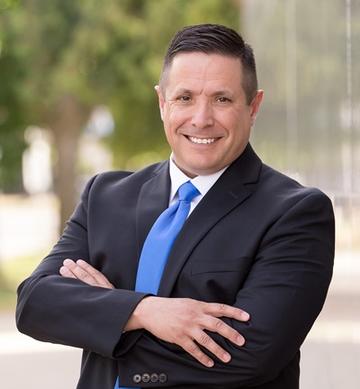
Defense Credit Union Council President and CEO Anthony Hernandez told CUToday.info the decision is “great news in the spirit of economic inclusion.”
“Now, military members serving overseas will be able to benefit from the additional products and services that are offered by low income designated credit unions, including greater opportunities to obtain a business loan apart from the Paycheck Protection Program,” Hernandez said. “DCUC would like to thank NCUA for its ongoing support for our nation’s military and their families. This rule change will allow more military and veteran members to participate in our economic recovery.”