

ALEXANDRIA, Va.–Saying the share insurance fund has suffered losses in the past when fidelity bond coverage was voided because the person who signed the bond forms also committed the fraud, the NCUA board has voted 3-0 in favor of making changes to its rules. NAFCU responded by saying it has concerns the change will raise costs for credit unions.
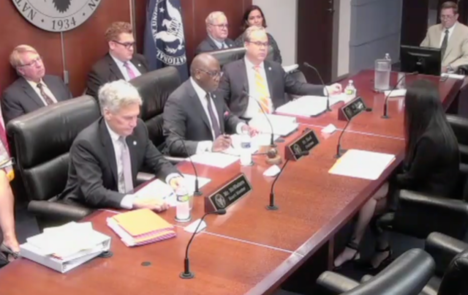
With the proposal, out for comment since November of 2018, agency staff said it tweaked portions of the proposed changes to the Final Rule for Parts 704 and 713 of the FCU Act to reflect feedback from credit unions and their trade groups.
The new rule requires a board member who is not an employee of the credit union to sign off on the fidelity bond, with that person not permitted to sign off on consecutive years.
“In the past we have had cases where the fidelity bond has been voided because the employee had knowledge of fraudulent activity,” NCUA staff told the board. “We believe this reduces the risk.”
According to NCUA staff, the NCUSIF has lost $10 million in recent years as a result of such scenarios.
Other Changes
The final rule approved does not require the supervisory committee to be involved.
A second change to the rule extends the period of time NCUA has for the discovery period in cases where fraud has led to a liquidation. Agency staff said that change will also reduce losses to the NCUSIF.
A third change approved by the board will codify a 2017 NCUA Office of General Counsel legal opinion that allows for fidelity bond coverage of CUSOs in certain instances.
Staff told the NCUA board it does not anticipate the changes will increase burdens or costs on credit unions.
“This is an important rule to update and strengthen NCUA’s fidelity bond requirements,” said NCUA Chairman Rodney Hood.
NAFCU Response
Following the vote, Ann Kossachev, director of regulatory affairs with NAFCU, said, “We appreciate the NCUA’s efforts to address industry concerns and the revisions made to the fidelity bonds rule to reduce duplicity and regulatory burden for credit unions. However, the final rule could ultimately translate into higher unnecessary costs. NAFCU will continue to work with the NCUA and hopes to find more opportunities for regulatory relief in the future.”
NASCUS Response
NASCUS CEO Lucy Ito issued a statement saying, "We are closely examining the fidelity rule to determine its impact on state-chartered credit unions and the dual charter system. NASCUS is particularly concerned that the rule will adversely impact the dual charter system by preempting state laws related to fidelity bonds. We will also review the rule to affirm whether the potential cost increase to credit unions is as negligible as NCUA states. That said, we are pleased that the board heeded NASCUS’ observation that reference to possibly applicable supervisory committee review be removed.”