ALEXANDRIA, Va.–The NCUA hosted its annual briefing here on its proposed 2019-2020 budget, with representatives of three trade groups offering input and feedback on where they want to see the agency take action on its budget.

L-R: Rendell Jones, Mark McWatters, Rick Metsger
In introductory remarks, both NCUA Chairman J. Mark McWatters and Board Member Rick Metsger stressed the efforts the agency has put into being more transparent, with McWatters noting, “No other federal agency provides this level of detail.”
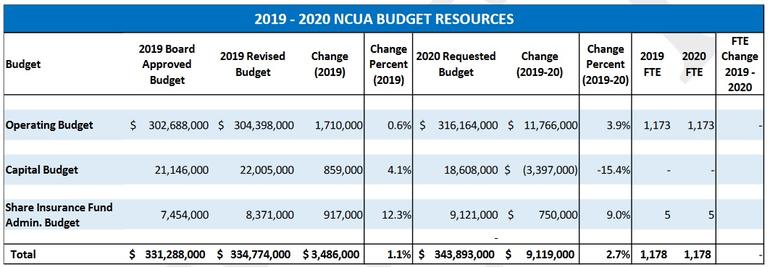
NCUA’s 2019-2020 budget proposal represents three separate budgets: the Operating Budget, the Capital Budget, and the Share Insurance Fund Administrative Budget. Combined, these three budgets total $334.8 million for 2019, 1.1% more than the 2019 funding level approved by the NCUA board in November, 2017, and 4.3% more than the comparable 2018 board approved budget.
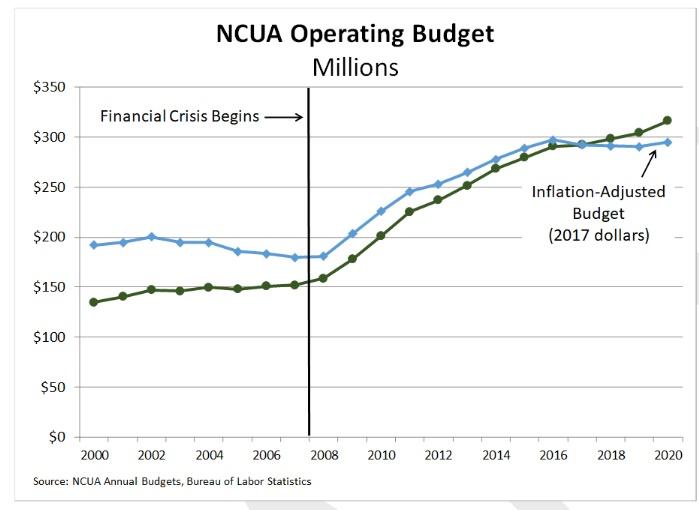
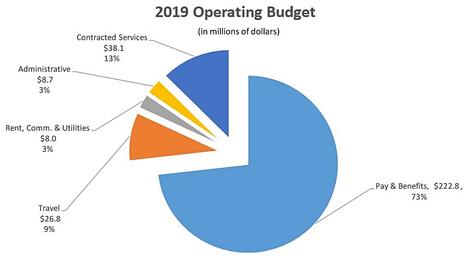
NCUA has proposed a $304.4 million operating budget for 2019.
‘Troubled’ By Some Comments
Prior to hearing testimony from the three witnesses, which CUToday.info is reporting separately, McWatters addressed an issue he said he hears often: Why is NCUA’s budget going up when number of credit unions is falling?
“I am troubled by this, as I hear it from some very sophisticated observers of the credit union system, and I suspect they already know the answer,” the chairman said. “The number of credit unions is going down, but the number of larger, more sophisticated credit unions is rising. Consolidation is taking a number of small credit unions with relatively simple business plans out of the system.”
McWatters noted that in the last year the number of CUs under $100 million in assets is down by 226, while the number of CUs of more than $1 billion in assets rose by 20, bringing the total to more than 300. He added that when he joined NCUA in 2014 credit unions represented just over $1 trillion in total assets; five years later, credit unions represent nearly $1.5 trillion.
“There is no doubt that larger credit unions engage in more complex activities and are subject to a wider array of economic forces than are smaller credit unions,” said McWatters. “For NCUA, that means examinations and reports that require more data and processing systems to develop an accurate picture of the credit union’s health.”
The bottom line, said McWatters, is the agency “needs to keep pace with the changes in the credit union system…and that costs money, which is what we are laying out today.”
Again, prior to hearing from the witnesses, McWatters told the hearing, “I think it’s important to look a little deeper and not respond with canned talking points. The credit union system is full of smart, capable people. If we can get past the talking point arguments you folks might have some really good ideas for how the NCUA might improve its effectiveness.”
‘Lean’ Budget
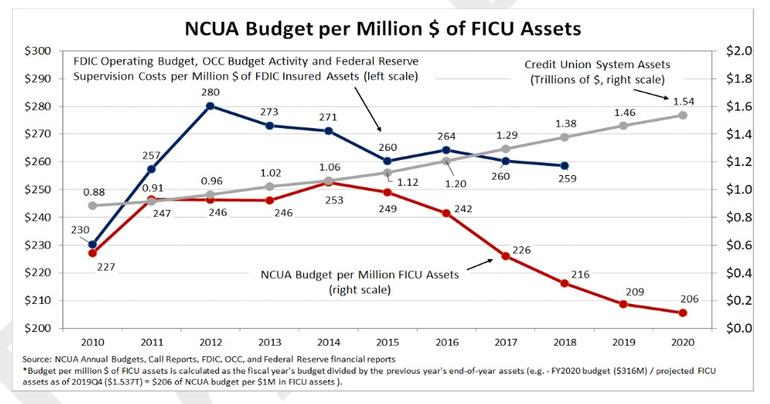
In his brief remarks prior to hearing input from three trade groups, Metsger, who was chairman of NCUA when he relaunched the public budget hearings, said the NCUA budget is “lean when compared to other regulators. We spend less per insured dollar than other regulators.”
NCUA Chief Financial Officer Rendell Jones provided a semi-detailed overview of where the NCUA budget goes, the trendlines in spending, the rationale for that spending, and what the agency has planned. He also reminded that his office this year processed payments to credit unions of more than $750 million from the NCUSIF distribution.
He noted the agency is closing its Atlanta and Albany, N.Y., regional offices, meaning that six regional offices are being reduced to three. Jones said the consolidation will reduce leasing expenses by 80% over three years.
Reduction in Full-Time Staff
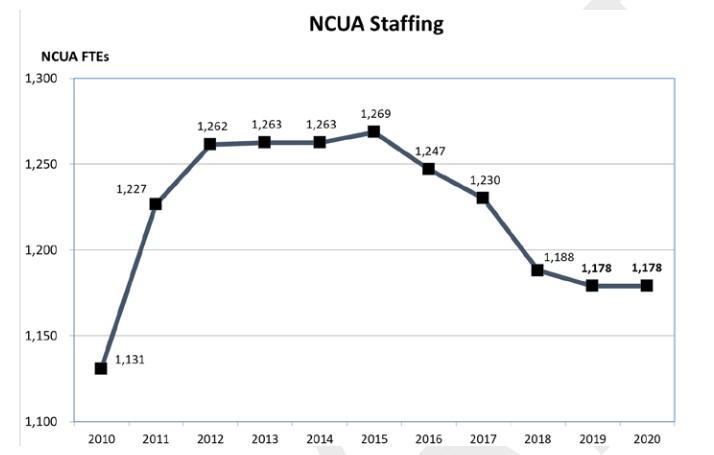
Jones said NCUA’s Flex program around examinations will lead to lower travel costs for examiners and improve quality of life for examiners, which reduces turnover and related costs. Personnel pay and benefits, plus travel, comprise more than 80% of NCUA budget. For 2019, NCUA is projected it will have 1,178 full-time employees, a net reduction of 10 people from 2018 and 91 fewer than 2015.
The Overhead Transfer Rate is 60.4% in 2019. Because of the remaining 39.6% budget collected from the operating fee, the rate to be charged to FICUs is expected to increase by 2.2%, Jones said.
For more details on the NCUA’s proposed budget, go to CUToday.info’s The Gov.