

WASHINGTON–NCUA’s director of its Office of Examination and Insurance shared with Congress how the agency is using and plans to use artificial intelligence, while also again calling for NCUA to be given third-party vendor oversight authority.
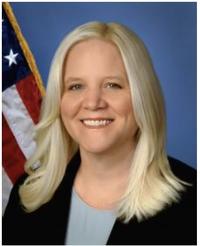
Kelly Lay
Testifying before the House Committee on Financial Services’ Task Force on Artificial Intelligence, Kelly Lay shared with the committee details on the agency’s examination modernization efforts, highlighted the research the NCUA has conducted in the realm of AI and RegTech, and discussed NCUA’s challenges to incorporate AI and RegTech in the credit union industry, in addition to urging Congress to give the agency more vendor oversight.
Lay noted NCUA in 2015formed the Enterprise Solution Modernization Program to help its staff regulate and supervise credit unions more efficiently, including working to create an integrated examination and data environment. Now, after several pilot phases, NCUA rolled out MERIT, including enhanced, integrated analytics utilizing a business intelligence tool, and its new, secure central user interface, called NCUA Connect, Lay said.
Goal to Transition
Lay further said that it is the agency’s goal to transition, within the next five to 10 years, the examination and supervision function into a predominantly virtual one for credit unions that are compatible with this approach.
“The virtual examination model should lead to greater use of standardized interaction protocols and enhance advanced analytical capabilities,” Lay said. “For subject matter experts, the benefits are more consistent and accurate supervisory determinations and greater clarity about how the NCUA conducts supervisory oversight between the agency and credit union staff.
“Currently, the virtual examination project is in the research and discovery phase,” Lay continued. “During this phase, staff identifies new and emerging data sources and methods to access the data, assesses advancements in analytical techniques, and considers harnessing other technologies to automate or streamline various aspects of the examination process. So far, research efforts have been focused on deploying AI solutions.
Testing Phase
“Specifically, the NCUA is in the testing phase of deploying a machine learning (ML) model to perform data validation more efficiently with quarterly Call Reports and profile submissions. This technique automatically clusters credit unions into various buckets and is more appropriate for time-series data. Further, this technique employs forecasting models comparing actual and predicted values to identify outliers.”
Lay said deployment of the new technique is expected to occur in the next four quarters and should result in more reliable and consistent Call Report filing across the credit union industry.
In addition, said Lay, the agency is also investigating Natural Language Processing (NLP), which transforms unstructured data into structured data, allowing end-users to leverage the data through analysis.
“Applied to the NCUA’s examination process, NLP could take unstructured data, such as information found in board minutes, internal and external audit reports, and file maintenance reports, and turn it into structured data,” Lay said. “Structured data is easier to consume, evaluate, and analyze.”
Lay said NCUA:
- Is researching whether it could utilize Process Robotics Automation to perform an array of repetitive or routine tasks during examinations
- Has embraced a data-driven supervisory initiative with its largest credit unions, which she said “offers opportunities to be more efficient by conducting supervisory activities offsite.”
Looking Forward
Looking forward, Lay told the committeeexpanding the NCUA’s use of RegTech and AI will require the agency to train examiners and credit unions, as applicable, and revise its examination policies and procedures.
“More importantly, AI and ML algorithms must be tested to prevent the intrusion of underlying historical bias that may result in discriminatory practices,” Lay said. “We must be cautious when deploying AI tools, to avoid exacerbating systemic inequities.”
Challenges to Small CUs
Noting that currently NCUA does not have a budget dedicated strictly for AI and the acquisition of related technologies, Lay said small credit unions face similar, if not more significant, challenges.
She said in her written testimony that nearly two-thirds of credit unions (3,222) are smaller than $100 million in assets, meaning they have very limited resources, and average only seven employees per institution. Of all credit unions, nearly 500 operate without a single full-time employee, and more than 100 of those credit unions operate exclusively with volunteers, Lay added.
“In general, credit unions are small, not-for-profit institutions and may not possess sufficient expertise to properly conduct due diligence on what is rapidly becoming a very complex ecosystem of third-party vendors,” Lay said. “These smaller institutions may neither have the economies of scale nor the expertise necessary for sophisticated analytics. While small credit unions play a vital role in their communities, they are commonly short-staffed and may lack the resources required to keep abreast of evolving AI technologies.”
Third-Party Vendor Authority
Lay told Congress that any examination of technology and the NCUA is incomplete without discussing the challenges the agency has confronted since the 2002 expiration of its third-party vendor authority.
“The NCUA asks Congress to enact legislation restoring the agency’s examination and enforcement authority over third-party vendors, including credit union service organizations,” Lay said. “The NCUA requires third-party vendor authority to safeguard not just the Share Insurance Fund, but the credit union system overall, which is a major pillar of our national economic system. The inability of the NCUA to supervise or examine third parties poses numerous systemic risks.”
Lay said NCUA lacks the authority to enforce third-party vendors’ compliance with federal consumer financial protection regulations or prudential standards, like anti-discrimination laws, concentration limits, maximum loan-to-value ratios, minimum capital levels, and some cybersecurity and anti-money laundering efforts.
“While there are advantages for credit unions to use these service providers, the high concentration of credit union services within third-party vendors presents safety and soundness risks for the industry,” Lay said. “The continued transfer of operations to CUSOs and other third parties hampers the ability of the NCUA to accurately assess the risks present in the credit union system and determine if current CUSO or third-party vendor risk- mitigation strategies are adequate.”
Yes, FOMO is Very Real in this Case!
Don’t forget to check your Spam/Junk email folder if you haven’t been receiving your free, popular and daily CUToday.info news headlines.
And if you haven’t yet signed up for the new email solution on which CUToday.info has partnered with ResponseGenius, you can do so here. Signing up requires less than one minute of your time.
CUToday.info has received very positive response from readers following the move to an improved provider of the daily headlines, but many also noted they did need to go to their Spam/Junk folder and mark it as safe.
The new email solution has not only improved every reader’s delivery experience, but it also features a fresh, new format that is easy to read, especially on mobile devices.
Please note and/or make your IT department or email administrator aware the emails will be coming from the domains CUTodayinfo.com and CUTodayinfoReply.com