

ALEXANDRIA, Va.–NCUA has sent a pair of Letters to Credit Unions, in one announcing its examiners will be asking certain questions of CU leaders, and in the other reminding of compliance issues related to new government programs.
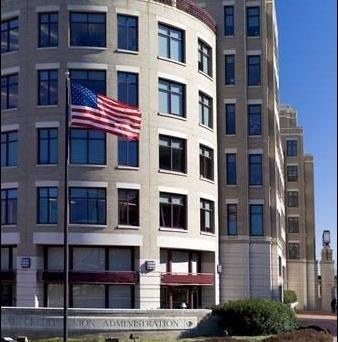
In Letter to Credit Unions 20-CU-12, NCUA Chairman Rodney Hood said the agency is expanding its outreach to credit unions related to the COVID-19 pandemic, and its examiners will be contacting credit unions between May 4-18 for responses to a list of questions.
“I encourage you to schedule a mutually agreeable time with your examiner,” Hood wrote. “Many of the questions ask for your best estimates only; we do not anticipate significant research will be necessary. As with all interactions with the NCUA, I encourage you to have an open dialogue with your examiner, ask questions, and express challenges you may be facing. The NCUA will continue to be mindful of the impact of information requests on any credit unions experiencing operational and staffing challenges associated with responding to COVID-19.”
‘Helping Us Understand’
The letter says NCUA will also continue to coordinate outreach efforts for state-chartered credit unions with state supervisory authorities.
“You are helping us understand the challenges credit unions are facing so we can identify or develop the assistance you need,” the letter reads. “Where there have been challenges with the pandemic, credit unions have adapted to continue to provide quality member service.” Among the issues examiners will be exploring, according to the letter, are:
- Operational Status. “Almost all credit unions report full or partial service to members. A few credit unions that have closed locations due to their sponsors being closed (including school districts and churches, among others) are continuing to serve their members’ needs on an appointment basis.”
- Lobby Service. “Many credit unions noted their lobbies are generally closed, but the vast majority are offering lobby appointments. Credit unions that are not offering lobby appointments are providing services using a drive-thru, or offering appointments at another location.”
- Liquidity Planning. “Few credit unions report a need to increase borrowings,” the letter states.
NCUA said it has also been monitoring the impact of COVID-19 on credit unions through information provided by corporate credit unions, other financial service providers, and other government agencies.
Letter on Compliance
Separately, NCUA has published a new Letter to Credit Unions offering an overview of programs created in response to the coronavirus pandemic.
NCUA Letter to Credit Unions 20-CU-11 notes changes the agency has made as a result of the variety of new programs introduced by the federal government as part of stimulus efforts, including the Small Business Administration’s Paycheck Protection Program (PPP), the Federal Reserve’s PPP Lending Facility, and more
In the letter NCUA addressed:
PPP Loans: The agency said loans are not subject to its enhanced underwriting and monitoring requirements for commercial loans. In addition, as CUToday.info has reported, the loans are also not included in a CU’s net member business loan calculation for purposes of determining compliance with the statutory limit on MBLs.
PPP loans to officials: In the letter, NCUA said the SBA’s rule on the loan program “appears to clarify that a credit union can extend a PPP loan to a small business owned, in part or in whole, by a member of the credit union’s board of directors if the small business meets PPP eligibility requirements, provided the director is not a key employee or officer of the credit union.”
But NCUA added any CU considering making PPP loans to a business owned in part or in whole by a board member should ensure it is complying with restrictions in place on loans and lines of credit to officials.
PPP loans to non-members: Federally chartered credit unions (FCUs), the agency noted, are prohibited by law from originating loans to non-members. “If a potential borrower is not a current member, the credit union must ensure the borrower becomes a member by the time of loan closing,” the agency stated.
Treatment of PPPLF-pledged loans for net worth ratios: NCUA noted in the letter a change in its rules for calculating net worth ratio allows CUs to exclude PPP loans pledged as collateral for a non-recourse loan that is provided as part of the PPPLF from the calculation of total assets for the purpose of calculating its net worth ratio. “Unpledged PPP loans will still be included in total assets for purposes of calculating the net worth ratio, but all PPP loans will continue to receive a 0% risk weight for purposes of risk based net worth,” the letter said.
For more info, go here: NCUA LTCU 20-CU-11: Regulatory Treatment for Paycheck Protection Program Loans