

ALEXANDRIA, Va.—Credit unions must look for new ways to make fees and fines less “debilitating” for low-income members, while also finding ways to make their financial counseling more effective, according to one person.
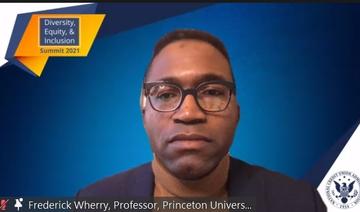
Frederick Wherry, professor of sociology at Princeton University and director of the Dignity and Debt Network, urged credit unions to consider those steps to help the underserved avoid spiraling downward financially.
During day two of NCUA’s second DEI Summit, Wherry shared how addressing fees and fines paid by the underserved can be one of the most “concrete” steps CUs can take to improve the financial lives of minority and low-income members.
“On the one hand, I know, fees and fines are a part of the business model. And there are people who do owe money,” Wherry said. “And I think one of the questions for us to really think through is can these things be structured in a way that is not debilitating? So, how do we help members remain as viable as possible. Is there something we can do in our repayment structure? Is there something else we can do to keep these members from spiraling down and out?”
The Bigger Picture
Wherry said credit unions must think carefully about the entire family when it comes to counseling a low-income member.
“One of the challenges when you're thinking about the network effects on a particular consumer, is that sometimes they're getting great advice from you about how to plan and build for the future. But the way they have to respond to that advice is by negotiating with other members of their household and their extended family network. So, on the one hand they want to save face when they're talking to their financial coach, but then they have to go back home at talk with their family.”
Wherry suggested credit unions bring in more than just the member to counseling sessions, drawing in more members of the family and the extended family.
Wherry reminded that African-Americans often don’t have the same access to fairly priced and trusted financial services as do people who live outside low-income neighborhoods.
“If you're in a neighborhood with a high percentage of Black or Black net households, you're just going to be exposed to more high-cost alternative financial institutions,” Wherry said. “When your choices are restricted in this way, the way that you're thinking about banking, no matter how nice the bankers are, changes. And so what we know is that people who are having more contact, for example, with police in the criminal justice system also tend to distrust other systems, including financial systems, including banking systems, and there is this spillover.”
'Distrust Happens'
Wherry urged credit unions to recognize this issue of trust can exist with some African-American members and to find ways to address the problem.
“This distrust happens, just by virtue of histories of policing and some of these neighborhoods,” he said. “Sadly we also know that education is not quite enough to fix it.”
Wherry emphasized the importance of credit unions finding ways to work more closely with their African-American members, noting, “50% of Black borrowers owe more than the principal after four years.”