

DULLES, Va.–One of the more interesting perspectives on how credit union “demographics” are changing, particularly the number of board directors per member, was shared during a meeting here.
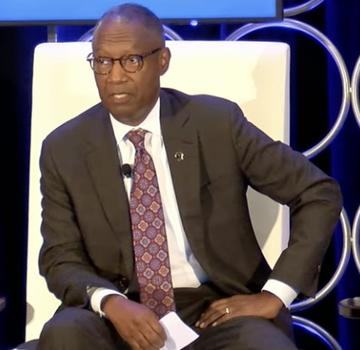
Maurice Smith
During a panel discussion on how to build sustainable DEI models inside credit unions as part of NCUA’s DEI & ACCESS Summit, Maurice Smith, the soon-to-retire president and CEO of Local Government Credit Union and Civic FCU in North Carolina, did the math and offered this perspective.
Smith said what the math shows is there is a “shift happening in the movement and it’s creating some headwinds” for DEI initiatives.
“There are now fewer than 5,000 credit unions in the United States. The last time we had fewer than 5,000 was 1943,” said Smith. “In 1969, there were 23,000 credit unions serving 21.6 million members. Let’s assume the average number of directors on boards was seven. That’s 161,000 board members in 1969, or one board member for every 134 members. That was a smaller community each board member represented and had to be accountable to.
‘Easier to Lose Sight’
“In 2023, we have 5,000 credit unions representing 135-million members. Let’s again assume an average of seven directors per credit union. That is about 35,000 directors who now represent 3,857 members each.
“When you represent larger communities, it’s easier for a director lose line of sight because there are more people to pay attention to,” Smith continued. “That also creates fewer spots for members to land on the boards of credit unions. It creates a rationing problem. It’s harder to have direct relationships with members, so it’s easier for members to be left behind.”
Fewer Interactions
Smith said that as the number of members represented by the average volunteer climbs, it becomes much less likely members can interact with their CU’s board members at church or in the grocery store.
“Now that you have leadership in the institutions who don’t have a direct line of sight to the community they are serving, it’s easier for DEI to get lost,” he said.
What Can be Done?
How can the issue be addressed? Smith was asked.
“By ensuring the few precious board seats we have truly represent the membership,” he answered. “If they don’t, how do we ensure the policies and procedures of the credit union benefit the community? It’s neither good nor bad. It is just what it is.
“Consolidation is occurring. How we ensure that DEI concerns go forward requires intentionality,” he continued. “It is having some influence and say in who serves on the boards of our credit unions. We have to be intentional as a movement to prepare leaders of the future who have DEI as a presence of mind. They will focus on DEI because that’s what brought them to the table.”
The Very Best in CU Reporting. Every Morning. At a Price Every CFO Will Love
Don’t forget to check your Spam/Junk email folder if you haven’t been receiving your free, popular and daily CUToday.info news headlines.
And if you haven’t yet signed up for the new email solution on which CUToday.info has partnered with ResponseGenius, you can do so here. Signing up requires less than one minute of your time.
CUToday.info has received very positive response from readers following the move to an improved provider of the daily headlines, but many also noted they did need to go to their Spam/Junk folder and mark it as safe.
The new email solution has not only improved every reader’s delivery experience, but it also features a fresh, new format that is easy to read, especially on mobile devices.
Please note and/or make your IT department or email administrator aware the emails will be coming from the domains CUTodayinfo.com and CUTodayinfoReply.com.