

NEW YORK–Credit union membership in the federal home loan banks has grown substantially, especially during this century, and the presidents of two FHLBs shared their observations on how the banks are evolving, what credit unions get from membership, and what the hectic days after the recent failures of two banks were like.
The comments came as part of NCUA’s Capital Markets Symposium here. The first-ever event was organized by NCUA Board Member Rodney Hood and held in the ornate boardroom of the New York Stock Exchange on Wall Street.
With Hood moderating the discussion, the panelists included Jose R. Gonzalez, president and CEO of the Federal Home Loan Bank of New York, and Kirk Malmberg, president and CEO of the Federal Home Loan Bank of Atlanta.
Here's a look at what was discussed:
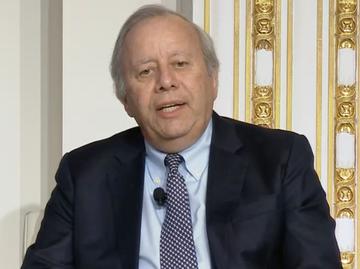
Jose R. Gonzalez
Hood: Tell us more about the FHLBs and where credit unions fit in the Federal Home Loan Bank system.
Gonzalez: For the last 20 years or so the FHLB has included credit unions among its membership and credit unions are, in fact, the fastest growing segment of our membership. We in the New York district now have about 106 credit union members out of a total of 300 members, and credit unions have been the prototype of the community lender in our economy in recent years.
Credit union membership has grown tremendously. It's really tripled over the last 15 years, reflecting the active engagement of the federal home loan banks with the credit union community and also, of course, the growth in size, penetration and importance of the credit union system among American communities.
Overall, there are about 1,600 credit union members out of about 6,000 members in the federal home loan bank system, with approximately $100 billion in borrowings through the system.
Malmberg: We had 240 credit union members, which for us is about 30% of our membership base. That's up from 157 10 years before, and at the end of the year in our district we had $21 billion of advances out to our credit union members. It’s a very important part of our membership base. Remember, the home loan banks are a cooperative just like all of you.
Hood: We are just a few weeks removed from a very challenging day in the banking sector. As we've seen in past crises, the federal home loan bank system played an important role in getting liquidity out to its member owners. How did the system respond to this crisis?
Gonzalez: The system was created in 1932 and its foundational mission from the very outset has been to provide liquidity to support housing finance activities…Over time, our membership and our mission was expanded to include essentially all depository institutions in the U.S., including commercial banks in the 1990s, credit unions in the 2000s, and now it's really very much a proxy for the for the essence of the U.S. financial system.
It is our duty to stand fast when there are liquidity concerns and to run to where the fire is and provide liquidity in times of stress to our members against collateral that is predefined and predetermined on a statutory basis.
We just went through an incredible period of stress in mid-March, which led to a tremendous increase in federal loan bank lending activity during the two weeks in the middle of March. It was a completely different crisis than in 2008-09, which was a credit quality-driven crisis. This was really a crisis of confidence by depositors, which led to deposit outflows principally in the mid-tier of the banking industry and not really at the smallest banks or the largest banks.
Record Advances
We had record advance activity and record issuance activity in the week of March 13th, which was the week following the failure of Silicon Valley Bank on Friday. Signature Bank is in our district and over the weekend we essentially had a $300 billion issuance of debt in the market, which essentially mirrored our advanced activity to our members. That's an extraordinary level, taking us above a trillion dollars of issuance. We had our single largest ever issuance day for the system on Monday March 13th when everybody ran to ensure they had adequate liquidity just in case.
We worked very closely with the regulators and the Fed to ensure that all hands were on deck to provide support for the financial system as required. We really are sort of the first responders in this process. We step in…to provide on-demand liquidity to our members and that is definitely the first line of defense.
Malmberg: That Monday was our busiest day ever until Tuesday, which was busier for us. We deal with big numbers, but even to me 300 billion going out the door in a week is a big number and the way you can get that money deployed is by having a reputation in the capital markets and an ability to go raise that level of debt. That's what is so central to the home loan bank franchise; having that ability to go to the markets, because our debt investors know it's a safe and sound investment and that's critical.
If you go back to 2008-09, that was another time frame where we had to step up and provide massive amounts of liquidity. The beginning of the pandemic in March of 2020 was another period of time when we put out very large amounts of money. Now, most of that came back in in the space of about a month, but the key was we were there and we were able to do it. We frequently talk about the home loan banks being a shock absorber for our member institutions when some crisis hits…to help them get through that time period and to be sure they can weather those financial storms.
How Do CUs Use FHLBs?
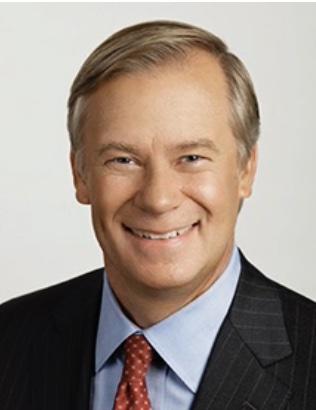
Kirk Malmberg
Hood: I know that the credit unions were not driving the increases in advances the federal home loan bank experienced last month, but what are some of the ways your credit your member-owners have been maximizing their home loan bank membership?
Malmberg: When we look at our credit union members it's about a relationship through time. Credit unions were not in the vanguard of what just went on, but at prior times there's been a need for the credit unions to come in and borrow pretty extensively.
If you go back a year ago, and it's amazing how quickly times have changed, there wasn't a whole lot of advance activity going on at that point. In fact, you were hearing questions at that point in time over whether the home loan banks are still relevant for the financial markets going forward. It's actually a part of what our regulator is currently looking at. We obviously staged what went on recently, but if you want to talk about something that does bring home the point of being relevant to the financial markets, these scenarios do it.
The way we stay in touch with a lot of our credit union members during those down times is by constantly building the relationships in Atlanta. We’re constantly going out and doing things with our credit union members, doing roundtables, doing ongoing podcasts. We do a credit union-specific conference. It’s to always stay in front of our credit union members so they know what the home loan banks can offer.
‘Obvious in Crisis, Present at all Times’
Gonzalez: We are obvious in times of crisis but we're present at all times and having a relationship with your federal home loan bank is critical to be able to take advantage of the many products and services we offer our members.
We are a cooperative like you, we’re member driven, we're member focused. Our reason for being is to serve our members, it's not to maximize return for our shareholders because you are our shareholders. We deliver value to you either through a dividend or through the products and pricing we offer, but it's really all about focusing on delivering value at all times, not just in times of stress. We do it by being available to provide you structured advances that match your assets appropriately, that allow you to invest opportunistically. We help you manage deposits, whether outflows or inflows. It is your window to the capital markets.
‘Nobody Else in the Market’ Can Do This
There’s nobody else in the market who will give you on any given day or at the same price that the very largest actors in the capital markets will get--nobody has a lower cost of funds than us other than the U.S. Treasury, and nobody marks it more thinly than us. When you come to us what you're getting is the very best deal you can get in the in the capital markets.
That allows you, I think, very critically to manage your balance sheet more actively and more efficiently at all times, not just in times of stress. It’s just that when the fire alarm is sounding we are there to provide support.
Hood: Tell us more about your affordable housing initiatives. I know each home loan bank contributes at least 10% of its net income toward this effort. How do you decide how to divvy up your contributions toward various initiatives?
Malmberg: The 10% is a statutory requirement. We've been doing that for 30 some years now, and over $7 billion has gone into affordable housing from the federal home loan banks. The banks have done additional voluntary contributions past the 10%; we did 50% more than what was our requirement last year.
There is a governance process in place, they all are highly regulated, but our board gets very involved. We also at the federal home loan banks have something that we call our AHACs, our affordable housing advisory councils are made up of pertinent subject matter experts. In the case of Atlanta we've actually got two big city mayors on our council: the mayor of Charlotte and the mayor of Birmingham to give us feedback and ideas of what can we do to support housing in local marketplaces. They give us that advice. We go through a targeted community lending plan to determine what are the needs in our district and how can we deploy that money.
Example in the ATL
Look at Atlanta, for instance. This coming year 65% of our affordable housing funds will go into what's called our general funds which are really a competitive round where our members sponsor projects that are going on and they're scored on the projects that really focus on multifamily and residential development. Thirty-five percent is what we call our home ownership set aside program , which is where we give basically down payment assistance to help typically first-time homebuyers.
Hood: What about system membership. What is your position?
Malmberg: A lot of folks would like to have access to the home loan bank system and we could opine on it all we want, but Congress controls the lever to who can be a member of the Federal Home Loan bank system.
I think one of our big issues we want to be sure of is to maintain the safety and soundness of the system so that we have that ability again in a crisis to be able to go to the markets and raise money because investors are not worried about the safety of the system.
Gonzalez: First, do no harm. I think the current membership has grown into a very diverse, very balanced spectrum of members. For additional member classes, it has to be about doing no harm. There should be no detriment to the safety and soundness of the system by acquiring a member class that doesn't have equivalent prudential regulation to what our current membership classes have, and there really should be an access to housing finance because that is at the heart of the system.