ALEXANDRIA, Va.–The NCUA board voted 2-1 to approve its 2021 and 2022 budgets.
NCUA Board Member Todd Harper cast the dissenting vote, saying it “falls short on several fronts.”
NCUA said the operating fee for FCUs will decrease 19.6% in 2021 as compared to 2020, reflecting a 19.8 basis point reduction in the estimate in draft budget. According to the agency, federal credit unions will cover 68% of the costs of 2021 NCUA operations, while state credit unions will pay 31%. Once again, FCUs below $1 million in assets will not pay an operating fee.
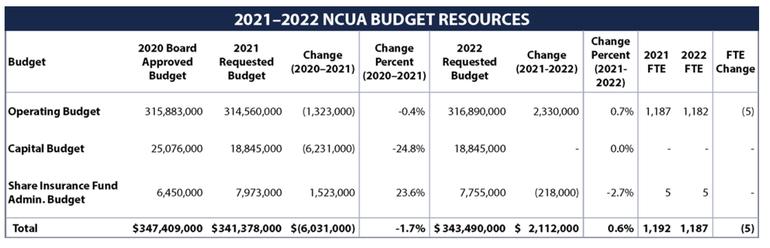
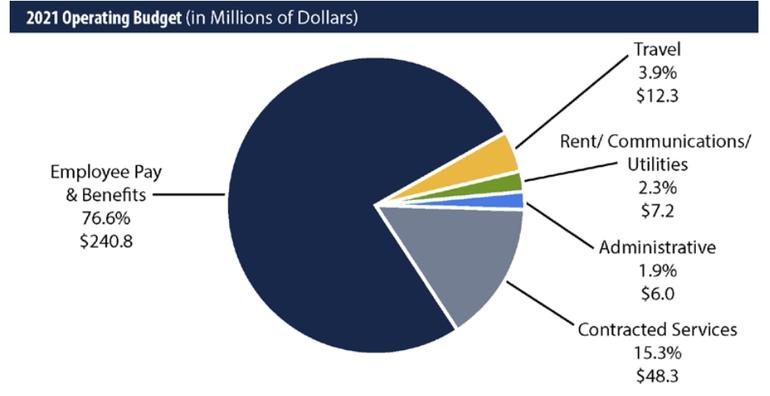
The budget approved for 2021 is $341.4 million, which includes an operating budget of $314.6 million and 1,087 full-time employees; a capital budget of $18.8 million, and an NCUSIF administrative budget of $8 million and five full-time employees.
The 2022 budget increases to $343.5 million (as detailed below).

The 2021 budget reflects a 1.7% decrease from the 2021 budget, due almost exclusively from examiner travel expenses that went unspent due to the pandemic as examiners conducted remote exams.

Rodney Hood
NCUA CFO Eugene Schied said “lessons learned about remote and offsite work” will reduce travel needs moving forward.
The 2021 budget includes a new full-time position to support financial technology (fintech), and $300,000 to develop and implement a mechanism to gather feedback on their interactions with the agency.
The 2022 proposed budget, said Schied, has been adjusted downwards by $24.9 million, reflecting decreased travel and return to more typical vacancy rate and reclassification of a portion of the contracted services budget.
Schied said of the approximately $10.4 million in funding for travel in 2020 that will not be spent funds have been reallocated, including $3.7 million to be used to retire the note on NCUA’s central office, with the remaining balances being used to offset costs related to COVID-19 pandemic.
The NCUA board also agreed to:
- Delegate to the agency’s executive director the authority to hire up to 30 people who have retired from the federal service to return as examiners. Funds already approved that went unspent would be used to compensate those examiners.
- Approve a budget to fill a consumer compliance program officer position to be added to the Office of Consumer Financial Protection in 2021, which Schied said is intended to enhance consumer compliance examination processes for the largest CUs not primarily examined by the CFPB.
‘Transparency & Accountability’
NCUA Chairman Rodney Hood pointed to the Dec. 2 budget briefing hosted by the agency, saying it is part of a process “vitally important for transparency and accountability. The process is valuable for the feedback it provides to us. I am pleased to see the final budget is even slightly lower than the estimate published last month, with a 1.7% decrease even with the mandated increase in contributions to the federal employee retirement system.
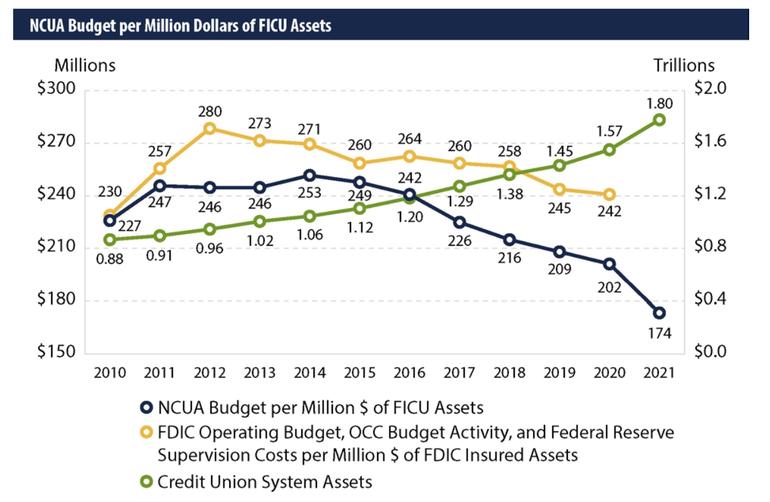
“I think it’s a bold statement about our commitment to controlling costs to the credit union system,” continued Hood. “During this challenging time credit unions are tightening their budgets and NCUA must do the same and lead by example.”
Hood said the agency is taking a “hard look” at the 2022 budget to continue to find efficiencies in operations.
As reported above, NCUA has added a consumer compliance officer position, a favorite issue for NCUA Board Member Todd Harper, who is the lone Democrat on the board.
“While the NCUA board has the votes to remove the consumer compliance officer position outright, in the spirit of bipartisanship it remained in the budget and is intended to provide a…resource to develop a proposal to advance consumer compliance examination procedures,” said Hood. “This is a temporary position with the term not to exceed one year unless the plan is adopted by the NCUA board. The NCUA board must review any changes to consumer compliance functions and must approve any such programs before implementation.”
Praise for Portion of Budget, But…
In his comments, Harper said he supports several aspects of the proposal, including devoting new resources to address financial technology, innovation and access issues, providing funding to stand up a new Office of the Chief Ethics Counsel, and completion of the MERIT examination tool.
“A budget, however, is a forward-looking document that establishes priorities. And, while there are some positive aspects of this proposal, for me, this budget unfortunately falls short on several fronts. I will, therefore, oppose it,” said Harper prior to the vote.
Among the points raised by Harper:
Exam Preparedness
With the pandemic ongoing, Harper repeated a point he has made before, that “We should plan for the worst and hope for the best when budgeting for

Todd Harper
2021. Once the effects of the economic stimulus fade and the congressionally imposed forbearance programs expire, we will have a fuller picture of the true state of the credit union system. And the agency needs to prepare for that reality.
“Based on discussions with staff, I have concluded that we do not yet need to examine all federal credit unions on an annual basis,” Harper continued. “That is why I proposed a surgical approach to modifying our examination program as part of the budget negotiations. Specifically, we have identified a number of high-risk institutions for which we currently have no plans to examine in 2021. We know the risks are there, so we should plan to check in with these credit unions next year.”
Harper, who will most likely be named NCUA chairman when Joe Biden becomes president, said he wants the agency to examine all federally insured credit unions with $500 million or more in assets, regardless of charter type, saying the failure of any large CU would be injurious to the NCUSIF.
“Regrettably, the budget before us falls short. It makes no changes to the exam scheduling policy,” said Harper. “And, authorizing the agency to fill as many of the 30 re-employed annuitant positions is only an illusion. I am told that many of the potential rehires will not sign up for another term of service at the NCUA. And, while I appreciate the efforts to try and address this shortfall during the midsession budget adjustments, we should be doing more much sooner.”
Consumer Financial Protection
Harper repeated his call for increased examination of credit unions for compliance with consumer financial protection laws, including assigning a separate consumer compliance rating in the way that other federal banking regulators — and even some state credit union supervisors — do.
The approved budget includes funding for one position in consumer compliance; Harper said at least three people are needed.
Financial Innovation and Central Liquidity Facility
Harper said he supports the new fintech division within the Office of the Executive Director, but opposes moving the virtual exam program to this division, saying it should remain in the Office of Examination and Insurance. Harper said he also opposes moving the Central Liquidity Facility from the Office of Examination and Insurance.