

ALEXANDRIA, Va.–During its annual budget briefing related to its proposed 2023-2024 budget, members of the NCUA board, agency staff and representatives of credit union trade groups all shared their views (see related reporting) on the necessity for the proposed budget increase, questioned/defended the end to virtual exams, and debated other points.
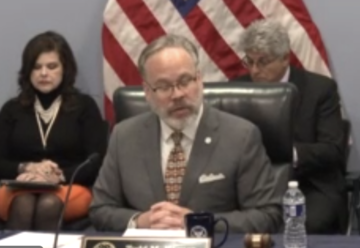
Todd Harper
NCUA Board Member Rodney Hood, for example, raised questions around rising costs related to the MERIT exam system.
As CUToday.info has reported, NCUA earlier announced a proposed combined 2023 staff draft budget of $367.0 million, an 8.1% increase from the 2022 staff budget. NCUA’s proposed operating budget is $350.8 million, which is 9.6% higher than in 2022.
The proposed 2023 capital budget is $11.2 million, or 14.1% lower than in 2022. The proposed Share Insurance Fund administrative budget is $4.9 million, or 21.5% lower than in 2022, NCUA said.
The proposed budget summary and detailed budget justifications can be found on the Budget and Supplementary Materials page on NCUA.gov. The comment period on the budget remains open.
According to NCUA Chairman Todd Harper, this year’s budget briefing, at the suggestion of Vice Chairman Kyle Hauptman, followed a “different and more interactive format than in prior years, and instead of the standard testimony followed by questions-and-answers format, the agency sought “to engage in more of a dialogue between NCUA staff, participating stakeholders, and the NCUA board.”
‘Not About Grabbing Headlines’
In his remarks, Harper said the budget hearing was about “gaining a better understanding of stakeholder concerns and stakeholders getting a better understanding of the NCUA staff’s budget recommendations. It’s not about scoring political points nor is it about grabbing headlines.”
Harper called the staff draft budget document “merely a starting point for discussions, not a final product,” and noted NCUA will continue to accept comments through Oct. 28.
“Ultimately, a budget is a forward-looking document that signals an organization’s priorities and objectives each year,” Harper said. “Among other things, the staff draft budget requests an increase in the number of specialist examiners and other staff in consumer compliance, Bank Secrecy Act compliance, and small credit union support. After considering industry input, we may want to make other choices.”
‘Aligns’ With Inflation
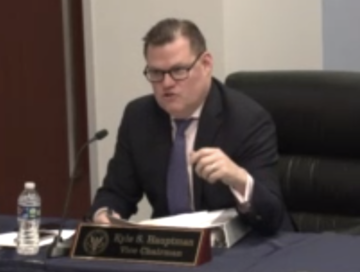
Kyle Hauptman
Harper said the 2023 staff draft budget of $367 million (8.1% larger than the 2022 budget) “largely aligns with the current rate of inflation,” adding it is “more than a four-percentage-point drop from the 2023 budget the board approved last December,” and that staff have already identified cost savings and pared back increases in certain activities.
“Nevertheless, like credit unions and the credit union members we protect and insure, the NCUA is experiencing inflationary pressures for nearly everything the agency needs, including labor, contracting, supplies, and travel,” Harper said. “As stewards of the agency’s resources, the NCUA board carefully evaluates what is needed to support credit unions’ safety and soundness, ensure consumer compliance, and maintain the health of the Share Insurance Fund.
“While the credit union system has, to date, largely weathered the COVID-19 pandemic without considerable economic dislocation, we now have new challenges ahead of us due to rising interest rates, increased liquidity risks, and ever evolving cybersecurity threats,” Harper continued. “In response, the NCUA must maintain an effective examination and supervision program as the agency navigates this period of economic and market uncertainty and fulfills its consumer financial protection responsibilities.”
What Credit Unions are Saying
Harper said his review of testimony and comment letters received to date make clear stakeholders want the agency to “pare back” expenditures in 2023, including cutting travel costs, which are rising as NCUA returns to in-person exams.
“…We must also ensure that our efforts to be penny-wise in exams don’t ultimately result in being pound-foolish for the Share Insurance Fund,” Harper said. “Since the start of voluntary travel this spring as part of Phase 2 of the NCUA’s return to on-site examinations and supervision, field staff have found an increase in recordkeeping deficiencies, problems with internal controls, and instances of fraud. While the agency will continue to use off-site supervision as appropriate, the NCUA will need to spend the money necessary to conduct in-person examinations to find and address other internal control, recordkeeping, and fraud issues before they become significant and lead to Share Insurance Fund losses.”
Hauptman: Questions About Staffing
Like Harper, Hauptman said “the draft budget is just that, a draft. After hearing stakeholder statements and questions, I expect this budget to evolve significantly before it is voted on.”
In his comments, Hauptman said he wanted to address several points, including proposed expenses related to staffing.
“The number of 25 new FTEs is hard to justify, especially given the continued positive performance of the credit union movement in the third quarter,” said Hauptman. “These 25 new hires are proposed at the same time the number of credit unions has dipped below 4,900 from nearly 5,200 credit unions when I started this job two years ago.
“Of course, the real concern is for future budgets. These are positions that will never go away. Over the past two years, credit unions have had to prioritize core functions over support activities,” Hauptman continued. “For many, that meant deploying new technologies while closing branches and laying off staff. We must also maintain our focus on core program activities…My perspective on the budget reflects a conviction that we deploy resources where they will do the most good -- and that is with the regions and field staff.”
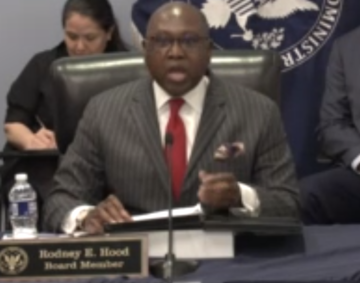
Rodney Hood
Hauptman repeated comments he has made in the past that those people closest to the emerging risks in credit unions are best equipped to address them quickly and effectively.
“Since we haven’t been onsite in over 24 months, there will likely be a greater percentage of issues requiring fast action by experienced examiners. For that reason, I am inclined to support the proposed 10 new specialists for the field,” Hauptman said.
Hood: The Need to Find More Efficiencies
Hood echoed Hauptman’s point on the proposal to hire 25 new staffers, which he said the agency has seen proposed since 2012.
Hood noted that when he previously served on the board, th NCUA regulated just over 7,500 credit unions, while today that number is less than 5,000.
“Even though credit unions have become more and more complex, we can find additional ways to find efficiency given we are regulating fewer and fewer institutions,” said Hood, who had a number of questions for NCUA staff during a follow-up presentation (see related reporting).